Make a COLD NOODLE SALAD in your kitchen
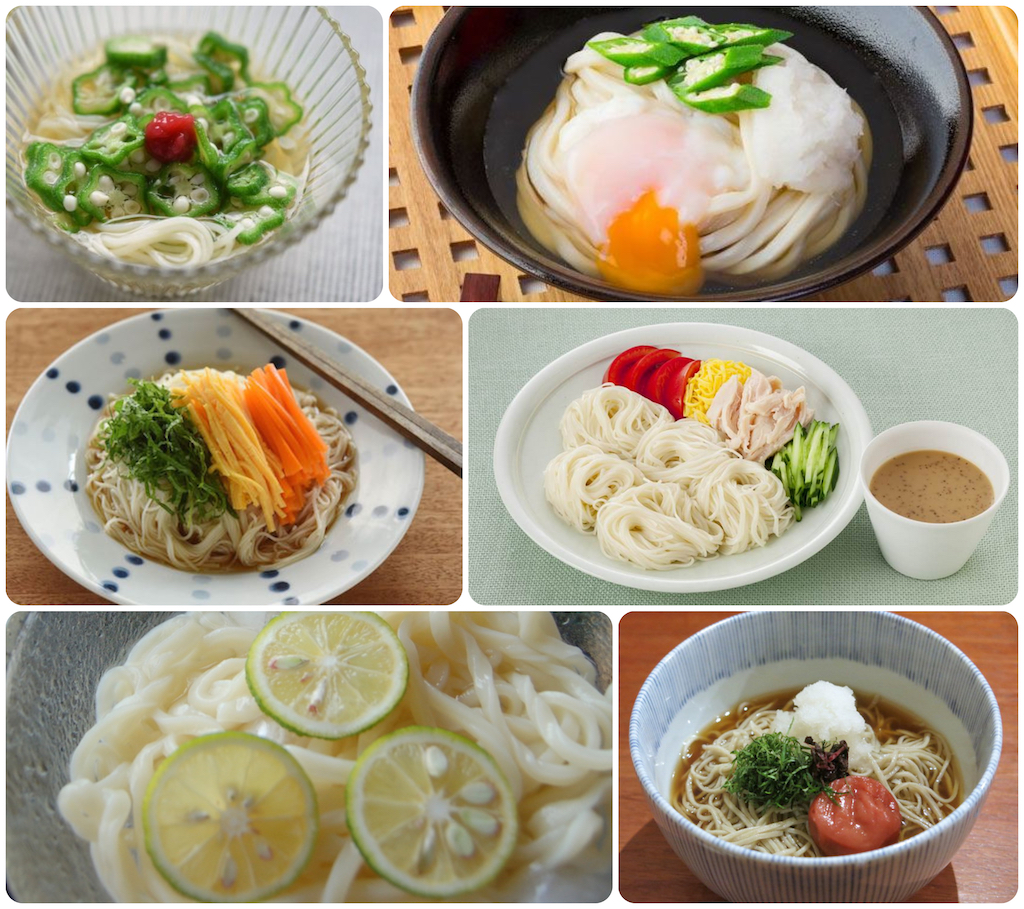
FIRST… choose your NOODLE: thread-thin sōmen … or thick, slithery-chewy udon … rustic wholegrain soba … or curly-springy chūka soba.
NEXT… decide if you want to serve your noodles DIPPING-STYLE (tsuké-jiru) or POUR-OVER STYLE (kaké-jiru) and choose your DIP SAUCE or DRESSING accordingly. If making a classic dipping sauce for sōmen, soba or udon start with umami essence (a vegan version is available, too) and adjust intensity of flavor with stock (either Standard Sea Stock or Kelp-Alone Stock). A sesame-enriched sauce is served with chūka soba; it can be clear or creamy-and-thick.
CHOOSE some CONDIMENTS: as a general rule, grated GINGER accompanies sōmen and udon, WASABI is served with soba, and various kinds of NEGI (scallions and leeks) are served with all types of noodles. In addition, uméboshi plums and shredded shiso leaves pair well with sōmen, udon and soba. Thin slices of lemon, lime are also refreshing.
Toppings for Cold Noodles
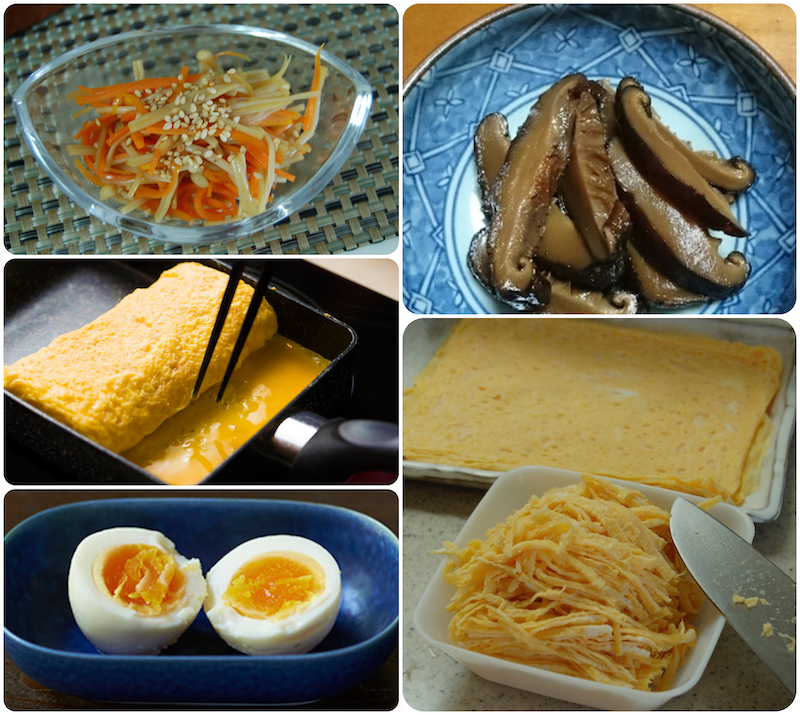
Eggs make a great topping to all sorts of noodle dishes. Impatient Coddled Eggs (WASHOKU pg 292), thin sheets of omelet sliced into ribbons (WASHOKU pg 290) and rolled omelet are all good choices.
More topping ideas can be found on the Cold Noodles Part Three post.
Topping items that can be made ahead and store well for several weeks in the refrigerator include: Gingery Enoki Mushrooms with Carrots (pg 127 KANSHA) and soy-simmered shiitaké mushrooms.