
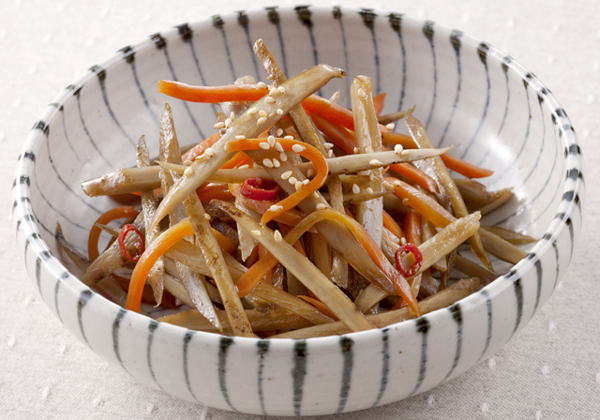
Classic KIMPIRA, stir-fried slivers of carrot and gobō (burdock root) finished with 7-spice blend and toasted sesame seeds.
Kimpira & 7-spice blend (shichimi tōgarashi)
金平・七味唐辛子
The original seventeenth century dish called kimpira was made from finely whittled gobō (burdock root), and finished with a blend of incendiary spices; the dish was named after a folk-hero, celebrated for his fiery determination. Today, kimpira-style dishes are regularly made from a wide variety of vegetables, especially roots such as lotus, carrot, and daikon, and tubers such as yams, sweet potatoes, yellow and white potatoes. Peppers – green, red, yellow – are also good candidates.
Daikon and potato peels are particularly well suited to cooking kimpira-style. Indeed, what many people would call kitchen scraps – the peels and trimmings from fruits and vegetables used to make other dishes – can be put to fine use prepared as kimpira. See what might be languishing at the back of your vegetable bin.
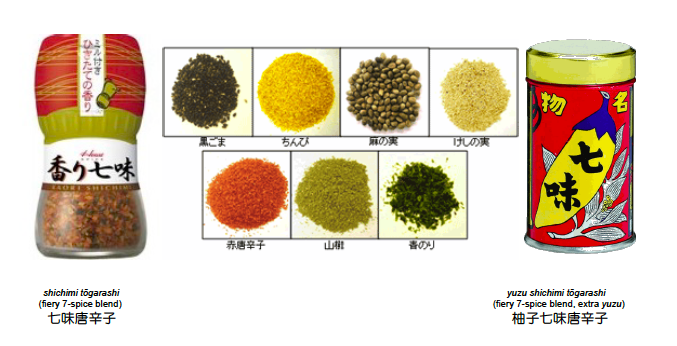
top row: black sesame, chinpi (dried mikan or yuzu peel), asa no mi (flax seed), keshi no mi (white poppy seed)
bottom row: aka tōgarashi (red chili pepper), sanshō, ao nori (sea herb)
The blend of seven spices known as shichimi or shichimi tōgarashi can be used as a garnish or finishing touch for many dishes.
Sprinkle on freshly fried potato and/or root vegetable chips… kara agé fried chicken nuggets… mounds of grated daikon radish… or to spice up mayonnaise or salad dressings.
Download Recipe

-79969_400x250.jpeg)