
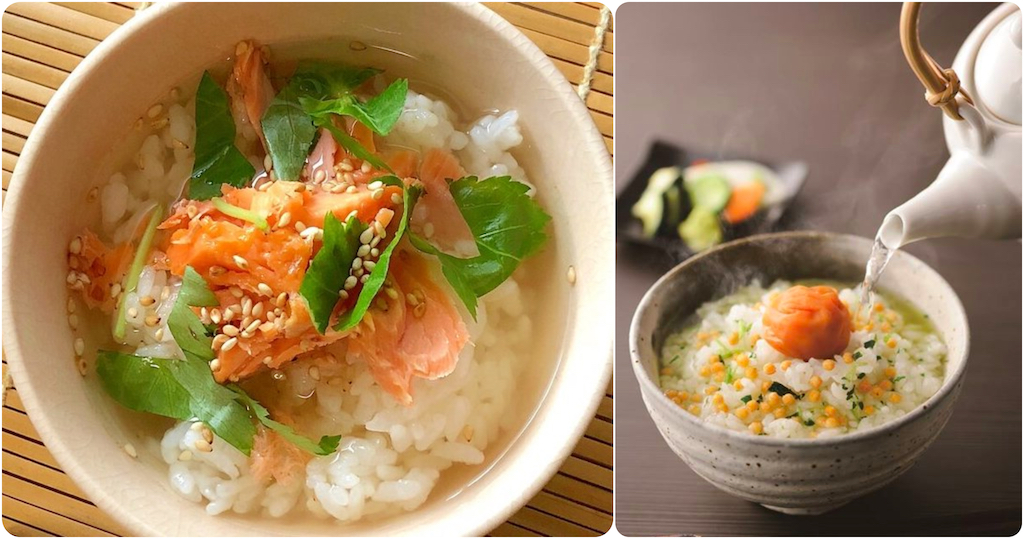
Ocha-Zuké お茶漬け
Ocha-zuké, rice moistened with green tea broth, is Japanese comfort food at its most basic – a reliable stand-by that can be quickly assembled as hunger, or the mood, dictates. A delicious way to enjoy leftover rice, ocha-zuké is a favorite, late night snack of college students pulling all-nighters, salaried workers after a night of barhopping, and housewives after a disappointing restaurant luncheon with friends.
Variations abound. A Master Recipe for making several versions of ocha-zuké is provided here. One features Seasoned Salmon Flakes another sour plum (uméboshi) and yet another Second Chance Tea Topping… all are moistened with kelp-enriched tea broth.
Kelp-Enriched Tea Broth
昆布汁茶 Kombu-Jiru Cha
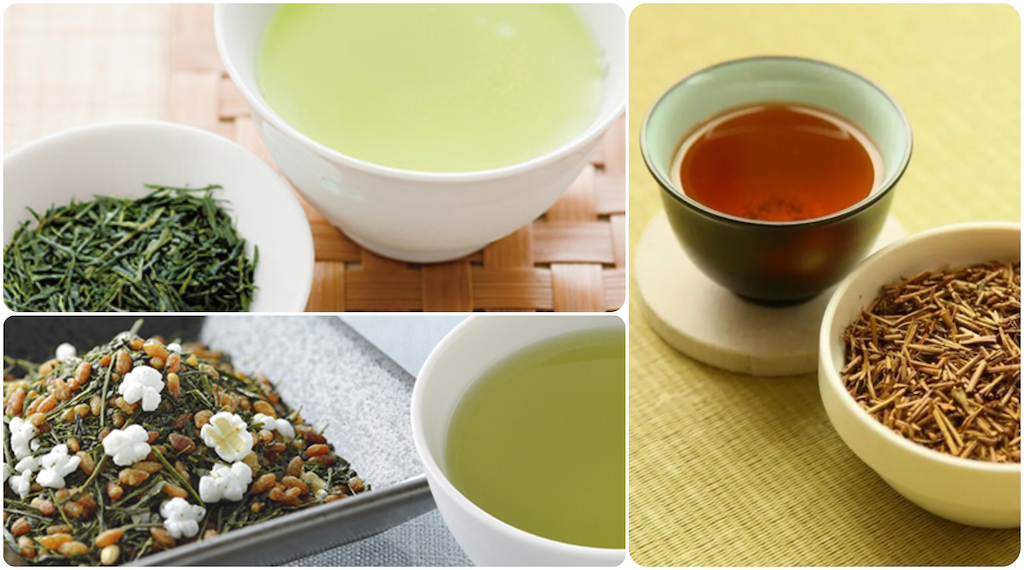
Tea Broth is an essential component of all ocha-zuké dishes. Most often the broth is made with just leaf tea, steeped in moderately hot (NEVER boiling) water. However, brewing any leaf tea with kombu-jiru (instead of very warm water) can really enhance the outcome. Download instructions for making Kelp-Enriched Tea Broth.
Depending upon the choice of tea, the color and character of the broth changes. SEN CHA 煎茶 makes a pale celadon broth with a delicate grassy-herbal aroma. GENMAI CHA 玄米茶 makes an amber-tinged green broth with a rice-cracker like flavor. HŌJI CHA 焙じ茶 makes an earthy-colored broth with a decidedly roasted flavor.

-79969_400x250.jpeg)