季節のゆず味噌・Kisetsu no Yuzu Miso
Seasonal Citrusy Miso Sauce
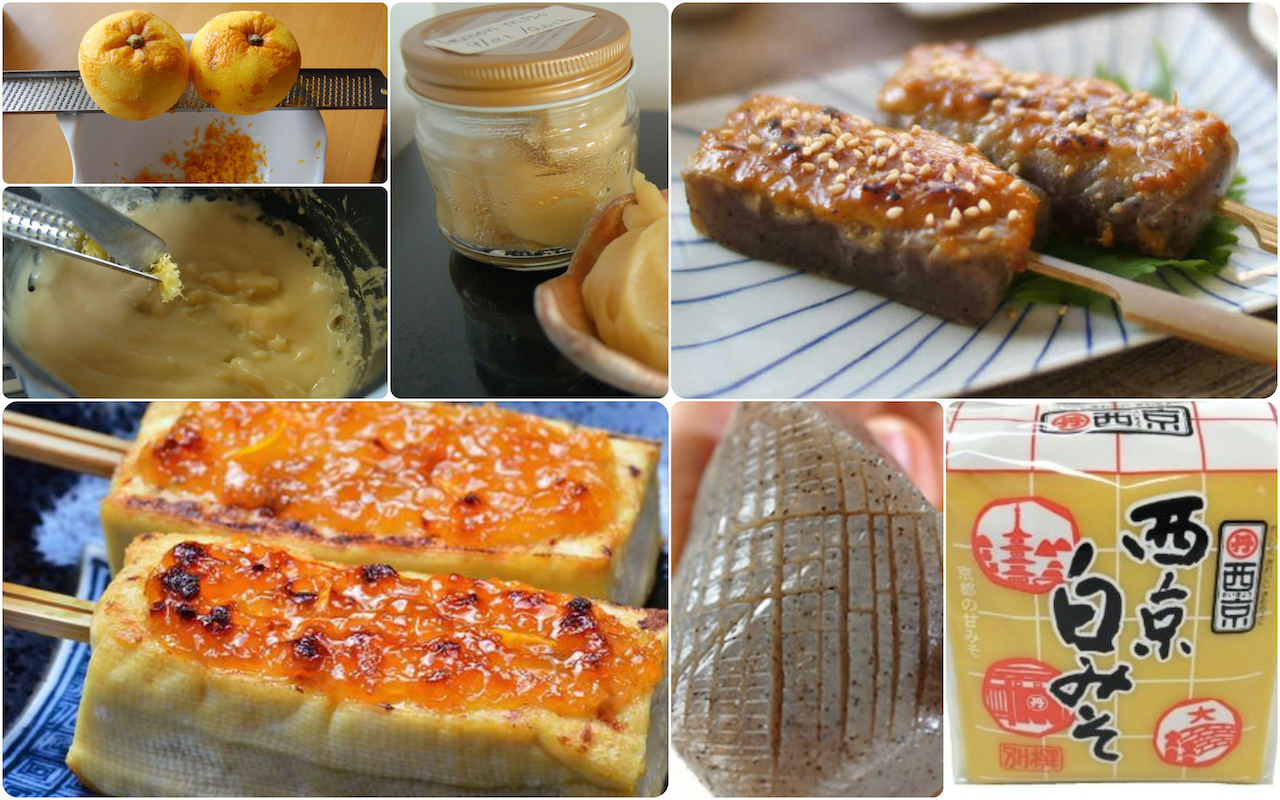
The Japanese delight in bringing elements — often fresh produce — of each season to table. Yuzu citrus fruits ripen from green to golden yellow as autumn turns to winter. As yuzu ripen, the peels become especially fragrant and the tart juice mellows a bit. One way of capturing the essence of December and bringing it to table is to infuse light/white miso with yuzu zest to make a sauce. This YUZU MISO sauce can be a dip for raw vegetables, be transformed into a salad dressing by adding a bit of olive oil and a drizzle of rice vinegar, or slathered on tōfu, konnyaku and/or vegetables that are then briefly broiled, dengaku style.
This PROJECT YUZU MISO is about making your own citrusy-flavored miso sauce and using it in creative ways. If you can source real yuzu you are in for a treat. If you can’t try a mixture of orange, lemon and grapefruit to approximate the sweet, slightly bitter, tart flavors of yuzu. Be sure your fruit is organically grown; you do not want to consume the zest of fruit that has been sprayed with chemicals.
DOWNLOAD a recipe for ゆず味噌・YUZU MISO
After zesting fresh yuzu, the remaining fruit can be used to perfume your bath. In fact, the Japanese do just that at the start of winter, on TŌJI which, most years, coincides with December 22. The custom is called YUZU YU ゆず湯. Find out more about this at my Kitchen Culture blog.