PROJECT: Serving Steamed Foods Piping Hot
This PROJECT is about serving chawan mushi, a dish that requires heatproof cups to cook the egg custards in and to bring them piping hot to table.
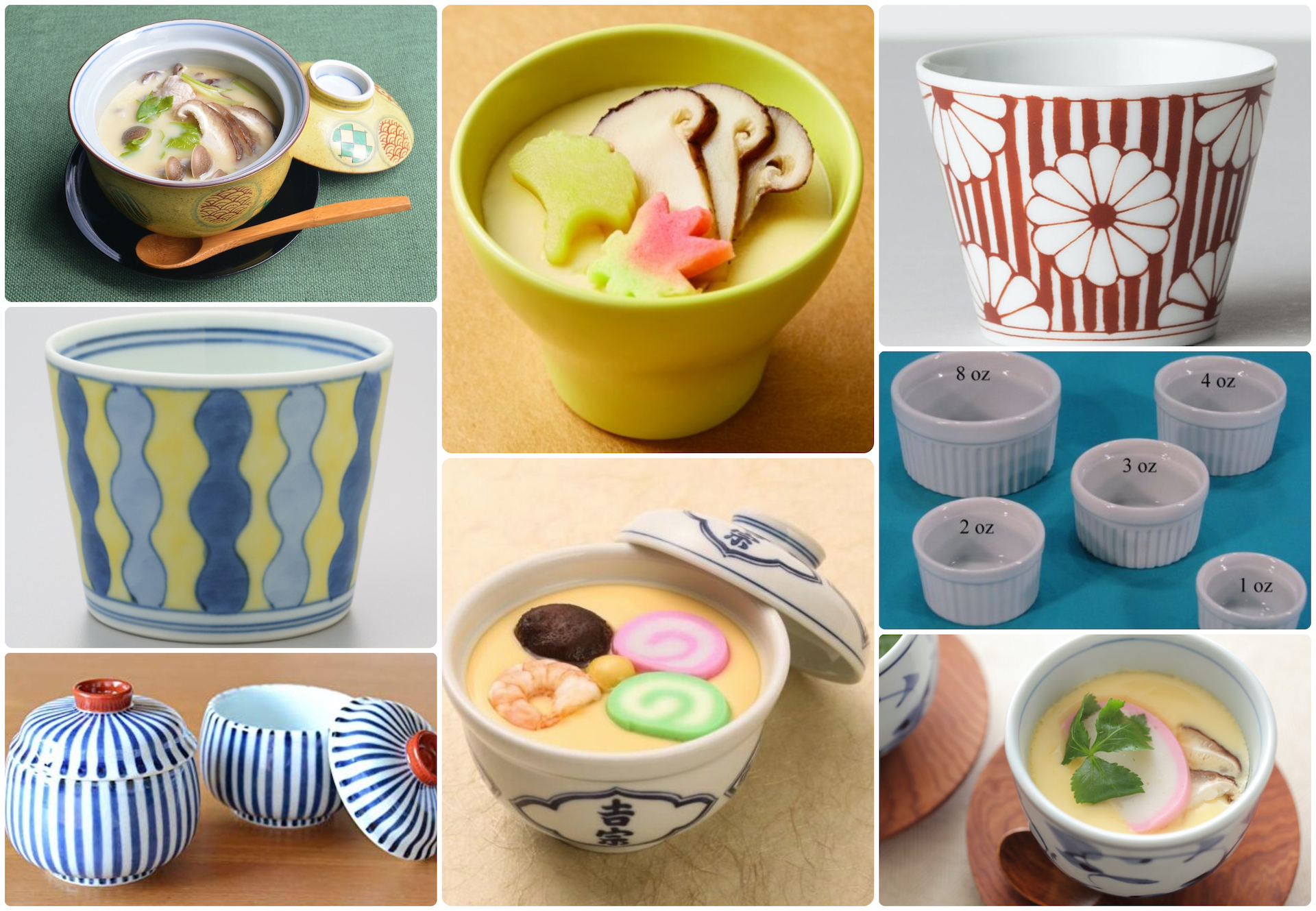
Because Japan’s food culture places importance on the presentation of food, often specialized tableware is chosen. Indeed, for serving steamed foods there is a vessel called 蒸し茶碗 mushi-jawan (steam + cup), one of several pieces of tableware that is lidded to keep foods piping hot. The lids that are part of mushi-jawan vessels, however, are placed on the cups as they come from the steamer; they are not used during the cooking process.
Chawan mushi custards are best served in lidded mushi-jawan vessels though they could also be cooked and served in other handle-less cups such as ramekins or choko 猪口.
If your cups do not have lids you will need to hold the custards hot for a few minutes after steaming them. The easiest way to do this is by setting a piece of parchment paper over each cup, carefully balancing the paper on the rim. Place a saucer or other small flat plate on top of the paper to anchor it. Using foil to keep the cups warm is not recommended since condensation easily forms on the underside and drips down on the custards, pockmarking them.
To learn more about chawan mushi and to download a recipe for the savory, steamed egg custards visit my Kitchen Culture blog and read my October, 2024 newsletter.