
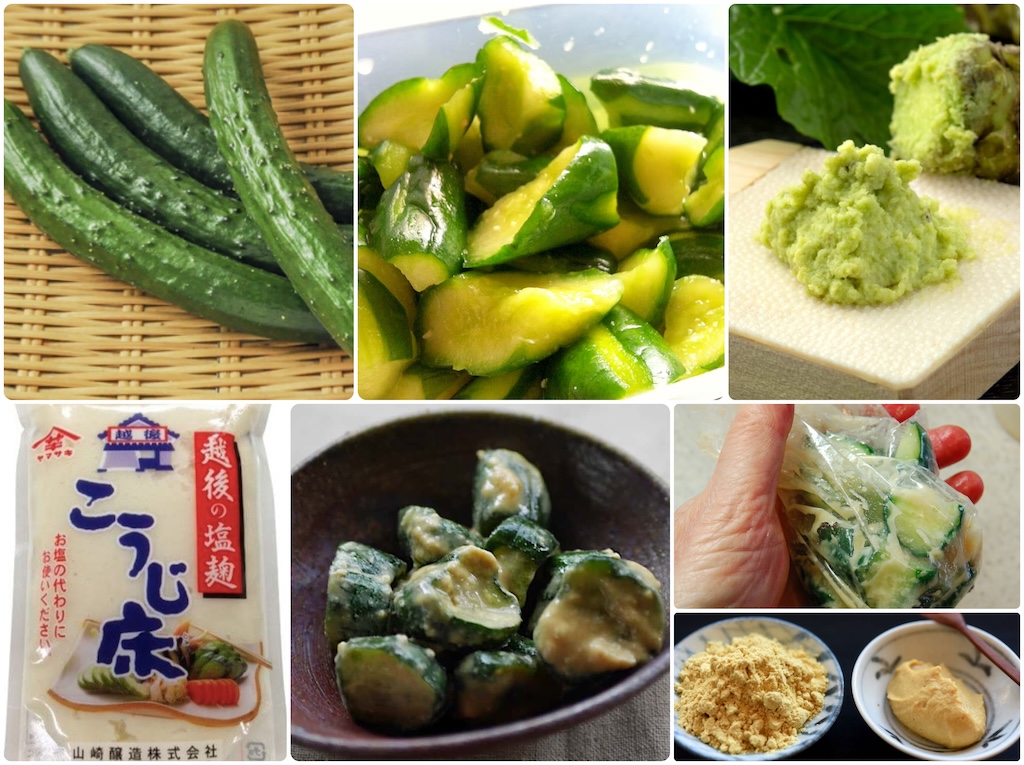
PROJECT Crunchy, Spicy Cucumbers

Sep 2, 2025 | Kitchen PROJECTS

Crunchy, Spicy Cucumbers

The catergory of foods known as tsukémono runs the gamut from sokuseki (“impatient”) and asazuké (lightly pickled) to furuzuké (literally “old” or overly pickled) foods that are intensely-flavored and/or deeply fermented.

There are dozens of kinds of cucumber tsukémono; the vegetable itself lends itself to being paired with a wide range of flavors. Below two recipes, one featuring karashi mustard, the other wasabi horseradish.

Both of these cucumber pickles would be considered asazuké because they can easily be assembled in less than 30 minutes and ready to eat shortly thereafter. Both retain their zippy taste and crunch for 4 or 5 days though the intensity of flavor and color may fade a bit as time passes. Best to refrigerate, especially in hot weather. 
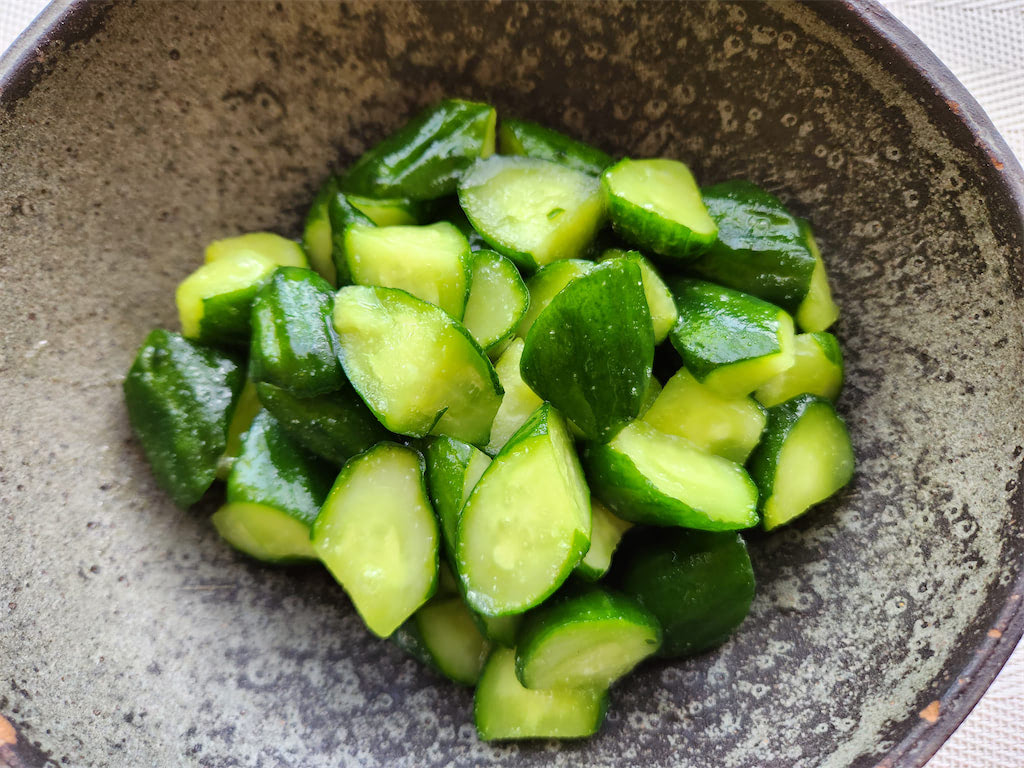
Wasabi-Pickled Cucumbers

 胡瓜のわさび漬け
Kyūri no Wasabi-Zuké
Download the recipe.

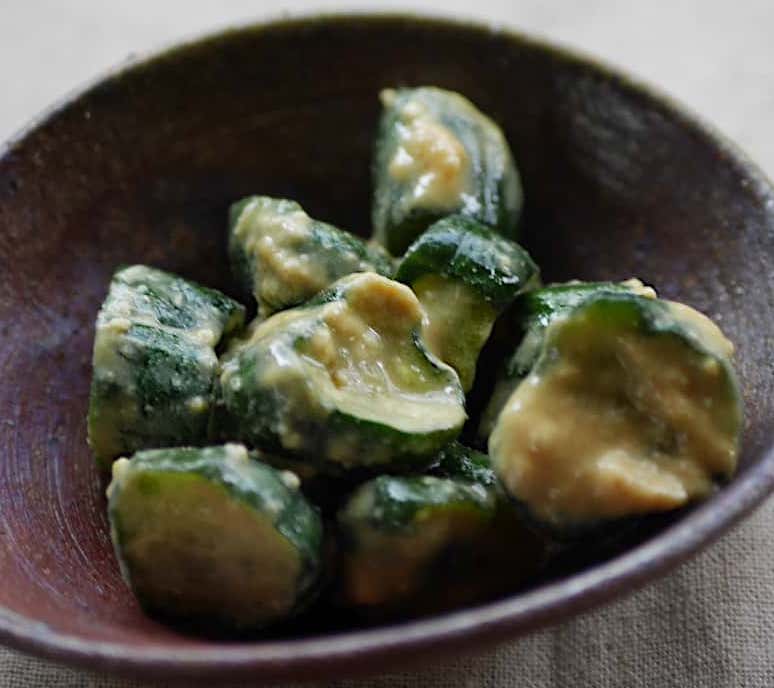
Mustard-Spiked Kōji-Pickled Cucumbers

胡瓜の辛子麹漬け
Kyuuri no Karashi Kōji-Zuké

Download the recipe.

Download your copy of the SEPTEMBER 2025 newsletter

about 

残暑 Zansho  Lingering Heat and  納涼 Nōryō Escaping the Heat 

Oysters

Oysters

Throughout the world, oysters have been a popular food source since ancient times. Archeologic evidence in Japan, in the form of kaizuka (shell mounds), dates to the Jōmon period (14,000-300 BCE). Oysters had been abundant for millennia and harvested in their natural...

PROJECT Kagami-Biraki

PROJECT Kagami-Biraki

In most parts of Japan, kagami mochi is on display for several weeks, by which time the omochi rice cakes have dried out and begun to crack. KAGAMI-BIRAKI, the ritual smashing of the dried out omochi, is performed on January 11, this date having been fixed in the 17th...

Kagami Mochi

Kagami Mochi

At New Years’ time, the Japanese decorate their homes with a special display called KAGAMI MOCHI. There are many regional variations on the theme but typically two large rounds of omochi rice taffy are stacked with a daidai 橙 (bitter orange) on top. The arrangement is...

Symbolic Pine

Symbolic Pine

Because pine trees are hardy evergreens, they are a symbol of longevity and resilience in Japanese culture. As such they are a key motif used at New Year’s. Various foods are configured to evoke the image of pine needles (matsuba 松葉 ) and pine cones (matsukasa 松笠 )....

Recent Posts & Projects