Katsura Muki, gossamer thin peels

Nov 10, 2025 | Kitchen Culture

KATSURA MUKI

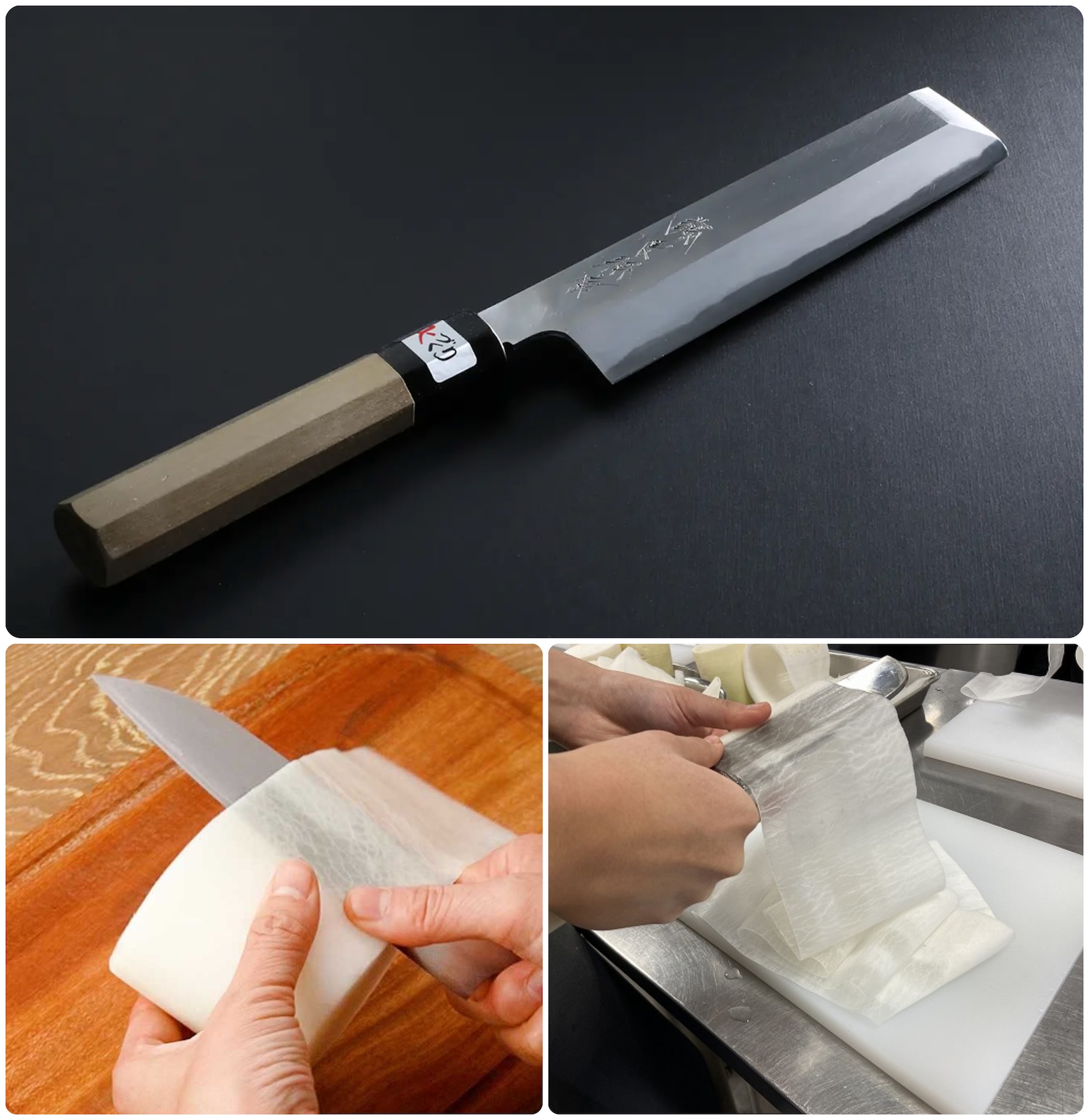
Daikon radish is peeled into long, seemingly impossibly thin ribbons in a cut known as katsura muki. The skill needed to produce these peels is the most basic requirement in any Japanese professional kitchen. It typically takes months (if not years) of daily practice to master the technique.

Want to give it a go? Check out PROJECT katsura muki for a basic tutorial.

As you practice, you’ll have lots of peels and peeled chunks of daikon. Below are some ways to enjoy them.
Kimpira

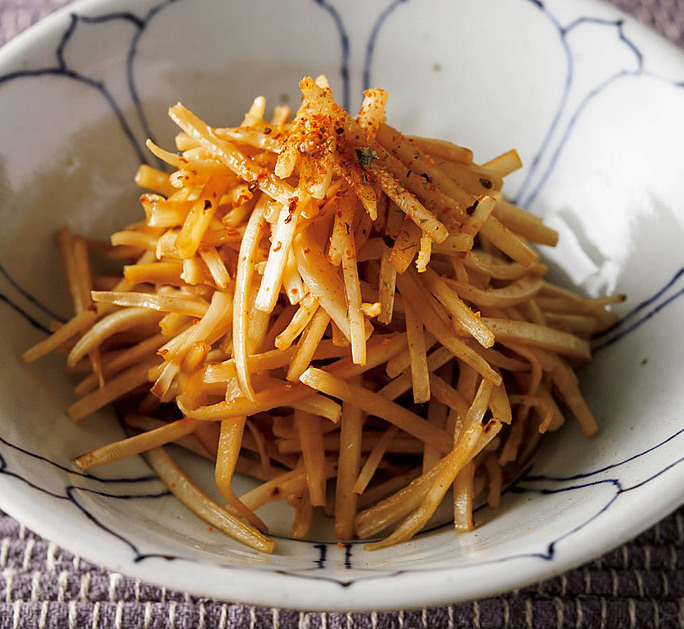
Kimpira stir-fry 金平

Kimpira is a slightly sweet, tingly-hot stir-fry — a fiery blend of seven spices called shichimi tōgarashi is always added at the end of cooking.

Making kimpira from daikon peels is perfect! Use the peels from your katsura muki practice sessions.
Download the recipe.

Piping Hot Daikon with Yuzu Miso

風呂吹き大根 Furofuki Daikon

Tender-prepped and then simmered in dashi broth and serve piping hot – so hot you will need to blow away the steam (that’s the origin of the dish’s name) the daikon is then served with a miso sauce — yuzu miso is my favorite.

After practicing your katura muki cutting technique you’ll have lots of chunks of peeled daikon. This is one just one of many delicious ways to prepare peeled daikon chunks.

DOWNLOAD the recipe

Download a copy of my November 2025 newsletter about KATSURA MUKI peeling. 

Using Food Fully

Using Food Fully

Meals planned around a single ingredient prepared in many ways are referred to as tsukushi (or zukushi) 尽くし menus. The verb tsukusu means "to use, or consume, entirely." This no-waste approach is both a frugal and practical way to cook, making the most of what is...

The Language of Learning

The Language of Learning

Although we are all born with some innate capabilities, we also must LEARN in order to survive and thrive. Different cultures manage learning differently. The Japanese language has two verbs that can be used when talking about acquiring information and experience....

Oysters

Oysters

Throughout the world, oysters have been a popular food source since ancient times. Archeologic evidence in Japan, in the form of kaizuka (shell mounds), dates to the Jōmon period (14,000-300 BCE). Oysters had been abundant for millennia and harvested in their natural...

Kagami Mochi

Kagami Mochi

At New Years’ time, the Japanese decorate their homes with a special display called KAGAMI MOCHI. There are many regional variations on the theme but typically two large rounds of omochi rice taffy are stacked with a daidai 橙 (bitter orange) on top. The arrangement is...

Recent Posts & Projects