PROJECT Crunchy, Spicy Cucumbers

Sep 2, 2025 | Kitchen PROJECTS

Crunchy, Spicy Cucumbers

The catergory of foods known as tsukémono runs the gamut from sokuseki (“impatient”) and asazuké (lightly pickled) to furuzuké (literally “old” or overly pickled) foods that are intensely-flavored and/or deeply fermented.

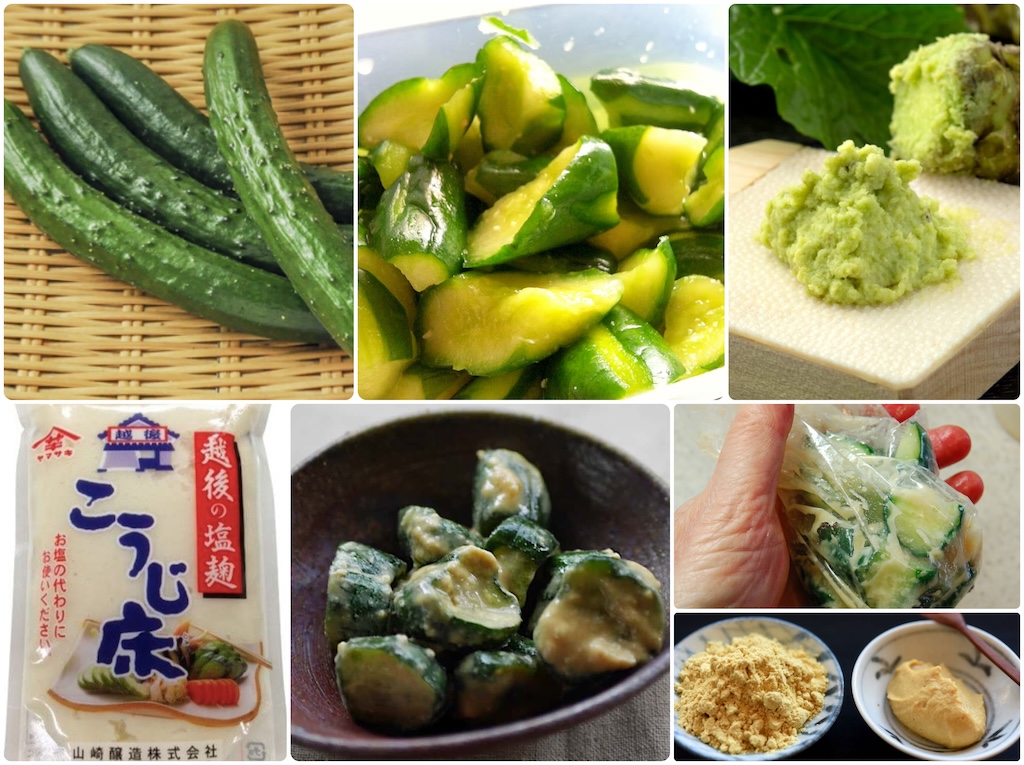
There are dozens of kinds of cucumber tsukémono; the vegetable itself lends itself to being paired with a wide range of flavors. Below two recipes, one featuring karashi mustard, the other wasabi horseradish.

Both of these cucumber pickles would be considered asazuké because they can easily be assembled in less than 30 minutes and ready to eat shortly thereafter. Both retain their zippy taste and crunch for 4 or 5 days though the intensity of flavor and color may fade a bit as time passes. Best to refrigerate, especially in hot weather. 
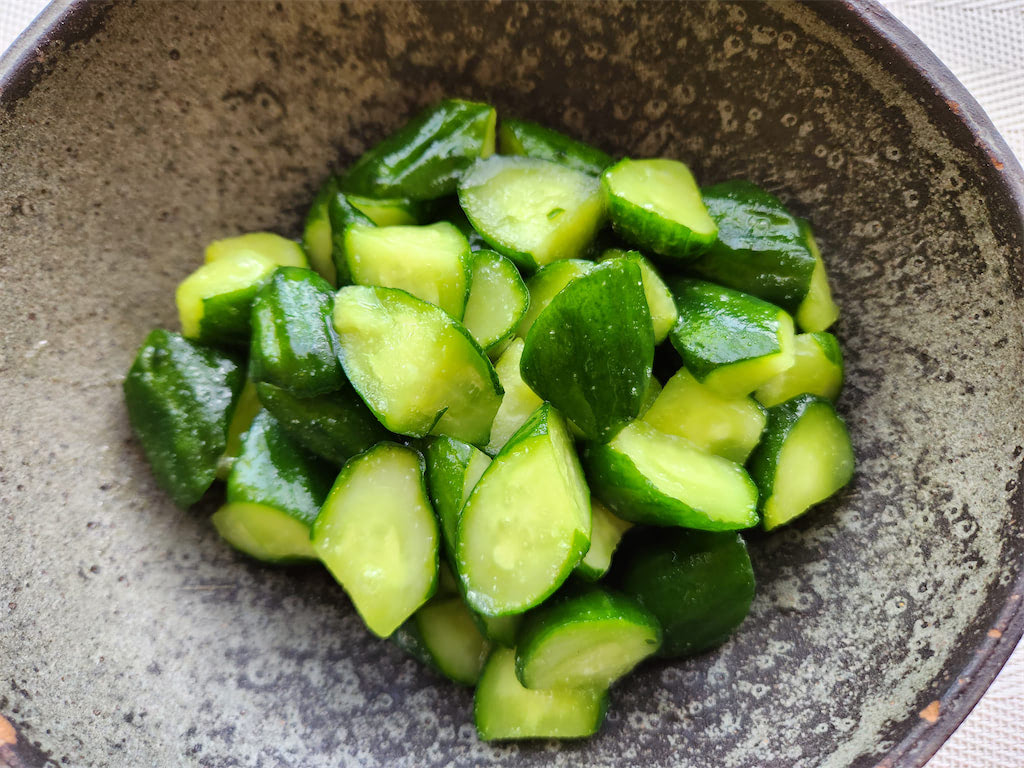
Wasabi-Pickled Cucumbers

 胡瓜のわさび漬け
Kyūri no Wasabi-Zuké
Download the recipe.

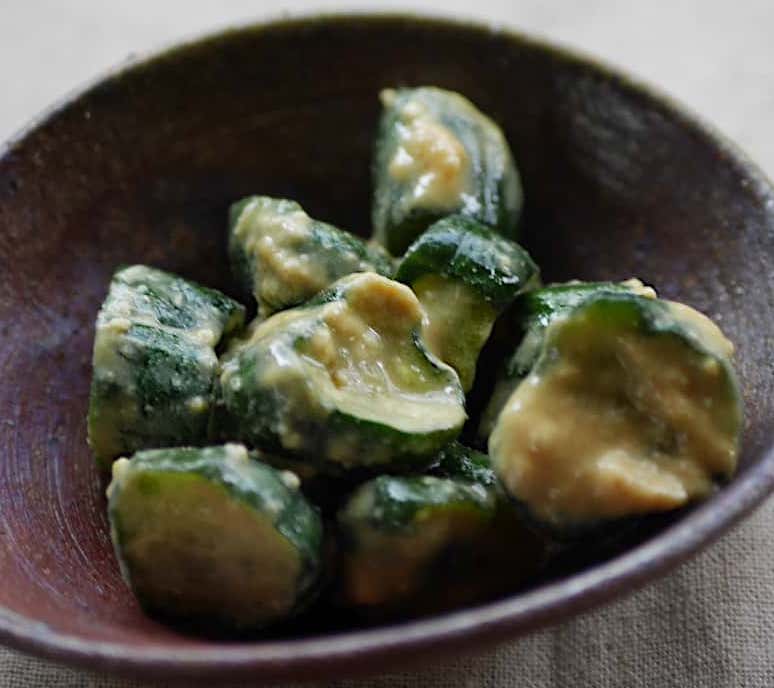
Mustard-Spiked Kōji-Pickled Cucumbers

胡瓜の辛子麹漬け
Kyuuri no Karashi Kōji-Zuké

Download the recipe.

Download your copy of the SEPTEMBER 2025 newsletter

about 

残暑 Zansho  Lingering Heat and  納涼 Nōryō Escaping the Heat 
PROJECT Symbolic Pine

PROJECT Symbolic Pine

Because pine trees are hardy evergreens, they are a symbol of longevity and resilience in Japanese culture. As such they are a key motif used at New Year’s. Various foods are configured to resemble pine. Cones (matsukasa) and needles (matsuba) are the most frequently...

Katsura Muki, gossamer thin peels

Katsura Muki, gossamer thin peels

Daikon radish is peeled into long, seemingly impossibly thin ribbons in a cut known as katsura muki. The skill needed to produce these peels is the most basic requirement in any Japanese professional kitchen. It typically takes months (if not years) of daily practice...

PROJECT Katsura Muki

PROJECT Katsura Muki

This PROJECT is about learning to make katsura muki, a classic cutting technique in the traditional Japanese kitchen. When done properly, long, flowing, continuous and incredibly thin peels are produced from vegetables such as daikon radish, cucumbers and carrots. In...

Tsutsumu… wrapping, enveloping

Tsutsumu… wrapping, enveloping

Written with calligraphy for “bath” (furo 風呂) and “spread out” (shiki 敷) the word is rather curious for a piece of cloth. It seems the origins hark back to the Muromachi Period (1336-1573 AD) when Daimyo lords would spread out a cloth in which to wrap their clothing...

Recent Posts & Projects