TSUTSUMU: Wrapping, enveloping
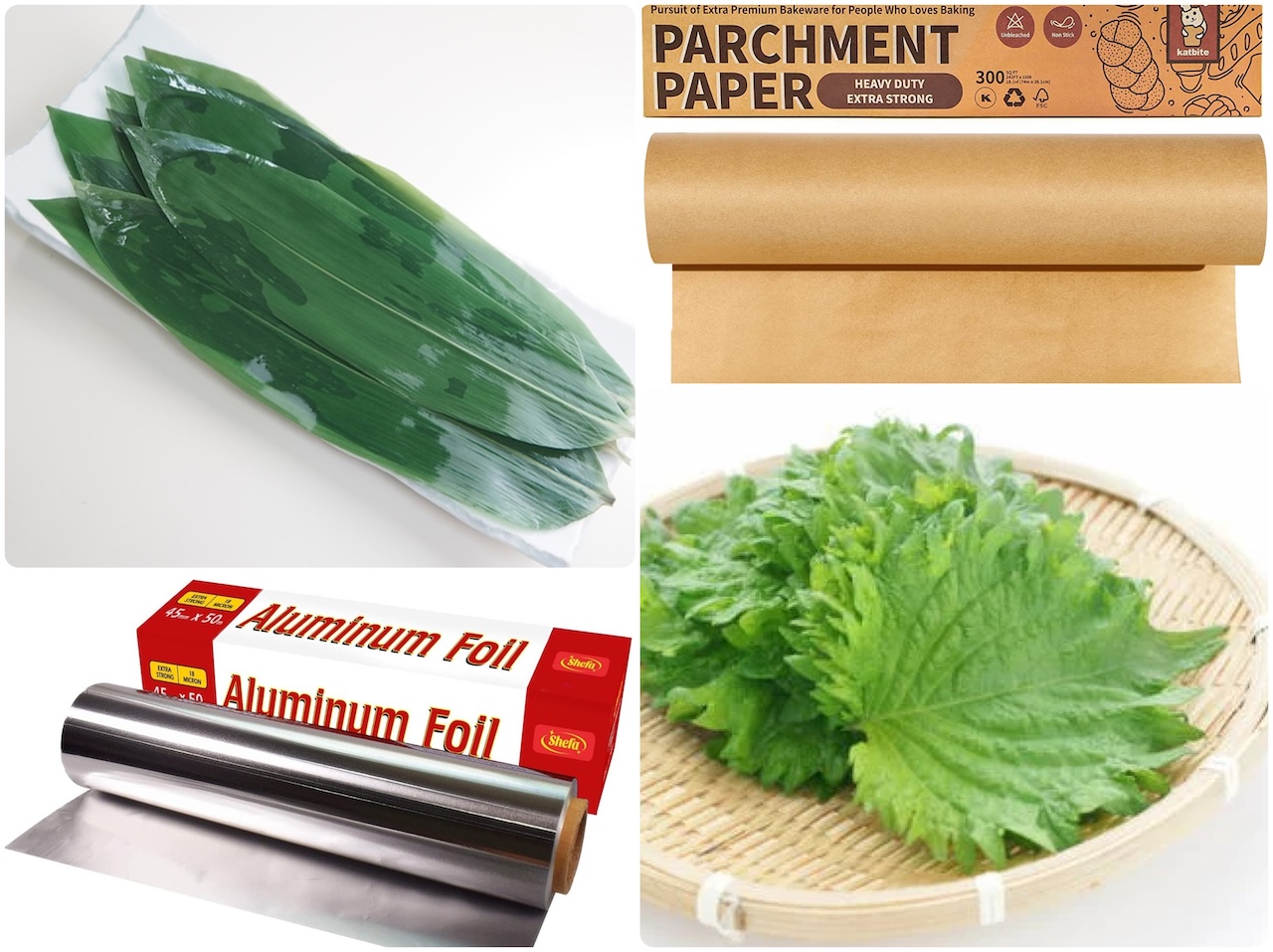
Wrapped foods are varied. Sometimes parchment or foil is used to enclose foods before they are cooked. Other times the wrappers are edible making pop-in-your-mouth savory packets. Below, two examples for you to try in your kitchen. Enjoy!
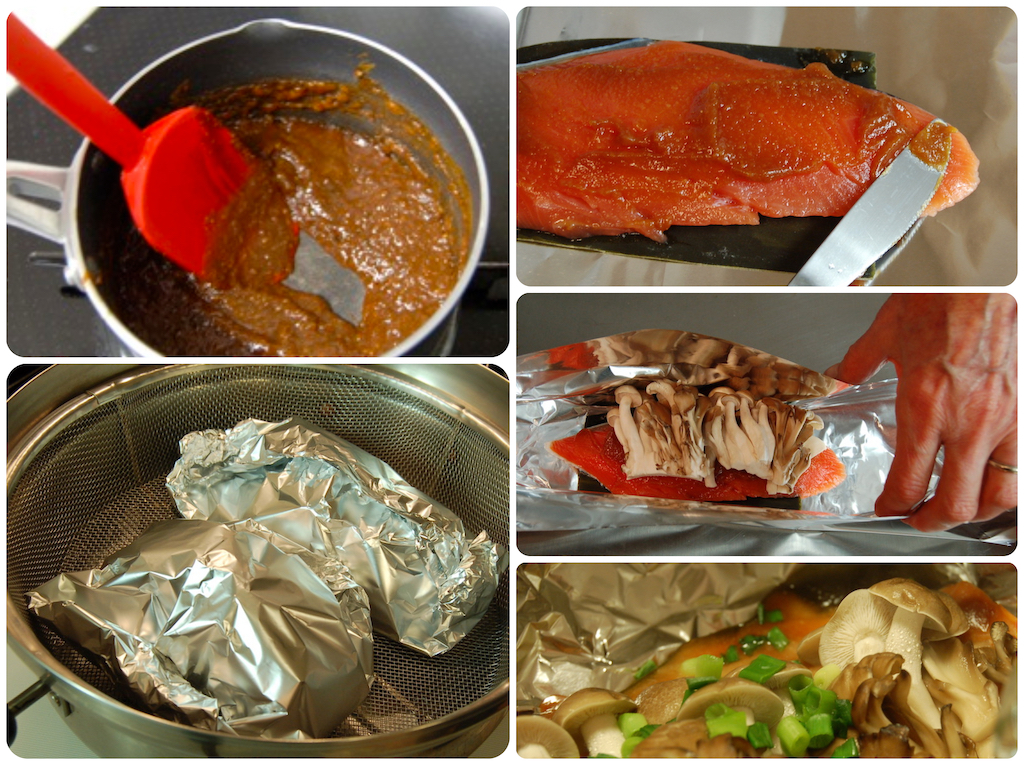
Miso-Slathered Salmon Steamed with Mushrooms in Foil Packets
包み蒸し
Archaeological evidence dating back at least 5,000 years shows that the early inhabitants of the Tohoku region of Japan – the Jomon peoples—fished for salmon. Millennia later salmon continues to grace Tohoku tables on a regular basis. Here, salmon is combined with a variety of mushrooms and Sendai miso, a robustly flavored, russet-colored, fermented bean paste native to the area.
The miso sauce is terrific spread on many kinds of fish, from mild-flavored flounder to more assertive oily fishes such as mackerel. Well-drained, firm tōfu can also be prepared similarly.

Piquant Miso Wrapped in Shiso Leaves
Shiso Maki しそ巻き
Japan’s Tohoku region is justly famous for its walnuts – large, meaty orbs that produce an incredibly rich, aromatic paste when roasted and crushed. The Tohoku is also known for its miso – a full-bodied red (burnished brown, really) fermented soybean paste called Sendai miso. In this dish the two local champions combine with toasted sesame to make an addictively tasty filling for herbaceous shiso leaves. Some Tohoku chefs will add a spicy spark to the sweet-and-salty miso mixture by adding a pinch of fiery shichimi tōgarashi to the filling.
Download a copy of my October 2025 newsletter about TSUTSUMU (wrapping), check it out.