Kagami-Biraki 鏡開き
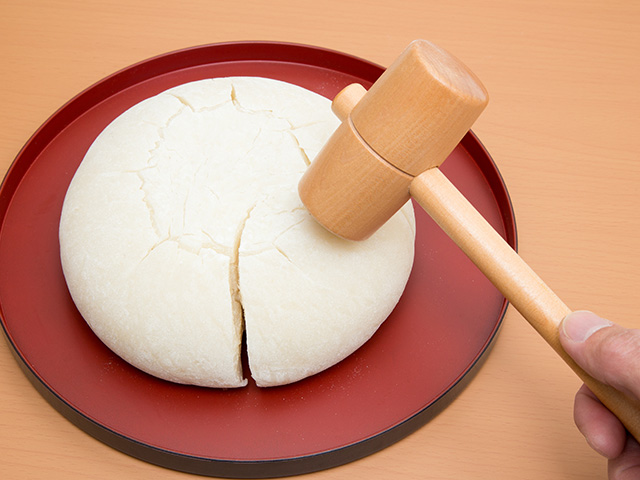
In most parts of Japan, kagami mochi is on display for several weeks, by which time the omochi rice cakes have dried out and begun to crack. KAGAMI-BIRAKI, the ritual smashing of the dried out omochi, is performed on January 11, this date having been fixed in the 17th century.
Both the mottainai 勿体無い approach to not wasting food and the practice of sharing food and drink with the dieties, known as naorai 直会, compel the Japanese to re-purpose the broken bits of omochi.
However, often moldy spots appear.
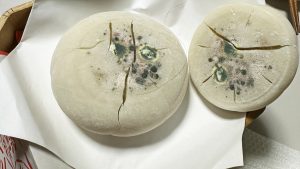
Traditional Japanese Granny-wisdom claims no harm will be done by cutting away the blue-green moldy spots that grow on omochi. Indeed, in the old days, ao kabi (blue mold) was cultivated for its medicinal (antibiotic) properties, placing it on open wounds to avoid infection. Anyone with allergies to penicillin (or similar antibiotics), however, should not eat omochi that has developed moldy spots.
Currently nutrition scientists in Japan advise the public NOT to eat omochi that has turned moldy, even after cutting away visible spots. It is difficult for non-professionals, they warn, to determine the difference between harmful molds and benign ones merely by color. Heat (cooking), they add, does not render toxic molds harmless.
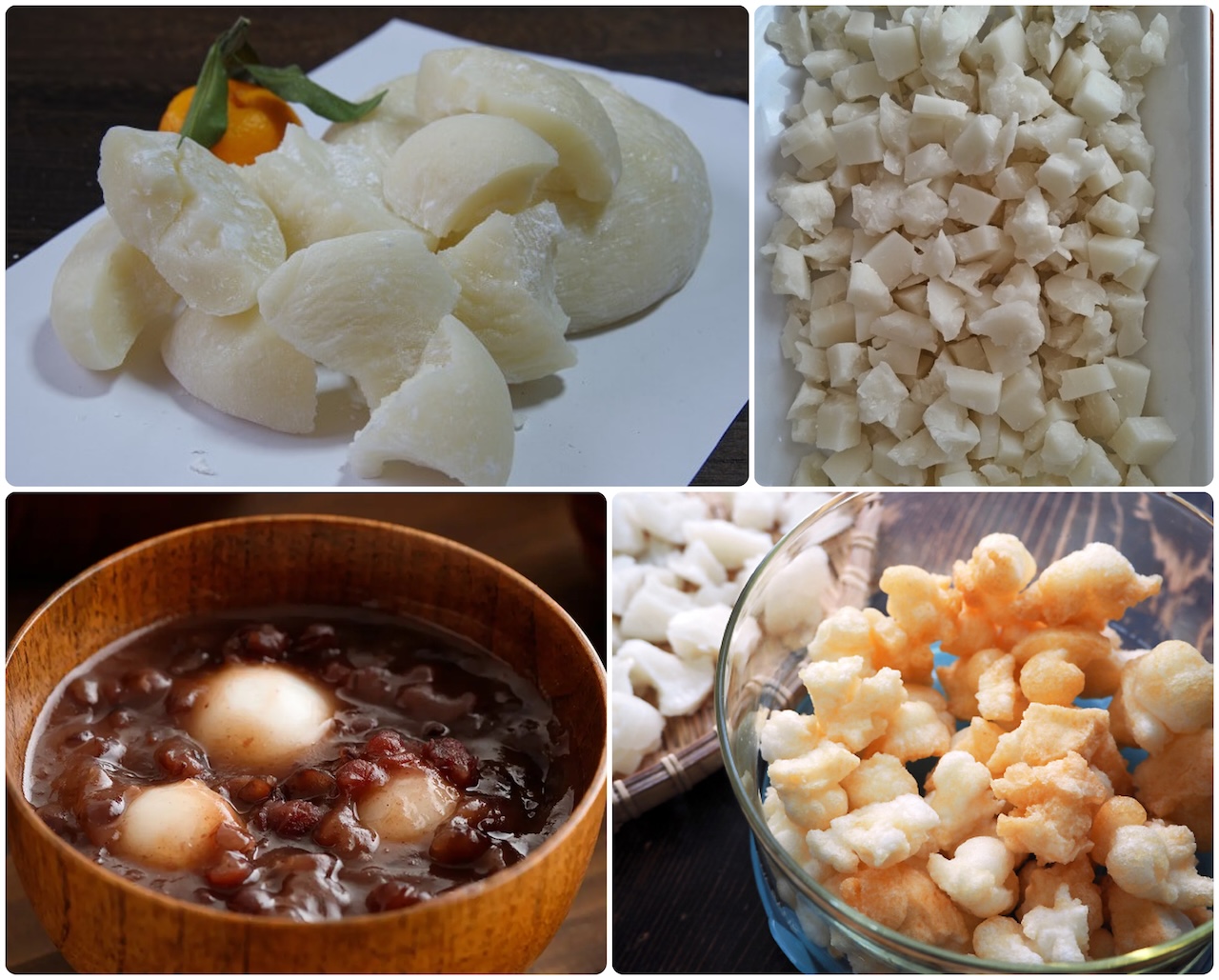
Re-purposing Cracked Omochi
Two of the most common uses of OKAKI お欠き bits of cracked omochi rice cake are oshiruko お汁粉, a sweet red bean soup with chewy rice dumplings, and crunchy araré 霰 “hail” chips.
Download a recipe for araré
Download a copy of my January 2026 newsletter about KAGAMI MOCHI.