Manganji Pepper

Aug 22, 2019 | Kitchen Culture, Summer

Manganji tōgarashi

Manganji Tōgarashi

万願寺唐辛子

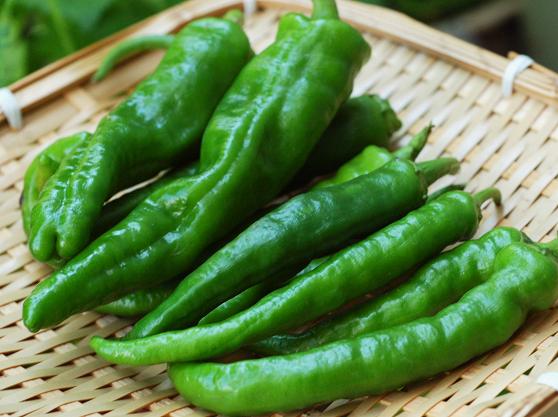
Manganji tōgarashi are mild, tender capsicums with an earthy-rich aroma. They typically run about 100 SHU (Scoville Heat Units) compared to jalapeno that average 5000 SHU.

Manganji are named after the area near Maizuru City (Kyoto) where the varietal was developed. About 90 years ago, Japanese growers created this hybrid from their native Fushimi tōgarashi (a slender, slightly incendiary capsicum), marrying it to the bulbous and sweet, California Wonder bell pepper.
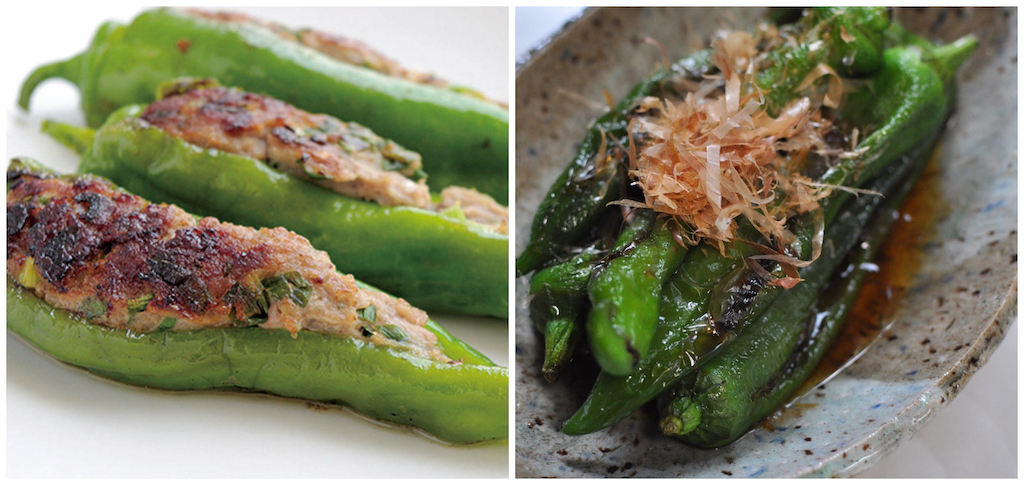
Left: Manganji tōgarashi stuffed with miso-chicken and glaze-seared

Right: Manganji tōgarashi showered with smoky fish flakes

Amenable to a variety of cooking methods, one classic way to prepare manganji tōgarashi is to skillet-roast them. The peppers can be finished with a shower of smoky katsuo-bushi flakes… or grated ginger if you want to keep the dish vegetarian or vegan-friendly.

Manganji tōgarashi are terrific slit, stuffed and seared, too.

DOWNLOAD recipes for
Manganji Togarashi no Okaka Ae

Manganji Stuffed with Miso-Chicken

Symbolic Pine

Symbolic Pine

Because pine trees are hardy evergreens, they are a symbol of longevity and resilience in Japanese culture. As such they are a key motif used at New Year’s. Various foods are configured to evoke the image of pine needles (matsuba 松葉 ) and pine cones (matsukasa 松笠 )....

Katsura Muki, gossamer thin peels

Katsura Muki, gossamer thin peels

Daikon radish is peeled into long, seemingly impossibly thin ribbons in a cut known as katsura muki. The skill needed to produce these peels is the most basic requirement in any Japanese professional kitchen. It typically takes months (if not years) of daily practice...

Tsutsumu… wrapping, enveloping

Tsutsumu… wrapping, enveloping

Written with calligraphy for “bath” (furo 風呂) and “spread out” (shiki 敷) the word is rather curious for a piece of cloth. It seems the origins hark back to the Muromachi Period (1336-1573 AD) when Daimyo lords would spread out a cloth in which to wrap their clothing...

Escape the Lingering Heat

Escape the Lingering Heat

The ancient, lunar-based koyomi almanac marks the start of autumn with risshū 立秋. When hot weather continues beyond that time, the phenomenon is referred to as zansho 残暑, literally "lingering heat." On the Gregorian calendar, this year (2025) risshū arrived on August...

Recent Posts & Projects