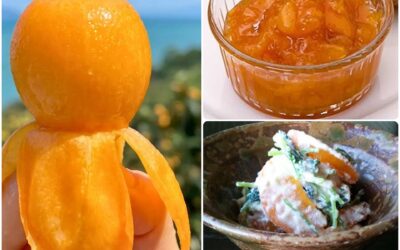

Japanese Citrus: SUDACHI & KABOSU
The Japanese have consumed a variety of citrus for millennia, enjoying both the juice and peels of the fruit. Many who reside outside Japan have become familiar with yuzu, a member of the Rutaceae (citrus) family primarily prized for its aromatic yellow peel but SUDACHI and KABOSU, both enjoyed as green-skinned citrus fruits, remain relatively unknown. I urge you to seek out either (better yet, both) since these fabulous lime-like fruits have such a wide culinary application.
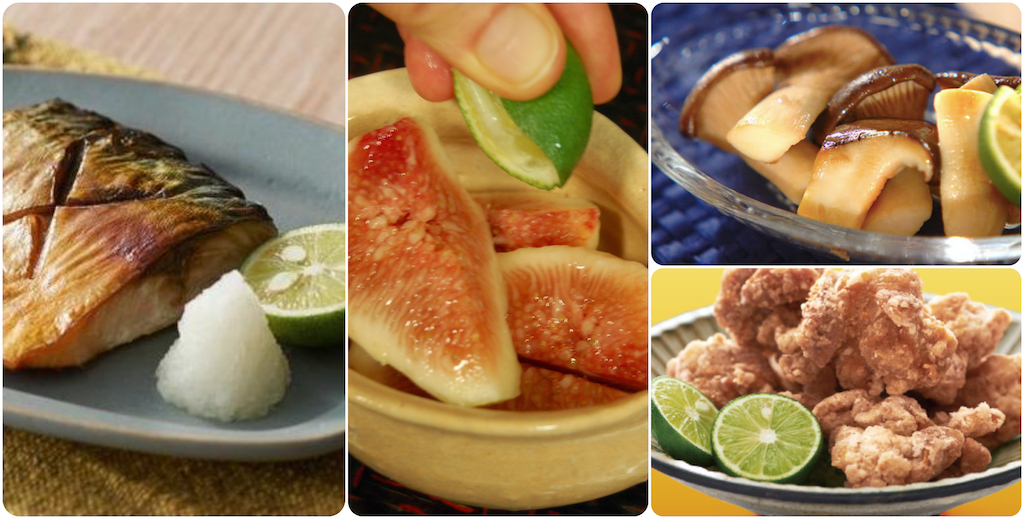
A wedge of citrus to brighten and enhance other foods
A wedge or slice of SUDACHI and/or KABOSU often accompanies grilled or fried fish, chicken and mushroom dishes. Download a recipe for Skillet-Seared Éringi Mushrooms with Sudachi Lime
Fall fruits such as figs and pears also pair nicely with sudachi or kabosu.
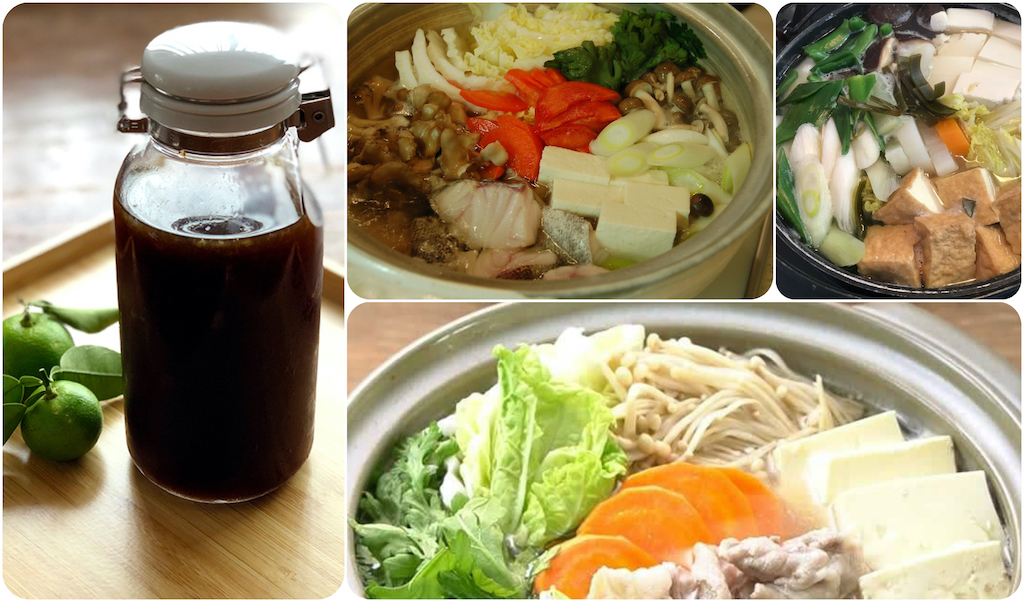
One-pot nabémono with citrusy dips
When chilly weather arrives, gathering around a bubbling pot of nabémono can’t be beat. When a wide variety of ingredients are included in a single pot these miscellany collections go by the name of yosénabé, literally ingredients that “gather.”
Three examples pictured here hint at the many possibilities — pork, chicken, fish, vegetables and mushrooms galore in addition to tōfu in many forms (blocks of meaty deep-fried abura agé join silky cubes of kinugoshi tōfu in one yosénabé, firm momen-dōfu included with meat in another).
Simmered for a few moments in a simple dashi made from kelp alone or a more complex katsuo-infused stock ingredients are lifted from the pot, dipped in citrusy ponzu sauce and savored.
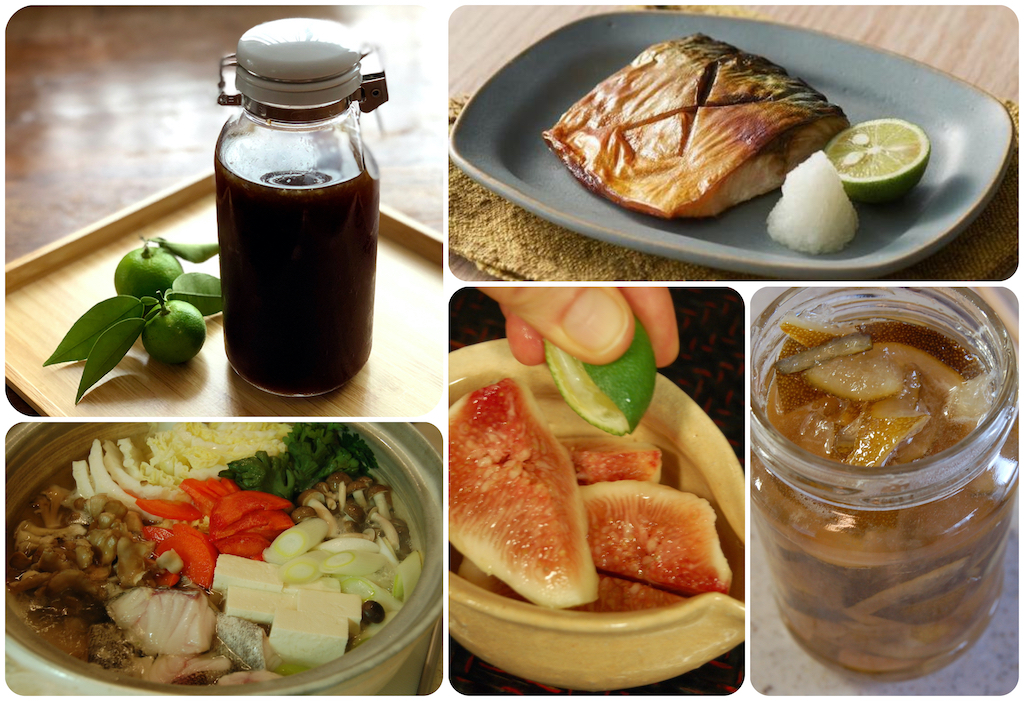
Try using sudachi & kabosu in your kitchen
Japanese citruses can be used in many ways, both sweet and savory.
Sudachi and/or kabosu makes marvelous marmalade… a splash of juice enhances fresh fruit… and cuts through the oilyiness of fish, chicken and meat. The juice is an essential part of ponzu sauce that on its own and as a dip for nabémono.
Or, you could try making a salad dressing by combining the citrus juice with fruity olive oil, nutty sesame oil or spicy chile oil (raayu). You might want to balance the tart flavor with a drizzle of (salty) soy sauce and a touch of sweetness from millet jelly (mizu amé), honey, mirin or sugar.
Further informatiion and inspiration on Japanese citruses available at my Kitchen Culture blog. The theme of the September 2021 newsletter is Sudachi & Kabosu. A copy can be downloaded from my newsletter page.
-79969_400x250.jpeg)