Ohitashi

Nov 12, 2019 | Kitchen Culture, Year-Round

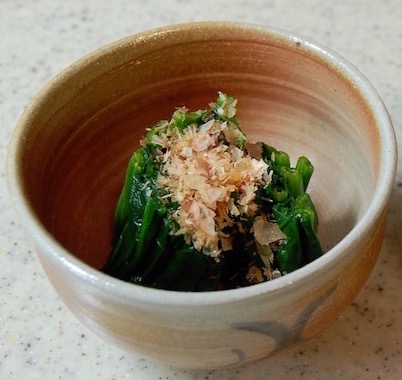
Spinach ohitashi garnished with katsuo-bushi flakes.

Spinach Steeped in Broth

Hōrensō no Ohitashi

ほうれん草のお浸し

The verb hitasu means “to steep” and is the root of the word ohitashi, a classic dish frequently seen on Japanese restaurant menus, served at family dinner tables, and packed into obentō, too.

Typically leafy greens are briefly blanched, then placed in dashi stock to cool. The stock is tinged with light-colored soy sauce and a drop of mirin. As the vegetables cool they become infused with the flavor of the seasoned dashi.
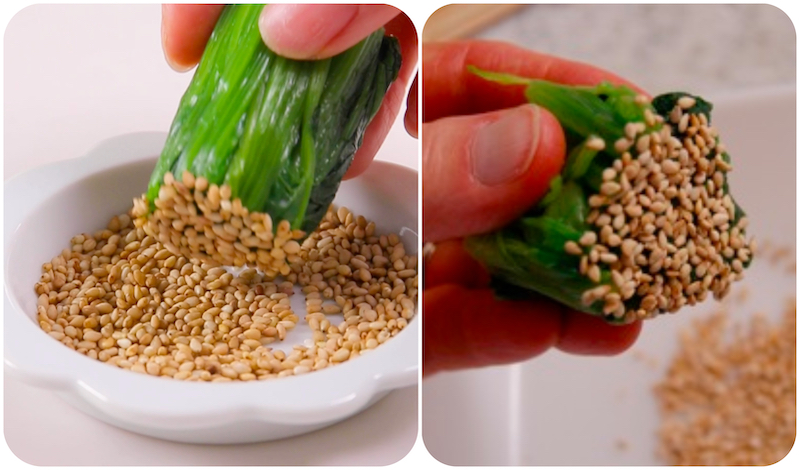
One way to serve ohitashi is as a compact bundle topped with toasted sesame seeds. For instructions on how to do this, DOWNLOAD the recipe for Spinach Steeped in Broth
The Language of Learning

The Language of Learning

Although we are all born with some innate capabilities, we also must LEARN in order to survive and thrive. Different cultures manage learning differently. The Japanese language has two verbs that can be used when talking about acquiring information and experience....

Oysters

Oysters

Throughout the world, oysters have been a popular food source since ancient times. Archeologic evidence in Japan, in the form of kaizuka (shell mounds), dates to the Jōmon period (14,000-300 BCE). Oysters had been abundant for millennia and harvested in their natural...

Kagami Mochi

Kagami Mochi

At New Years’ time, the Japanese decorate their homes with a special display called KAGAMI MOCHI. There are many regional variations on the theme but typically two large rounds of omochi rice taffy are stacked with a daidai 橙 (bitter orange) on top. The arrangement is...

Symbolic Pine

Symbolic Pine

Because pine trees are hardy evergreens, they are a symbol of longevity and resilience in Japanese culture. As such they are a key motif used at New Year’s. Various foods are configured to evoke the image of pine needles (matsuba 松葉 ) and pine cones (matsukasa 松笠 )....

Recent Posts & Projects