PROJECT Bean-Throwing for Setsubun
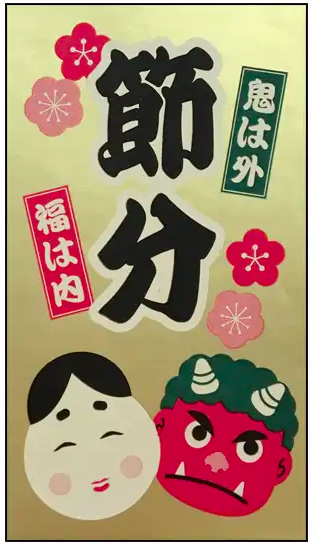
FUKU wa UCHI ONI wa SOTO
Bring in Good Fortune! Throw out the ogres!
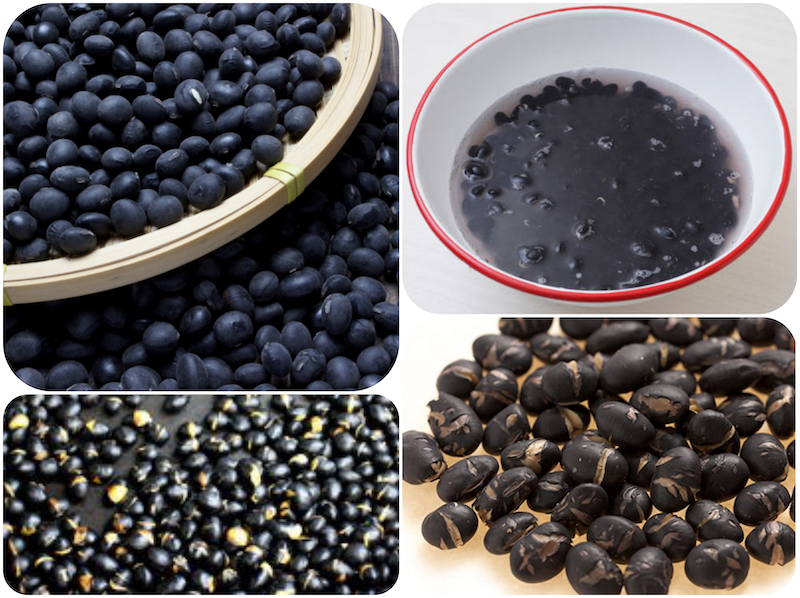
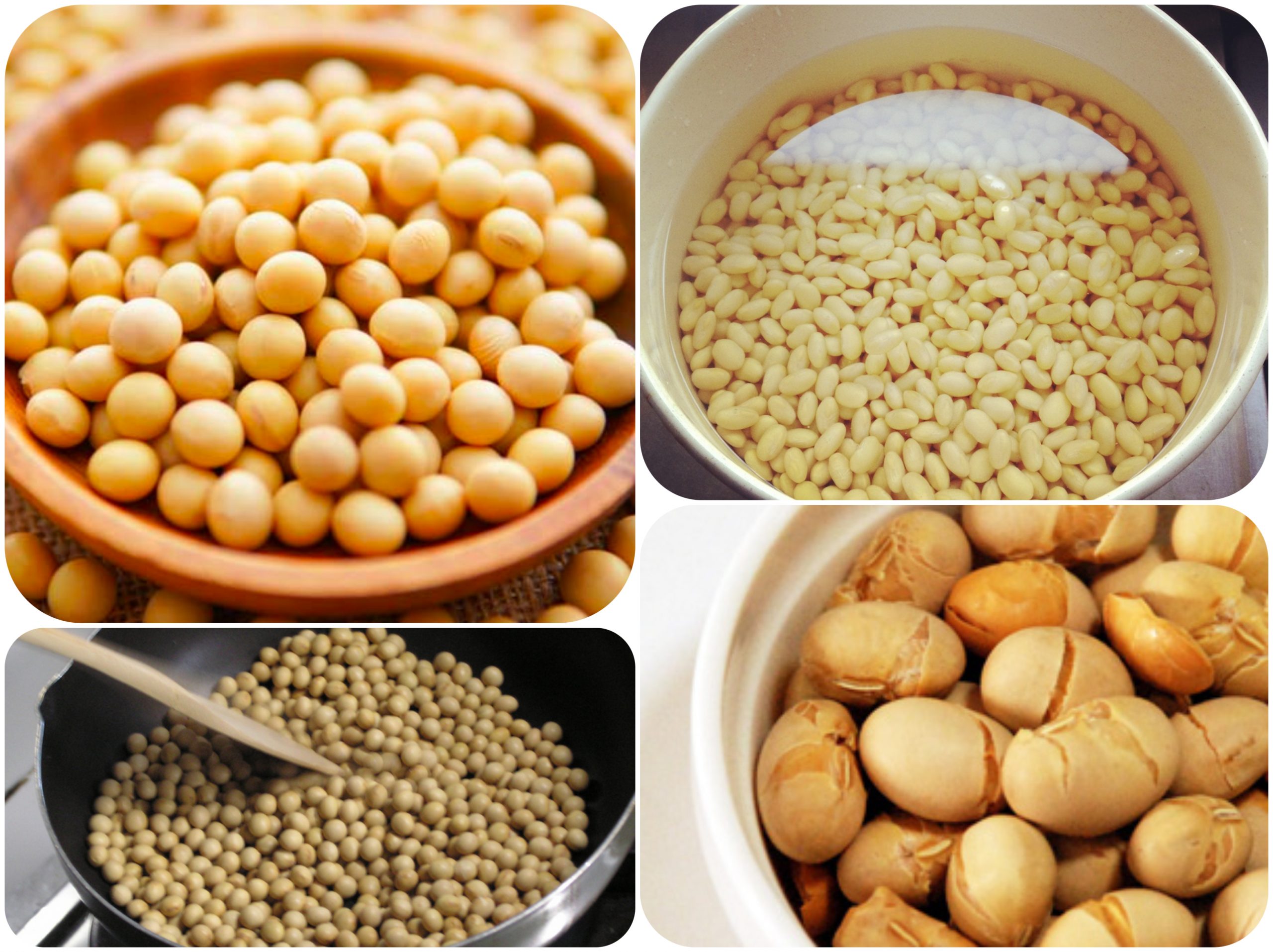
DOWNLOAD a recipe for Fuku Mamé roasted soybeans
節分
Setsubun, a marker on the ancient, lunar-based koyomi calendar indicates the start of a new season; setsubun breaks occur many times during the year. Today in Japan the setsubun that is most celebrated occurs in early February (this year, 2025, it falls on February 2).
Setsubun corresponds to the start of the lunar New Year and in other parts of Asia, China for example, this break is celebrated as New Years. But in Japan, since it switched to using the Gregorian calendar in the Meiji period, Setsubun is quite apart from Oshōgatsu (New Year activities), which comes to a close in mid-January.
Setsubun rituals developed to insure that evil was left behind in the old year, and good things could (and would) happen in the year to come. Oni monsters personify bad things and are traditionally expelled by shouting and throwing dry-roasted soybeans. Throughout Japan, school children make monster masks to don while they yell:
ONI WA SOTO 鬼は外 (throw the ogres out!)
This is shouted standing at the entrance to your home, school and/or place of business while throwing several beans OUT, over your shoulder.
FUKU WA UCHI 福は内 (bring in good fortune!)
This said after you turn around and throw a few beans over your shoulder IN to your place of business, school, or home.
Finally, eat the same number of beans as your age. (I love dry-roasted soybeans and each year I am glad to eat more of them!)
Visit my Kitchen Culture blog to learn about An Edible Ode to Winter: Sleet & Snow.
Read my January, 2025 newsletter.
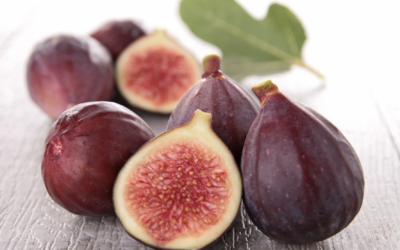
Figs
Figs are one of the world’s oldest cultivated fruits. Images of figs appear in ancient Egyptian murals and are frequently mentioned in the Old Testament and the Qur'an (or Koran, the central religious text of Islam). Figs were known to be an important source of daily...
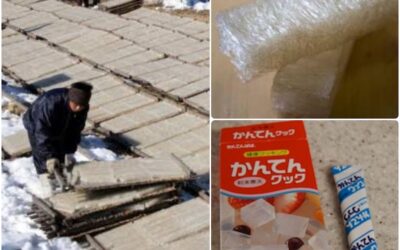
PROJECT Kanten
This project is about cooking with KANTEN, a shelf-stable foodstuff with remarkable gelling properties. It is used to make a wide variety of sweet jellies and savory aspics. Kanten is sold as sticks (they look a bit like brittle cellophane or styrofoam) and in...
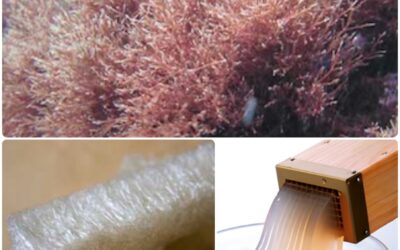
Tengusa (Heavenly Grass)
Making sweet and savory jellies and aspics from the sea begins with harvesting tengusa (天草 literally “heavenly grass”), a group of red marine algae that grow in fairly shallow waters. The most common variety is makusa (Gelidium amansii); in Japan most of the...
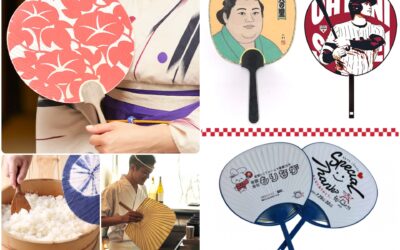
UCHIWA (flat fans)
In Japan, hand-held, flat fans called uchiwa have been creating cooling breezes for millennia. Uchiwa can be many things: In addition to being practical tools in the kitchen (for fanning rice when making sushi... for fanning cooking fires when broiling), uchiwa often...
Figs
Figs are one of the world’s oldest cultivated fruits. Images of figs appear in ancient Egyptian murals and are frequently mentioned in the Old Testament and the Qur'an (or Koran, the central religious text of Islam). Figs were known to be an important source of daily...
PROJECT Kanten
This project is about cooking with KANTEN, a shelf-stable foodstuff with remarkable gelling properties. It is used to make a wide variety of sweet jellies and savory aspics. Kanten is sold as sticks (they look a bit like brittle cellophane or styrofoam) and in...
Tengusa (Heavenly Grass)
Making sweet and savory jellies and aspics from the sea begins with harvesting tengusa (天草 literally “heavenly grass”), a group of red marine algae that grow in fairly shallow waters. The most common variety is makusa (Gelidium amansii); in Japan most of the...
UCHIWA (flat fans)
In Japan, hand-held, flat fans called uchiwa have been creating cooling breezes for millennia. Uchiwa can be many things: In addition to being practical tools in the kitchen (for fanning rice when making sushi... for fanning cooking fires when broiling), uchiwa often...