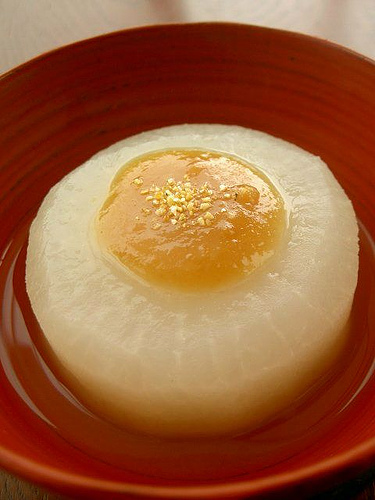
Furofuki Daikon topped with Yuzu-Scented Miso
ふろふき大根
Furofuki Daikon
Piping Hot Radish with Miso Sauce
Furofuki, literally “blowing steam,” is the name given to vegetables – most often daikon radish – that has been tender-prepped and then simmered in dashi broth. Served piping hot – so hot you will need to blow away the steam (that’s the origin of the dish’s name) – it is perfect cold weather fare. Serve the daikon in the broth in which it was cooked sauced with either dark and/or light miso sauce.
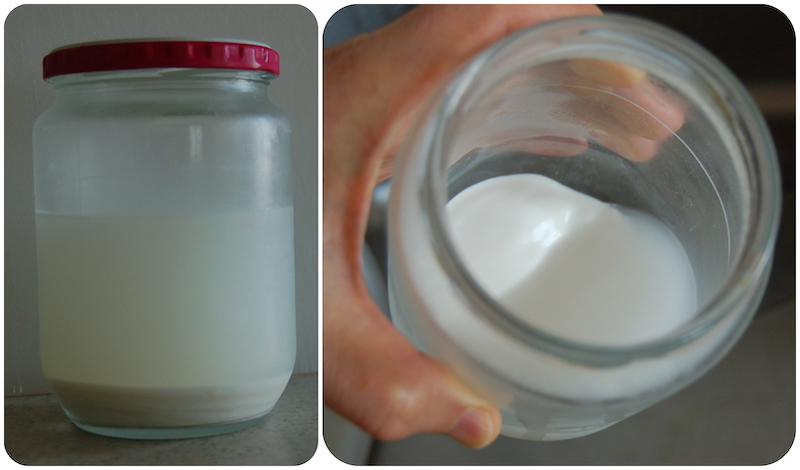
The technique for tender-prepping in togi-jiru (starchy rice water) is a useful one to remember whenever you are cooking daikon, carrots or other firm root vegetables or tubers (fresh bamboo shoots and corn-on-the-cob, too). Tender-prepping makes the vegetables very soft without falling apart (the natural oils in the rice water help them hold their shape). The par-boiling also makes them porous, getting them ready to absorb the flavor of the broth in which the final cooking takes place.
When you wash rice, save the starchy water (called togi-jiru) in a jar, storing it in the refrigerator if you do not use it the same day. After several hours you will notice sediment forming at the bottom of the jar. When ready to use, stir it to recombine.
DOWNLOAD recipe: Furofuki Daikon and 2 Miso sauces
-79969_400x250.jpeg)