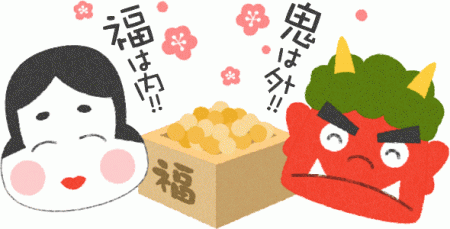
FUKU wa UCHI ONI wa SOTO
Bring in Good Fortune! Throw out the ogres!
節分
Setsubun, a marker on the ancient, lunar-based koyomi calendar indicates the start of a new season; setsubun breaks occur many times during the year. Today in Japan the setsubun that is most celebrated is on February 3, and it corresponds to the start of the lunar New Year. In other parts of Asia, China for example, this break is celebrated as New Years. But in Japan since the switch to using the Gregorian calendar in the Meiji period, Setsubun is quite apart from Osōgatsu (New Year activities, which come to a close in mid-January).
Setsubun rituals developed to insure that evil was left behind in the old year, and good things could (and would) happen in the year to come. Oni monsters personify bad things and are traditionally expelled by shouting and throwing dry-roasted soybeans. Throughout Japan, school children make monster masks they don while they yell:
ONI WA SOTO (throw the ogres out!)
This is said standing at the entrance to your home and/or place of business while throwing several beans OUT, over your shoulder.
FUKU WA UCHI (bring in good fortune!)
This said after you turn around and throw a few beans over your shoulder IN to your place of business, or home.
Finally, eat the same number of beans as your age. (I love dry-roasted soybeans and each year I am glad to eat more of them!)
Setsubun is celebrated with special foods: daizu (dried soybeans), konnyaku (a tuber transformed into a jelly-like loaf), iwashi (sardines), inari-zushi pouches (“filled with good fortune”) and plump, unsliced, mini maki-zushi. These rolls are called éhō maki because they are to be eaten while facing the auspicious direction (éhō) chosen for that particular year. This year (2020) the direction is Sei Nan Sei (West by Southwest)
西南西

DOWNLOAD recipes for making éhō maki (Good Fortune sushi rolls)
Classic Sushi Meshi + handai and BASIC Eihou Maki-Zushi
-79969_400x250.jpeg)