Great Graters

May 22, 2020 | Kitchen Culture, Tools & Techniques, Year-Round

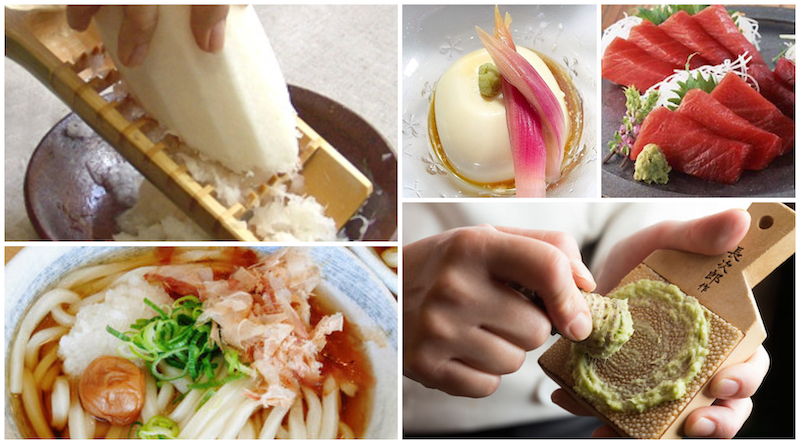
The Japanese developed two very special graters for two specific foods: 鬼おろし機 oni oroshi ki (“monster graters”) made from bamboo used to coarsely grate daikon into shards and鮫の皮 samékawa graters made from nubbly sharkskin that transform tough, fibrous wasabi roots into a creamy, smooth paste bursting with aroma and fire. 

Ordinary udon noodles are elevated to special status in my kitchen when I top them with (homemade) uméboshi, juicy-spicy daikon oni oroshi, a shower of scallions and flakes of smoky katsuo-bushi.

Once warm weather arrives, I thrive on chilled tōfu with grated wasabi and pink-pickled myōga. And spicy wasabi is the classic condiment to serve with ruby-red lean maguro.
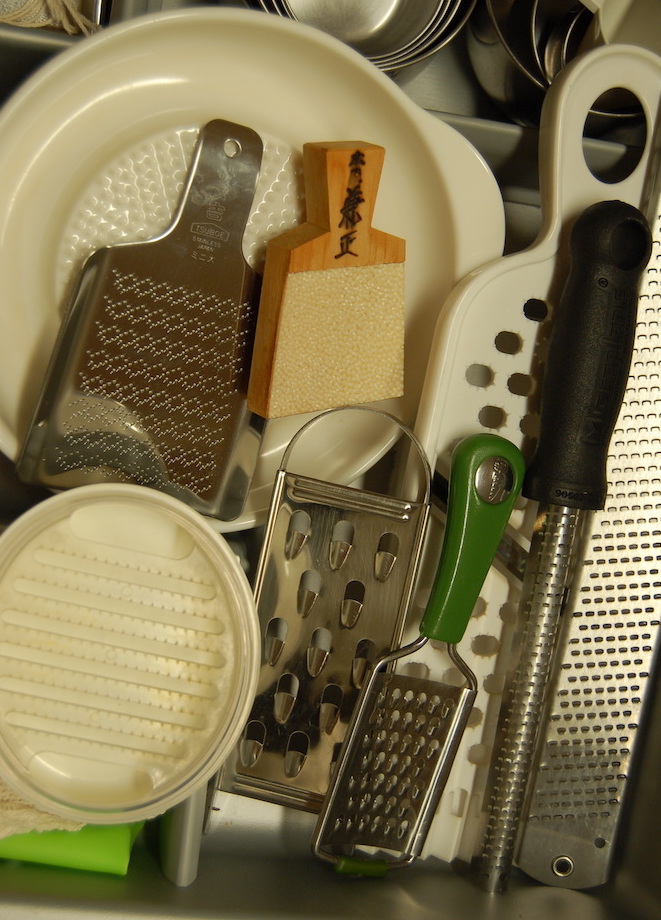
卸金の色々 Various Oroshi-gané

GRATING is a common kitchen task, performed when preparing many types of dishes. To choose the best tool in each case, consider the qualities of the food you want to grate: Is the food hard or soft? Brittle? Fibrous? Slippery? Smooth? Dry? Or is it likely to produce a puddle of liquid (and if so, do you want to capture that “juice” or not)? No wonder that so many different considerations and circumstances call for such a wide variety of grating tools.

DOWNLOAD recipe for GREAT GRATED Salad Dressing

The Language of Learning

The Language of Learning

Although we are all born with some innate capabilities, we also must LEARN in order to survive and thrive. Different cultures manage learning differently. The Japanese language has two verbs that can be used when talking about acquiring information and experience....

Oysters

Oysters

Throughout the world, oysters have been a popular food source since ancient times. Archeologic evidence in Japan, in the form of kaizuka (shell mounds), dates to the Jōmon period (14,000-300 BCE). Oysters had been abundant for millennia and harvested in their natural...

Kagami Mochi

Kagami Mochi

At New Years’ time, the Japanese decorate their homes with a special display called KAGAMI MOCHI. There are many regional variations on the theme but typically two large rounds of omochi rice taffy are stacked with a daidai 橙 (bitter orange) on top. The arrangement is...

Symbolic Pine

Symbolic Pine

Because pine trees are hardy evergreens, they are a symbol of longevity and resilience in Japanese culture. As such they are a key motif used at New Year’s. Various foods are configured to evoke the image of pine needles (matsuba 松葉 ) and pine cones (matsukasa 松笠 )....

Recent Posts & Projects