HATSU-GATSUO

May 12, 2020 | Kitchen Culture, Spring

初鰹   HATSU-GATSUO   First Catch of the Season

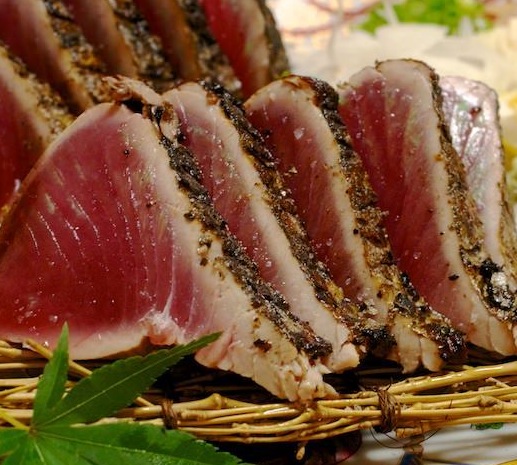
Japan’s seasonal sensibility is always on display at table; here the transition from spring into early summer is celebrated with hatsu-gatsuo (skipjack tuna (Katsuwonus pelamis) prepared tataki-style. Whole loins of katsuo are seared, plunged into ice water, patted dry and showered with fresh herbs… or pressed with cracked pepper and roasted garlic. Either way its prepared, the dish is accompanied with a dip of citrusy ponzu sauce.

The inhabitants of old Edo (the former name for Tokyo) were especially enamored with hatsu-gatsuo. There was a saying: nyōbō wo shichi ni iretemo hatsu-gatsuo “even if I have to pawn my wife, I must have a taste of the season’s first catch!”
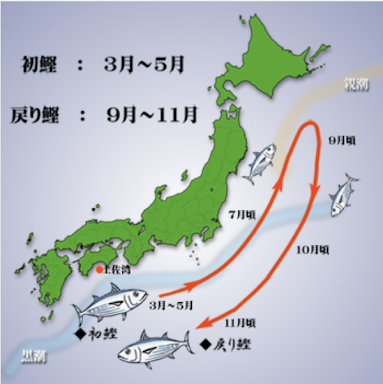
KATSUO’s journey riding the north-flowing Kuroshio Current begins as water temperatures rise: lean HATSU-GATSUO (the first catch) typically appears in Tokyo’s markets early in May. Come September, the fattened fish do a U-turn and head back south: MODORI-GATSUO (the returning catch) brings eating pleasure to the autumn table.

Outside Japan you will likely have trouble sourcing fresh loins of skipjack katsuo. If that is the case, I suggest you prepare beef instead.

DOWNLOAD the recipe for Tosa-Style Grilled Beef 

The Language of Learning

The Language of Learning

Although we are all born with some innate capabilities, we also must LEARN in order to survive and thrive. Different cultures manage learning differently. The Japanese language has two verbs that can be used when talking about acquiring information and experience....

Oysters

Oysters

Throughout the world, oysters have been a popular food source since ancient times. Archeologic evidence in Japan, in the form of kaizuka (shell mounds), dates to the Jōmon period (14,000-300 BCE). Oysters had been abundant for millennia and harvested in their natural...

Kagami Mochi

Kagami Mochi

At New Years’ time, the Japanese decorate their homes with a special display called KAGAMI MOCHI. There are many regional variations on the theme but typically two large rounds of omochi rice taffy are stacked with a daidai 橙 (bitter orange) on top. The arrangement is...

Symbolic Pine

Symbolic Pine

Because pine trees are hardy evergreens, they are a symbol of longevity and resilience in Japanese culture. As such they are a key motif used at New Year’s. Various foods are configured to evoke the image of pine needles (matsuba 松葉 ) and pine cones (matsukasa 松笠 )....

Recent Posts & Projects