Tazukuri Fish Brittle & Glazed Walnuts

Dec 20, 2020 | Holiday, Kitchen Culture, Winter

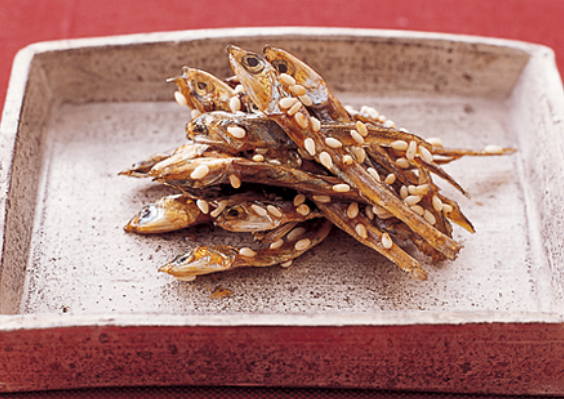
田作り tazukuri

ごまめ gomamé

The names of many Japanese dishes employ word play; this is especially true of traditional holiday foods such as TAZUKURI. Written with calligraphy meaning “tilled fields” the fish brittle is a New Year delicacy that symbolizes fertility and abundance. Hoping for a sweet and prosperous New Year, tazukuri are nibbled on New Year’s Day (best served with a well-chilled, dry saké).

The first time I tried these tiny, dried sardines, I admit I was a bit apprehensive: candied fish brittle??? Toasted and glazed the fish are both sticky-sweet and savory, with a hint of bitterness (the fish are consumed whole with head, tail and skeleton intact) a culinary combo not found in any American foods I know. Now I look forward to making, and munching on, these calcium-rich candied fish every year. Ready to give them a go? Download a recipe for Candied Fish.
胡桃の田作り風
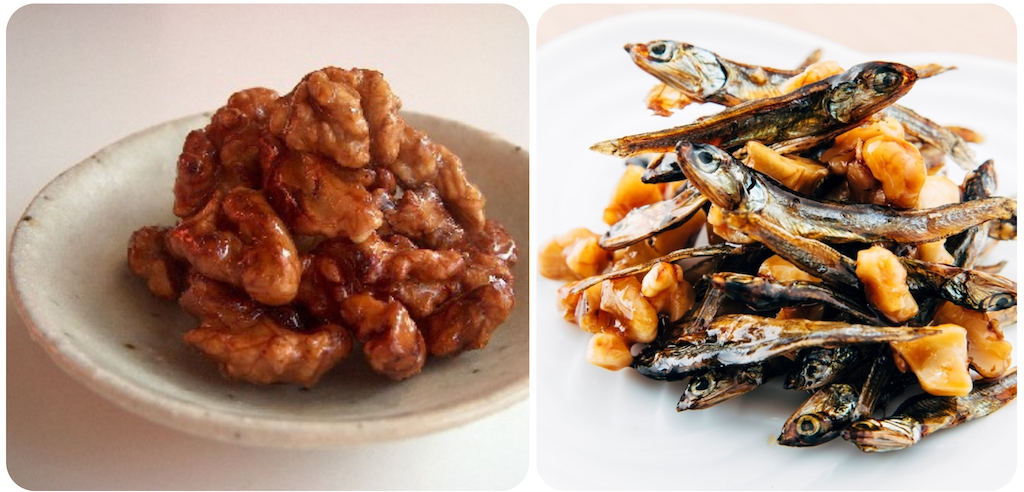
Kurumi no Tazukuri Fū

Glazed Walnuts

Walnuts can be glazed in a manner similar to tazukuri, and either served instead of the fish, or mixed with them. Download a recipe for Glazed Walnuts 
Oysters

Oysters

Throughout the world, oysters have been a popular food source since ancient times. Archeologic evidence in Japan, in the form of kaizuka (shell mounds), dates to the Jōmon period (14,000-300 BCE). Oysters had been abundant for millennia and harvested in their natural...

Kagami Mochi

Kagami Mochi

At New Years’ time, the Japanese decorate their homes with a special display called KAGAMI MOCHI. There are many regional variations on the theme but typically two large rounds of omochi rice taffy are stacked with a daidai 橙 (bitter orange) on top. The arrangement is...

Symbolic Pine

Symbolic Pine

Because pine trees are hardy evergreens, they are a symbol of longevity and resilience in Japanese culture. As such they are a key motif used at New Year’s. Various foods are configured to evoke the image of pine needles (matsuba 松葉 ) and pine cones (matsukasa 松笠 )....

Katsura Muki, gossamer thin peels

Katsura Muki, gossamer thin peels

Daikon radish is peeled into long, seemingly impossibly thin ribbons in a cut known as katsura muki. The skill needed to produce these peels is the most basic requirement in any Japanese professional kitchen. It typically takes months (if not years) of daily practice...

Recent Posts & Projects