
UMÉSHU Plum Wine

Jun 8, 2021 | Kitchen Culture, Summer

梅酒づくり Uméshu-Zukuri

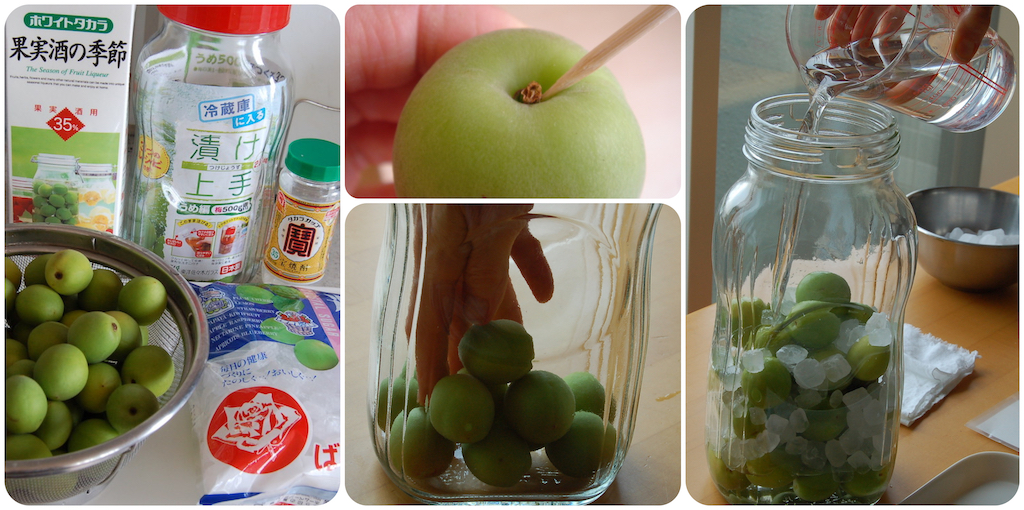
In Japan, early June is the time for UMÉ SHIGOTO (plum work), transforming the harvest of not-yet-fully-ripe fruit into a sweet liqueur (uméshu)  and/or sour, lip-puckering salt-cured uméboshi.

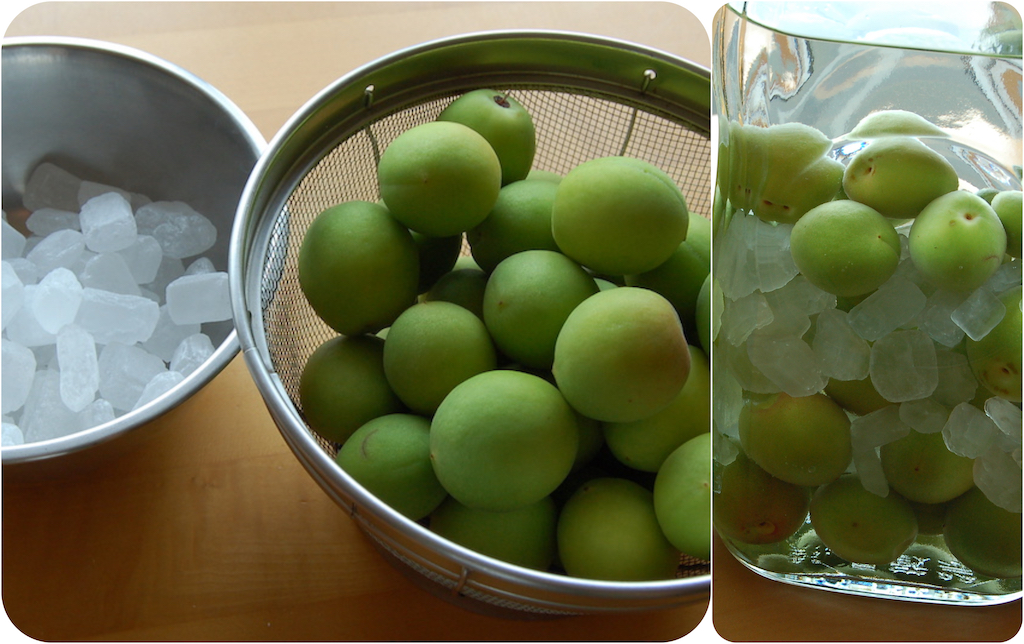
If you are able to source green, not-fully-ripe Japanese umé plums it is fairly simple to make a luscious liqueur from them. In addition to the fruit you’ll need rock sugar (what the Japanese call koori-zatō) and 35 proof shōchū and a glass (or other non-reactive) jar or tub that can be closed tightly. And, you will need PATIENCE.

Patience to carefully remove the stem bits without bruising or puncturing the fruit… patience to carefully wipe each plum with a clean cloth soaked in shōchū… patience to not stir the contents of the jar as you wait for the rock sugar to melt and the mixture to ferment. It will take about 3 or 4 months for the magic transformation from fruit to fruity-rich uméshu.
DOWNLOAD a guide to making UMÉSHU Plum Wine

Using Food Fully

Using Food Fully

Meals planned around a single ingredient prepared in many ways are referred to as tsukushi (or zukushi) 尽くし menus. The verb tsukusu means "to use, or consume, entirely." This no-waste approach is both a frugal and practical way to cook, making the most of what is...

The Language of Learning

The Language of Learning

Although we are all born with some innate capabilities, we also must LEARN in order to survive and thrive. Different cultures manage learning differently. The Japanese language has two verbs that can be used when talking about acquiring information and experience....

Oysters

Oysters

Throughout the world, oysters have been a popular food source since ancient times. Archeologic evidence in Japan, in the form of kaizuka (shell mounds), dates to the Jōmon period (14,000-300 BCE). Oysters had been abundant for millennia and harvested in their natural...

Kagami Mochi

Kagami Mochi

At New Years’ time, the Japanese decorate their homes with a special display called KAGAMI MOCHI. There are many regional variations on the theme but typically two large rounds of omochi rice taffy are stacked with a daidai 橙 (bitter orange) on top. The arrangement is...

Recent Posts & Projects