Classic Soy-Simmered Kabocha & Variations
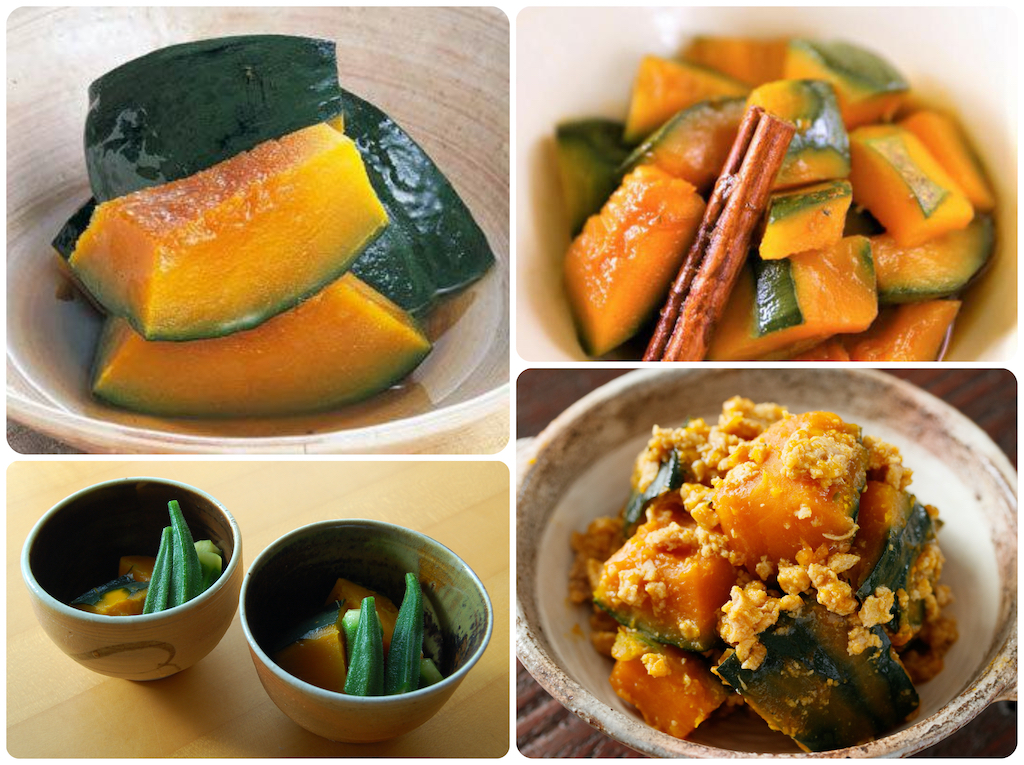
Kabocha, a pumpkin-like squash with sweet, orangey-gold flesh and dark green, edible skin, frequently appears on the menu in Japan. The classic way to prepare kabocha is to simmer it in a slightly sweet soy-tinged stock. Soy-simmered kabocha is delicious on its own… but it is also wonderful when served with a briefly blanched green vegetable such as okra … or, sauced with savory ground chicken … or, simmered in stock infused with cinnamon and ginger.
Start with a Classic Soy-Simmered Kabocha, a mainstay of homecooking throughout Japan. Then try some (or all) of the variations provided below.
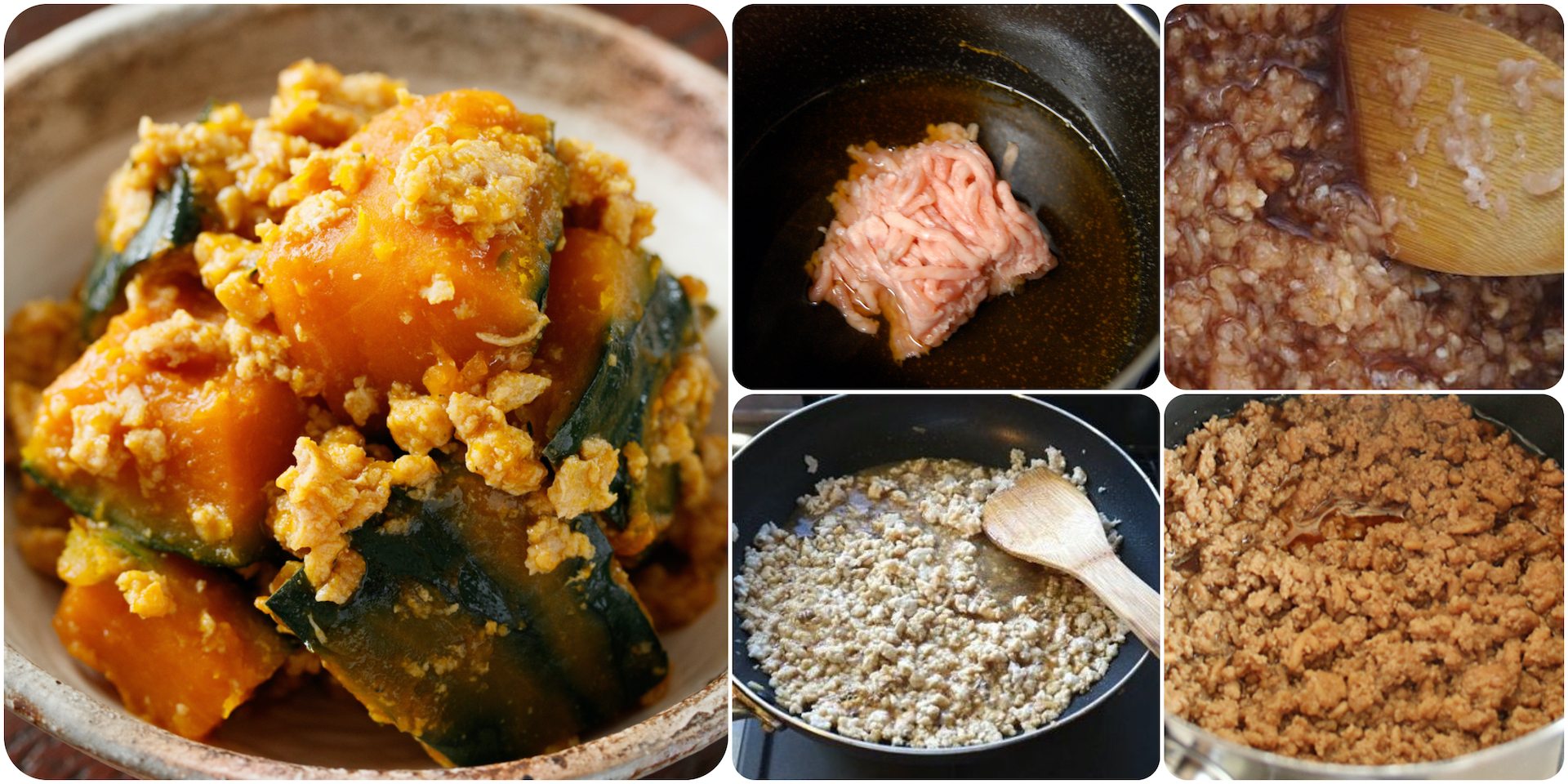
Kabocha with Crumbly Chicken Sauce
A wonderful combination of savory and sweet flavors, soy-simmered kabocha is sauced with ground chicken (or turkey). Download a recipe for Soy-Simmered Kabocha with Crumbly Chicken Sauce
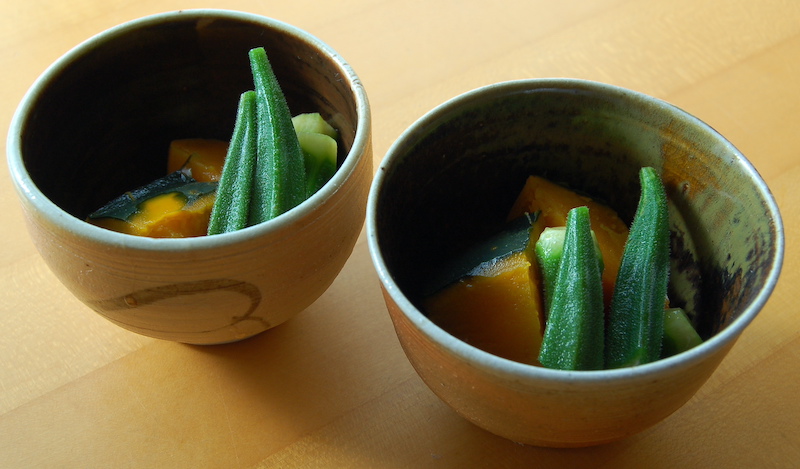
Soy-Simmered Kabocha with Okra
Soy-simmered kabocha is delicious on its own… but it is also wonderful when served with a briefly blanched green vegetable such as okra.
Download a recipe for Soy-Simmered Kabocha with Okra
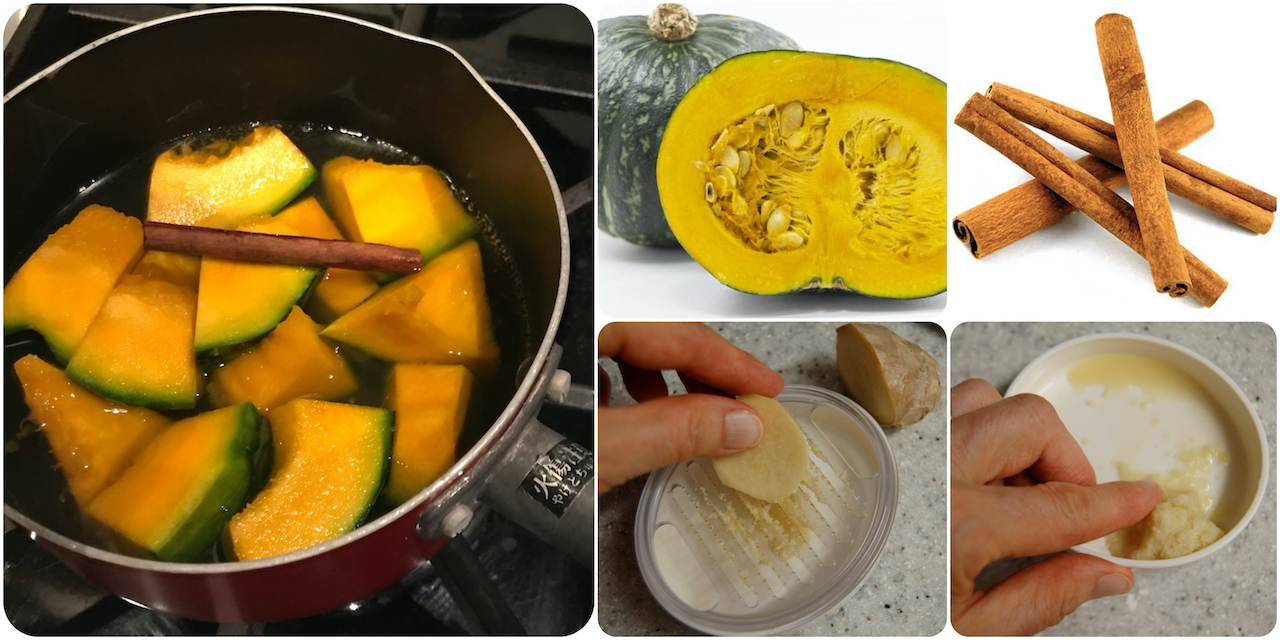
Kabocha Spiced with Cinnamon and Ginger
Although cinnamon is not a common seasoning in Japanese home cooking, it does have a fairly long history in Japan (dates back to the Edo Period 1603-1868). Cinammon, in combination with ginger, transforms classic soy-simmered kabocha from side-dish status to enjoy-on-its-own standing.
Download a recipe for Kabocha Spiced with Cinnamon and Ginger.
For additional informatiion and inspiration regarding dishes made with kabocha, visit my Kitchen Culture blog post.
The theme of the October 2021 newsletter is Halloween in Japan. A copy can be downloaded from my newsletter page.