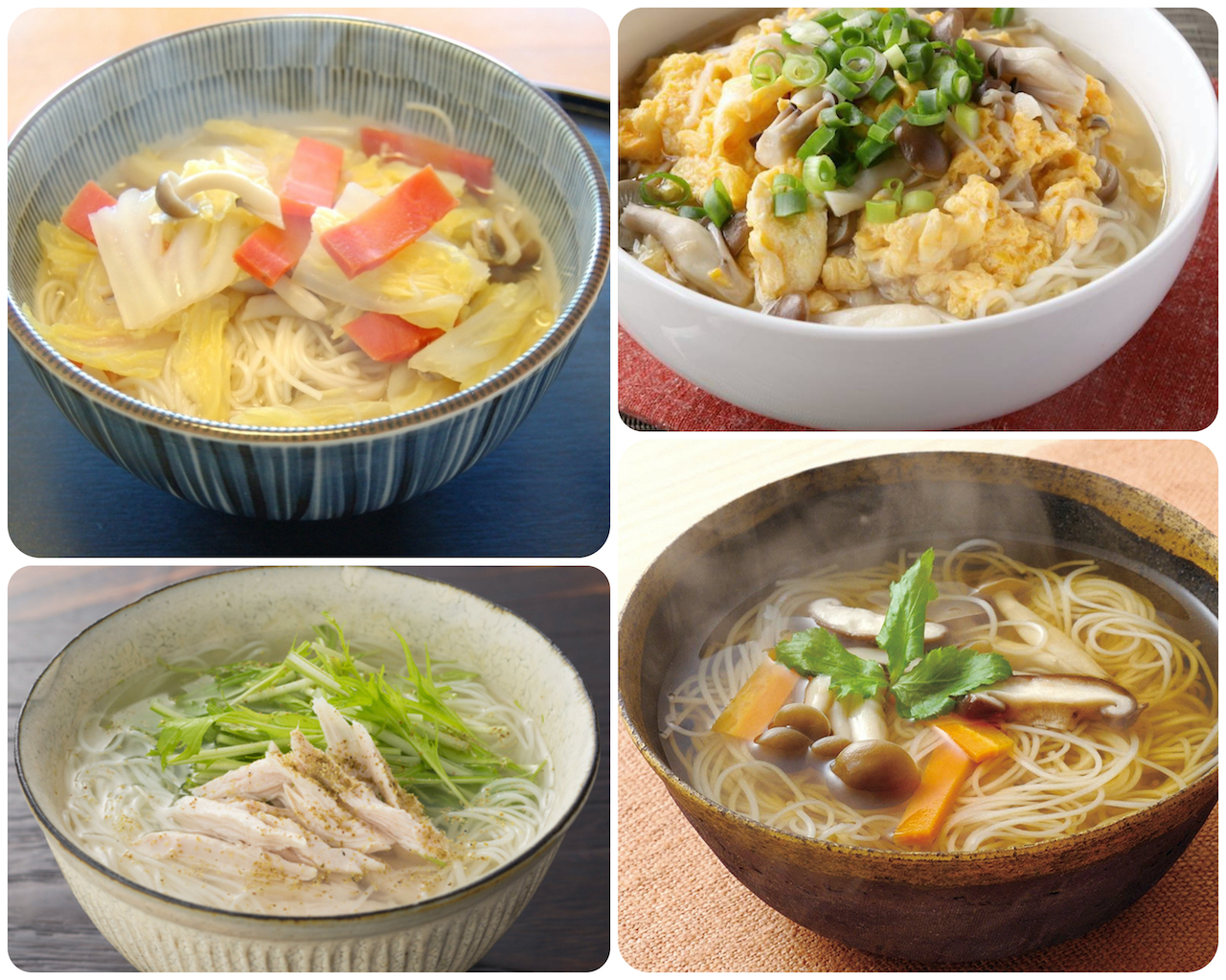
Above, Four Examples of Nyūmen:
Hakusai, Carrot and Shiméji (top left); Egg Drop, Shiméji and Scallions (top right); Chicken and Mitsuba with Sanshō (bottom left); Shiitaké, Shiméji, Carrot and Mitsuba.
煮麺 ・Nyūmen
This Kitchen PROJECT is about making NYŪMEN (sōmen noodles in piping hot broth) in YOUR kitchen.
On chilly days nyūmen makes for a quick, belly-warming light meal. Use this BASIC RECIPE as a point of departure for developing your own house version.
For those who eat plant-based foods exclusively, and others who would like to increase their consumption of non-animal foodstuffs, note there are MANY vegetarian and vegan options listed in the basic recipe.
Scroll down for several BROTH OPTIONS.
NOTE: the classic version of nyūmen features a subtly nuanced savory broth. Spicy flavorings such as yuzu koshō or shichimi tōgarashi are rarely used, though on occasion, a pinch of tongue-tingling sanshō is added as a finishing touch. There are those who add curry roux, in the same way that some Japanese favor curry udon.
Classic nyūmen is a clear broth soup-noodle dish. However, sōmen is added to miso soup (especially in the summertime in the Kansai region). When sōmen is placed in miso soup it is no longer called nyūmen though. Instead it is called sōmen iri miso shiru, or “sōmen in miso soup.”
Curious about how sōmen is made? Want to know how to buy, store and cook sōmen?
Take a look the Nyūmen Kitchen Culture blog post.
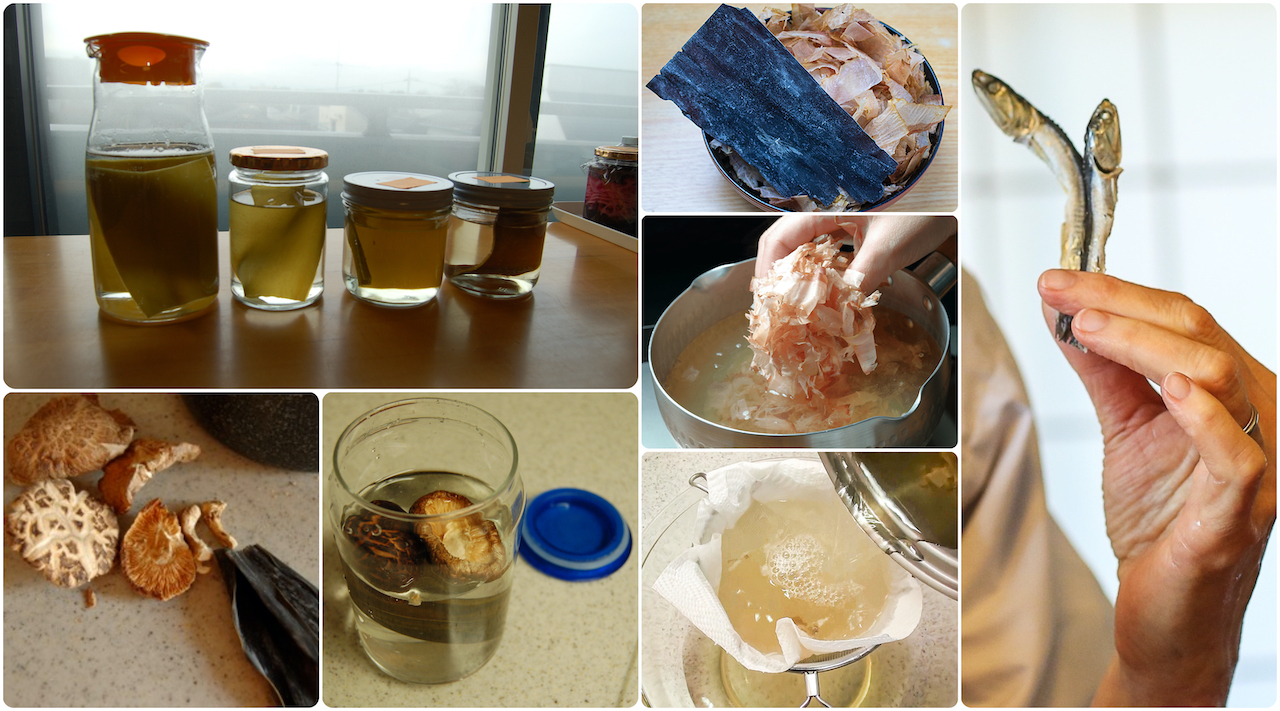
Simple vegan broths can be made using either Kelp Alone Stock or a mushroom-enriched version called Sankai Dashi (literally Mountain-Sea Stock). Using several varieties of kombu will add depth and complexity of flavor to your noodle soup.
Stocks using fish such as Standard Sea Stock (and Smoky Sea Stock) and Sanuki Sea Stock (made with iriko or niboshi dried sardines) are the most commonly encountered.