PROJECT Kampyo

Jul 10, 2022 | Kitchen PROJECTS, Year-Round

干瓢・かんぴょう・KAMPYŌ

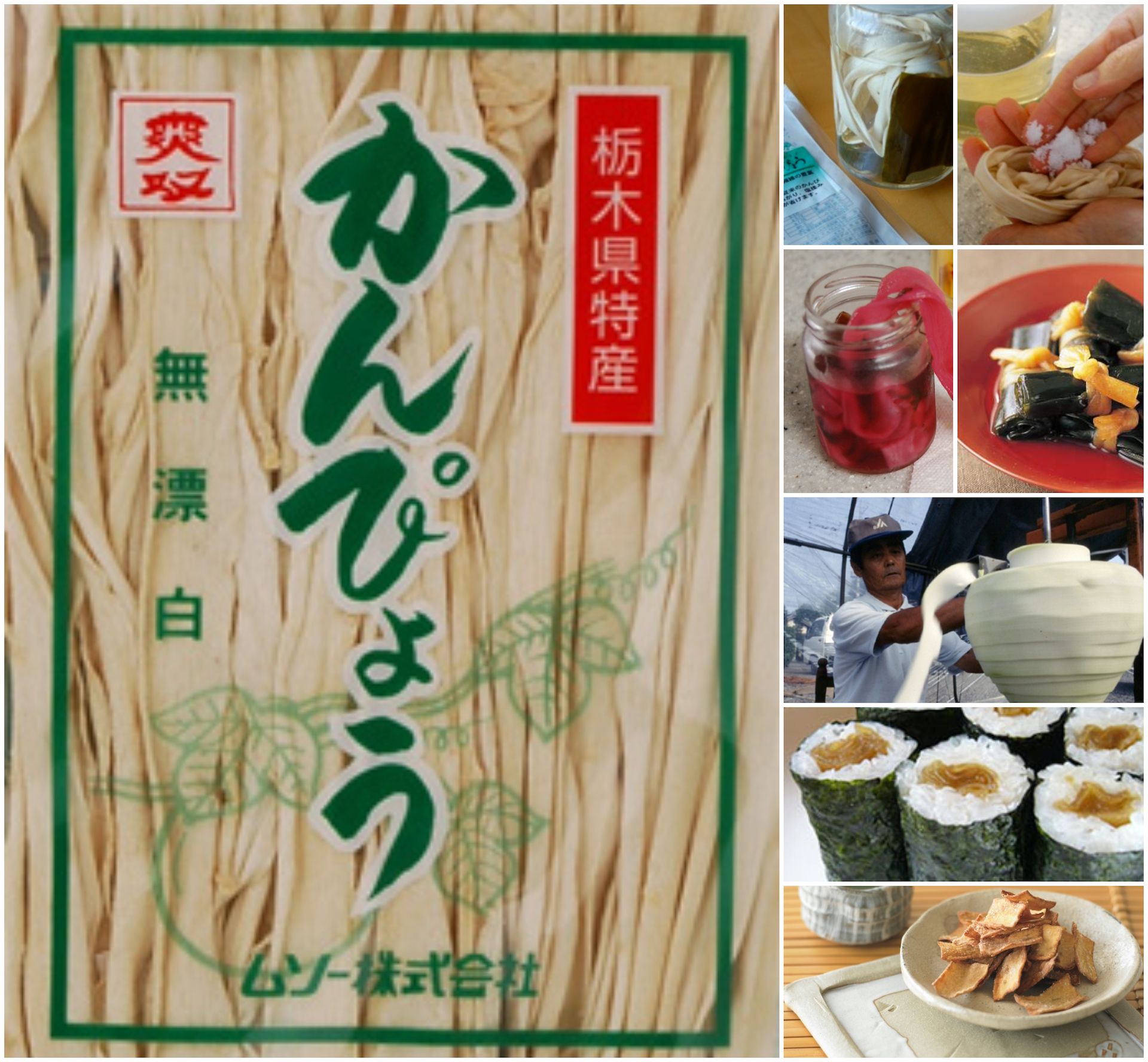
This Kitchen PROJECT is about using KAMPYŌ, sun-dried fukubé gourd ribbons in YOUR kitchen. Be sure to source UNBLEACHED (無漂白 mu hyō haku) gourd ribbons so that you can use the softening liquid as a tasty stock.

Gourd ribbons are used to tie up any number of edible packages in the Japanese kitchen such as kombu maki (An American Taste of Japan page 116 Gift-Wrapped Kelp Rolls). When gourd ribbons are simmered in a sweet soy broth they become a filling in sushi rolls called nori maki.

When simmered in sweetened umezu the ribbons turn vividly pink and exude a lovely, plum-like aroma. They, too can be used in sushi rolls. See page 33 in Kansha (Festive Flower Sushi Rolls).

Gourd ribbons can also be deep-fried to make (addictatively delicious) crunchy gourd chips. See page 145 in Kansha.
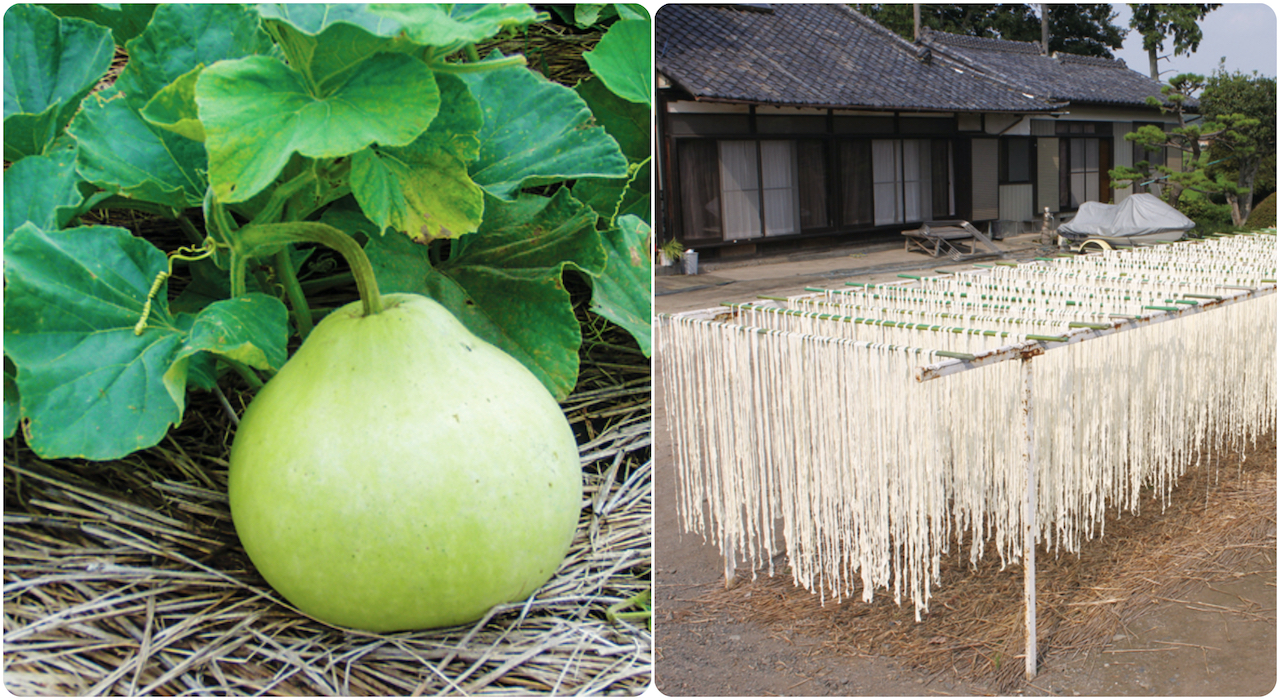
Bulbous fukubé gourds are harvested in the summer; the gourd is set to spin against a sharp blade that shaves it into ribbons. The ribbons are then hung to dry in the sun (or well-ventilated shade). Tochigi Prefecture, north of Tokyo, has been the center of production of kampyō since the Edo Period (1603-1868). It continues to produce about 80% of all dried gourd ribbons sold in Japan.

Want to know more about kampyō? Look at the Kampyō Kitchen Culture post and my July 2022 newsletter.
Kagami Mochi

Kagami Mochi

At New Years’ time, the Japanese decorate their homes with a special display called KAGAMI MOCHI. There are many regional variations on the theme but typically two large rounds of omochi rice taffy are stacked with a daidai 橙 (bitter orange) on top. The arrangement is...

Symbolic Pine

Symbolic Pine

Because pine trees are hardy evergreens, they are a symbol of longevity and resilience in Japanese culture. As such they are a key motif used at New Year’s. Various foods are configured to evoke the image of pine needles (matsuba 松葉 ) and pine cones (matsukasa 松笠 )....

PROJECT Symbolic Pine

PROJECT Symbolic Pine

Because pine trees are hardy evergreens, they are a symbol of longevity and resilience in Japanese culture. As such they are a key motif used at New Year’s. Various foods are configured to resemble pine. Cones (matsukasa) and needles (matsuba) are the most frequently...

Katsura Muki, gossamer thin peels

Katsura Muki, gossamer thin peels

Daikon radish is peeled into long, seemingly impossibly thin ribbons in a cut known as katsura muki. The skill needed to produce these peels is the most basic requirement in any Japanese professional kitchen. It typically takes months (if not years) of daily practice...

Recent Posts & Projects