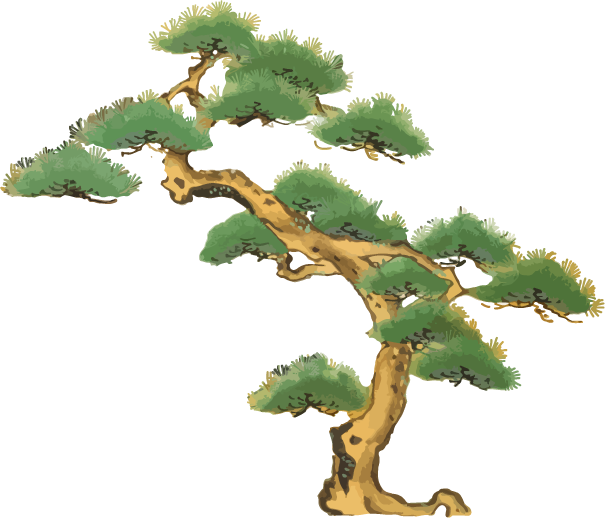
Pine as a symbol of longevity and resilience
Because pine trees are hardy evergreens, they are a symbol of longevity and resilience in Japanese culture. As such they are a key motif used at New Year’s.
Various foods are configured to evoke the image of pine needles (matsuba 松葉 ) and pine cones (matsukasa 松笠 ). Another motif evoking pine is called matsukazé 松風 or “wind whistling through the pines.”
Some motifs used in the culinary sphere are obvious from their appearance. Such is the case for pine needles and pine cones. Others, though, like “wind whistling through the pines,” are buried deep in (Japanese) cultural assumptions. Below, I unravel the reason a (yummy!) chicken patty called matsukazé yaki is served at New Year’s time.

The etymology of matsukazé
Like many dishes that are included on the menu for Japanese New Year’s, the name matsukazé yaki relies on a combination of word play (different calligraphy with the same pronunciation) and understanding (Japanese) literary references and personality stereotypes.
Unraveling the origins of matsukazé yaki means knowing that several waka (31‐syllable traditional Japanese poems) reference the sound of wind whistling through the pines as being desolate sabishi (寂しい). When the pine trees line the shore (ura) it is referred to as ura sabishi 浦寂し.
The word ura written with the calligraphy 裏 means “side hidden from view.” So ura sabishi describes a food that is plain on the undersurface, in other words, un-adorned. Indeed, the dish known as matsukazé yaki is decorated on only the top surface.
But why serve this dish to celebrate the new year? Because ura ga nai (not hiding anything underneath) is an auspicious way to start the new year.
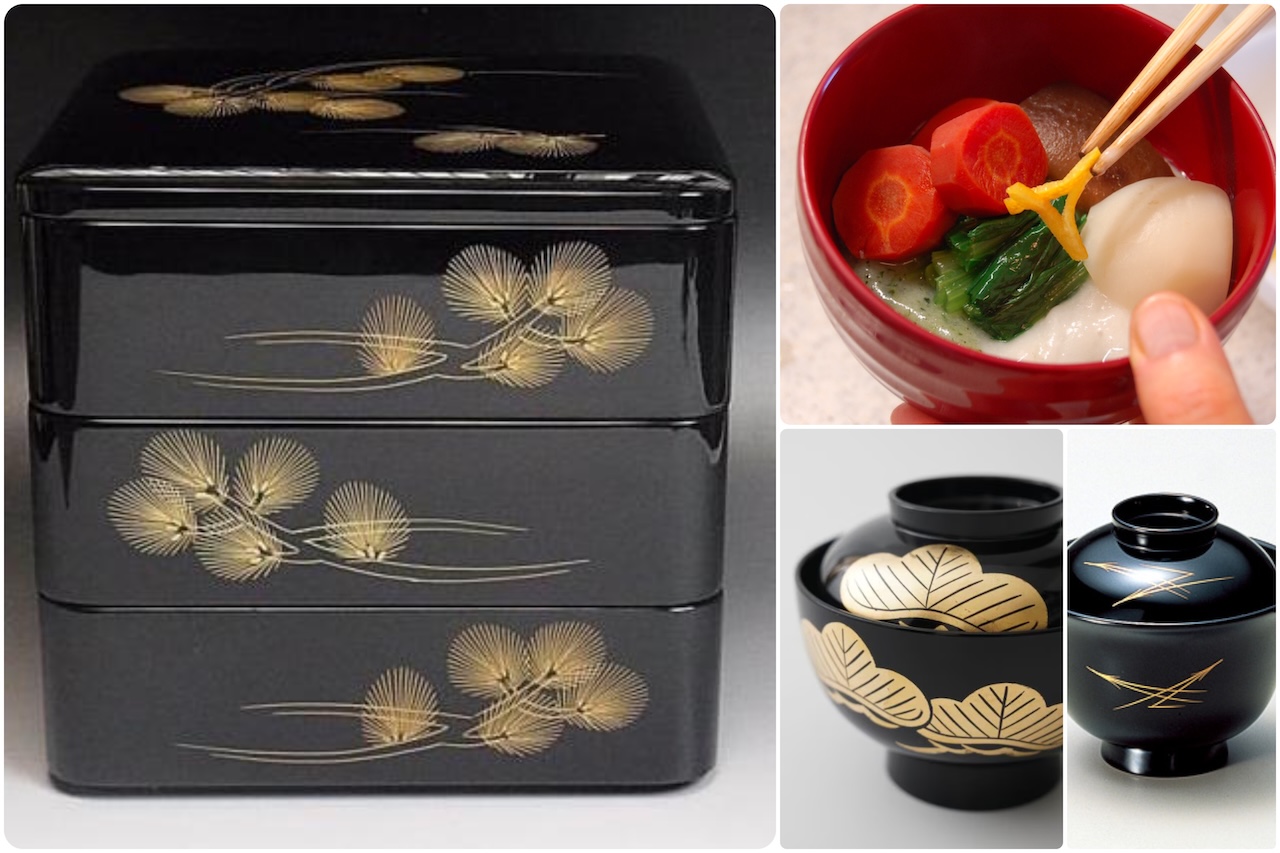
An auspicious start to the new year
Visit PROJECT Symbolic Pine for suggestions and recipes to help you begin a bright and promising new year.
Download a copy of my December 2025 newsletter about symbolic PINE.