
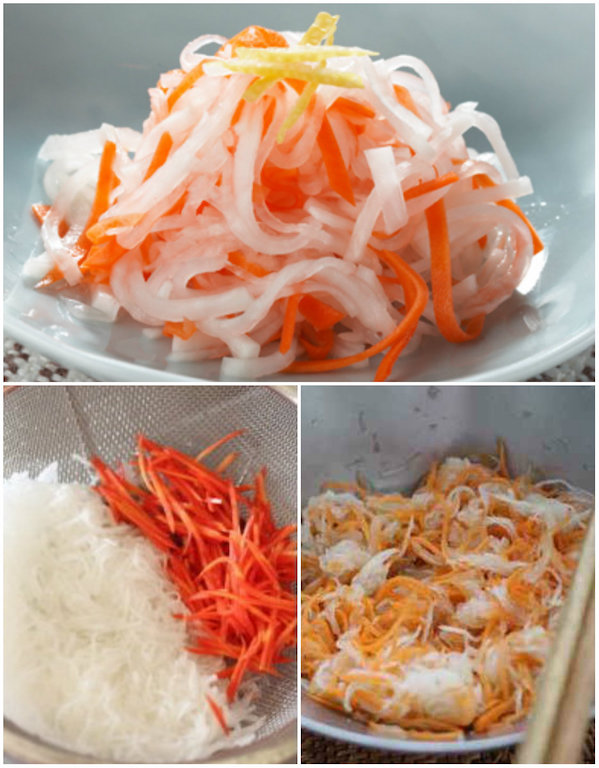
Classic KOHAKU NAMASU, “red and white salad” is made from finely shredded daikon and carrots. Fruit peel is added after the vegetables have been salt-wilted and rinsed. The mixture is marinated in sweet-and-sour sauce for several hours to several days. Yuzu peel is often added as a garnish.
RED 紅 and WHITE 白 are the colors of felicity; foods with these colors are served on happy occasions. Here carrots (both ordinary orange ones and crimson Kyoto reds) and snowy white daikon are the main ingredients; yuzu citron peel provides an accent, and garnish. This salad could appear on any celebratory menu, but it is always welcomed for OSHOGATSU, the Japanese New Year.
The salad’s tart-yet-sweet flavors and crisp texture pairs well with any broiled or skillet-seared foods, especially those prepared with soy sauce.
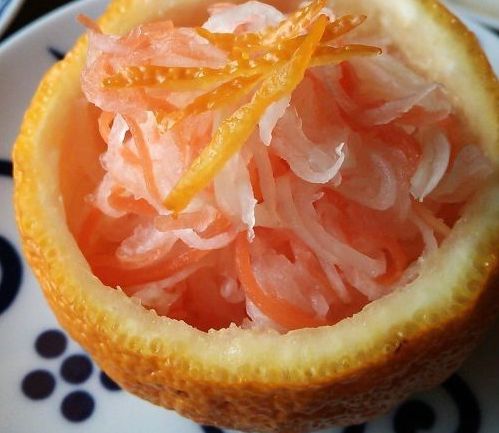
Kohaku Namasu Yuzu-Gama
(Red & White Salad in Yuzu Shell)
Although most often served from a large bowl, Kohaku Namasu can also be made into individual servings by mounding the salad in hollowed out lemon or yuzu shells. Place the scooped out fruit in sarashi (fine-woven cotton cloth used the traditional Japanese kitchen to strain stocks) or a double layer of cheesecloth. Bring up the edges over the fruit pulp to form a bag; hold over a cup or small bowl. Twist to squeeze juice from the pulp. Use this citrus juice in combination with, or in lieu of, vinegar when making your amazu (sweet-and-sour marinade).
DOWNLOAD recipe for Celebration Salad

-79969_400x250.jpeg)