Furofuki Daikon Piping Hot Radish with Miso Sauce

Jan 22, 2020 | Kitchen Culture, Winter

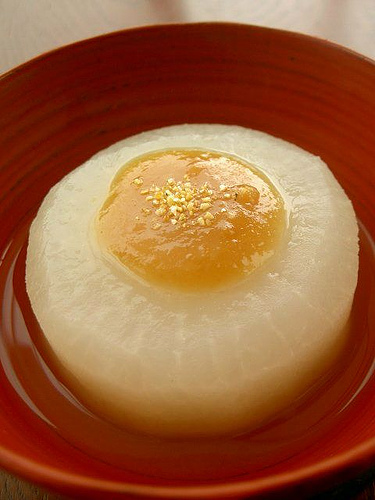
Furofuki Daikon topped with Yuzu-Scented Miso

ふろふき大根
Furofuki Daikon
Piping Hot Radish with Miso Sauce

Furofuki, literally “blowing steam,” is the name given to vegetables – most often daikon radish – that has been tender-prepped and then simmered in dashi broth. Served piping hot – so hot you will need to blow away the steam (that’s the origin of the dish’s name) – it is perfect cold weather fare. Serve the daikon in the broth in which it was cooked sauced with either dark and/or light miso sauce.
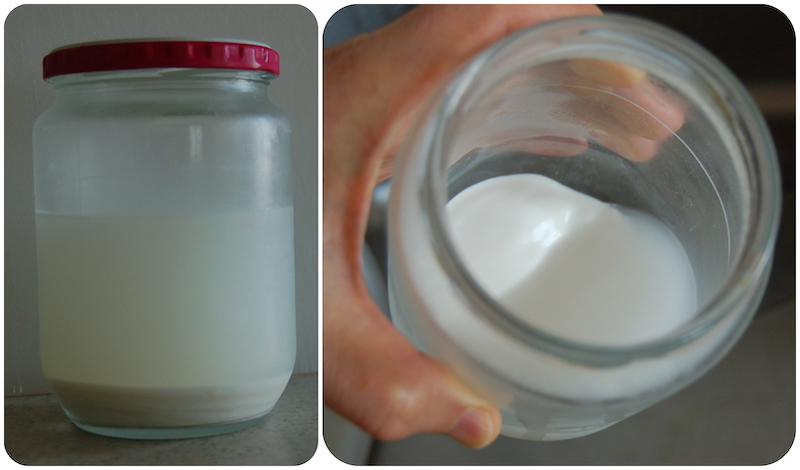
The technique for tender-prepping in togi-jiru (starchy rice water) is a useful one to remember whenever you are cooking daikon, carrots or other firm root vegetables or tubers (fresh bamboo shoots and corn-on-the-cob, too). Tender-prepping makes the vegetables very soft without falling apart (the natural oils in the rice water help them hold their shape). The par-boiling also makes them porous, getting them ready to absorb the flavor of the broth in which the final cooking takes place.

When you wash rice, save the starchy water (called togi-jiru) in a jar, storing it in the refrigerator if you do not use it the same day. After several hours you will notice sediment forming at the bottom of the jar. When ready to use, stir it to recombine. 

DOWNLOAD recipe: Furofuki Daikon and 2 Miso sauces
 

Symbolic Pine

Symbolic Pine

Because pine trees are hardy evergreens, they are a symbol of longevity and resilience in Japanese culture. As such they are a key motif used at New Year’s. Various foods are configured to evoke the image of pine needles (matsuba 松葉 ) and pine cones (matsukasa 松笠 )....

Katsura Muki, gossamer thin peels

Katsura Muki, gossamer thin peels

Daikon radish is peeled into long, seemingly impossibly thin ribbons in a cut known as katsura muki. The skill needed to produce these peels is the most basic requirement in any Japanese professional kitchen. It typically takes months (if not years) of daily practice...

Tsutsumu… wrapping, enveloping

Tsutsumu… wrapping, enveloping

Written with calligraphy for “bath” (furo 風呂) and “spread out” (shiki 敷) the word is rather curious for a piece of cloth. It seems the origins hark back to the Muromachi Period (1336-1573 AD) when Daimyo lords would spread out a cloth in which to wrap their clothing...

Escape the Lingering Heat

Escape the Lingering Heat

The ancient, lunar-based koyomi almanac marks the start of autumn with risshū 立秋. When hot weather continues beyond that time, the phenomenon is referred to as zansho 残暑, literally "lingering heat." On the Gregorian calendar, this year (2025) risshū arrived on August...

Recent Posts & Projects