Chrysanthemums ・ 菊 Kiku
To eat … To use as a motif
This Kitchen PROJECT is about CHRYSANTHEMUMS, to eat and to use as a motif in designing your autumnal menu.
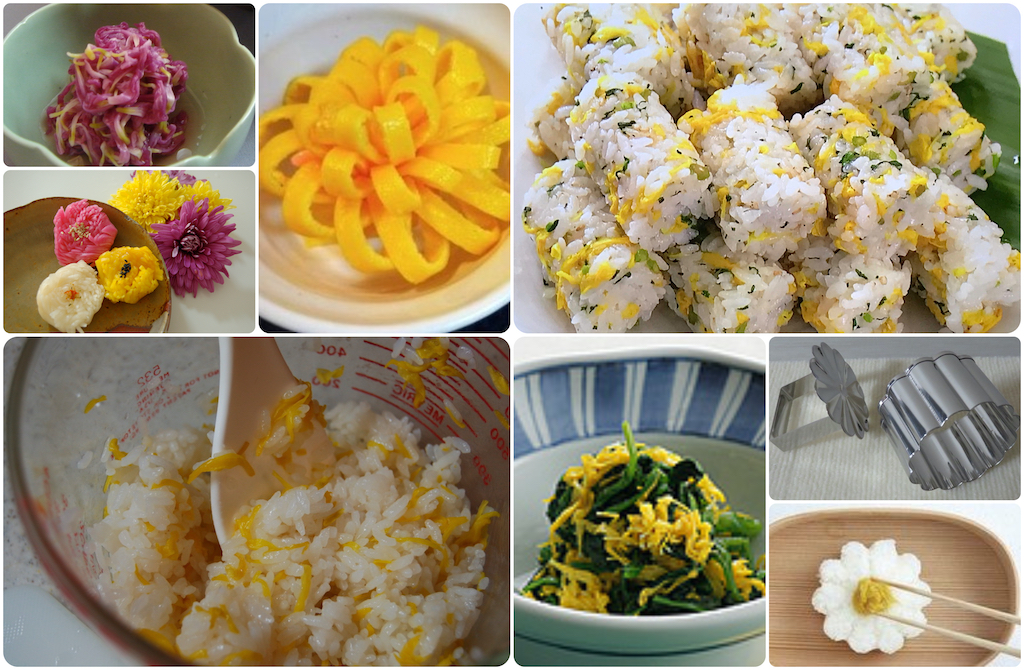
I have created a reference sheet regarding EDIBLE VARIETIES of chrysanthemums. If you can source fresh, edible flowers try making KIKU NAMASU, sweet-and-sour pickled petals (yellow and/or purple). These can be enjoyed on their own, as a garnish for grilled or fried foods, or be paired with other vegetables, such as this Cucumber and Chrysanthemum salad or Enoki Mushroom and Chrysanthemum salad. No dressing required for either.
If you toss the pickled petals with cooked rice it becomes “chrysanthemum sushi” — the sweet-and-sour pickling liquid that clings to the petals seasons the rice. Add some toasted sesame seeds and shredded shiso leaves to the chrysanthemum sushi rice for added texture and color. Make the chrysanthemum sushi rice a base for chirashi-zushi; top with soy-simmered shiitaké mushrooms and ribbons of omelet. The same thin omelet can be folded, snipped and rolled to resemble a chrysanthemum to decorate the sushi, or be tucked into an obento.
If you own, or can source, a rice mold shaped like a chrysanthemum (above photo) press out a flower shape on your plate and add pickled petals at the center to mimic the pistal.
Or, shape the rice into logs. You could stuff these logs into inari pouches if you like, or serve them as is, stacked.
If you can’t source fresh chrysanthemums use decorative knife skills to carve white turnips into chrysanthemum flowers. A combination of techniques (salt-wilting and marinating in a sweet-and-sour brine) will flavorthe turnips. Natural food dyes – gardenia pods and red shiso leaves – tint the turnip-flowers yellow and purple, respectively. These piquant turnips most often garnish platters of grilled fish or meat. Download full instructions for Three-Colored Turnip Flowers
DOWNLOAD a copy of the November 2021 newsletter, about CHRYSANTHEMUMS.