
NOODLE-SLURPING
Anyone who has ever spent time in Japan, or regularly eats at Japanese restaurants, knows (all too well) the sound of slurping. Noodles, for sure, but soup, tea and other liquids, too. Although noodles, soup and beverages are part of every food culture, making noise when consuming them is considered rude – except in Japan.
It is unclear just when the custom of noodle-slurping first appeared in Japan, but it is humorously, noisily depicted in a well-known rakugo story, Toki Soba, that has been performed for more than 400 years (rakugo is Japan’s comic storytelling tradition using pantomime).
When asked why slurping is the best way to eat noodles, most Japanese will offer “reasons” such as the speed and efficiency of slurping in getting noodles from bowl to mouth (with chopsticks), cooling hot soup at the same time. Another reason given is heighted enjoyment of flavor and aroma as noodles and soup are drawn into the mouth by slurping.
The verb susuru (to slurp) is written in kanji with the mouth radical (the vertical rectangle on the left) and 4 mata (on the right) meaning “again” (four times).
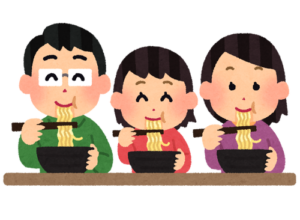
Learning to slurp (properly)
I envy those who slurp in style with an appropriate amount of gusto. After all these years I’m still not able to slurp noodles without getting hiccups. The advice I have been offered is to imagine gently blowing bubbles, but in reverse.
Visit the December, 2024 KITCHEN CULTURE blog: Year-Passing SOBA; New Year-Welcoming UDON for recipes and information on these noodle-eating customs.
Download a copy of the December, 2024 newsletter, Year-End Soba, Start-the-Year Udon