
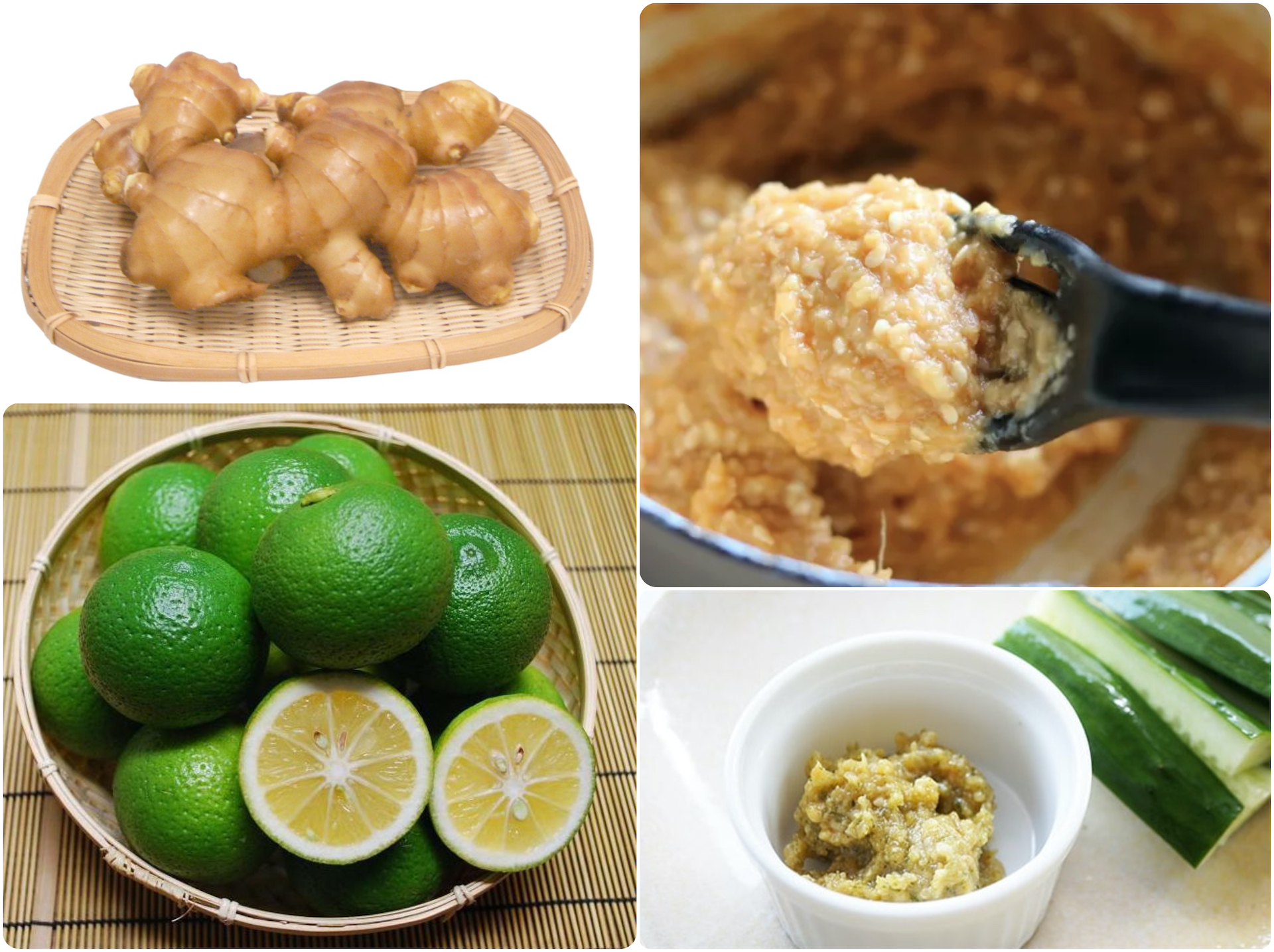
PROJECT Flavored Miso
This Kitchen PROJECT is about making flavored miso in YOUR kitchen. This page introduces two new flavored miso mixtures, one redolent with fruity kabosu, the other infused with smoky katsuo-bushi flakes. In addition, many recipes for flavored miso can be found on other posts to this website:
Black Sesame Miso Tōfu Dengaku
Fuki no Tō Miso Dengaku
April (2022) Kitchen Culture blog entry is about urui, a springtime plant that can be enjoyed various ways (including served with flavored miso),
Yet more ideas and instruction can be found in KANSHA: Miso-Slathered Nama Fu (page 148) and Miso Oden (page 171).
There are LOTS of options when it comes to flavoring miso.
Citrusy Miso
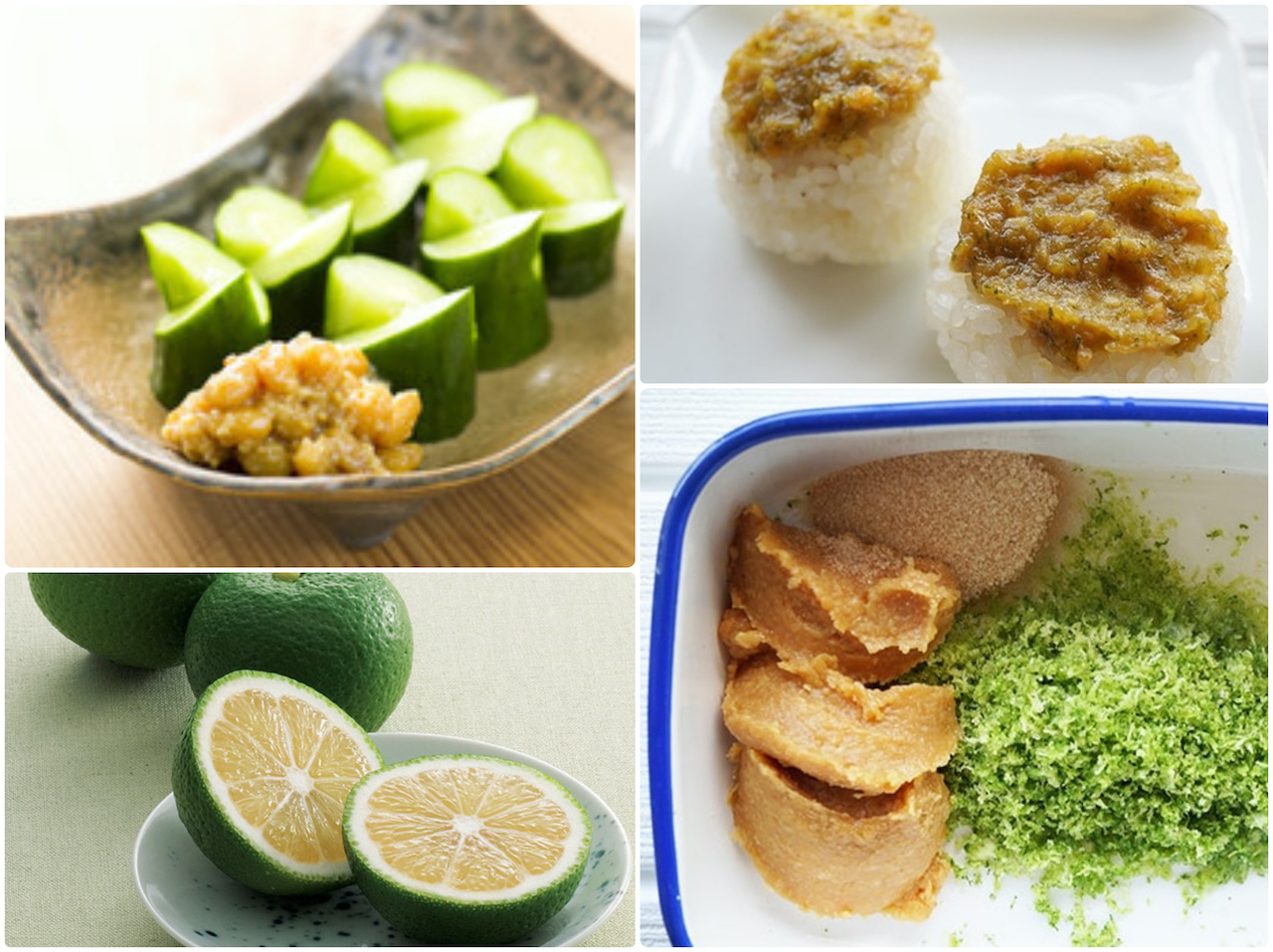
One way to flavor miso is to incorporate citrus ZEST. If you can source kabosu you are in for a special treat. If Japanese citrus fruits are difficult to source, try a combination of grapefuit and orange instead. You need to use organically grown fruit to be sure the skin has not been sprayed with chemicals.
I love the combination of biter-and-tart kabosu with yeasty-salty mugi miso. It is a terrific dip for cucumbers or celery. Or, try a dab of kabosu miso spread on rice (mini-omusubi) or tōfu, broiled dengaku-style.
Smokey Katsuo-bushi Miso
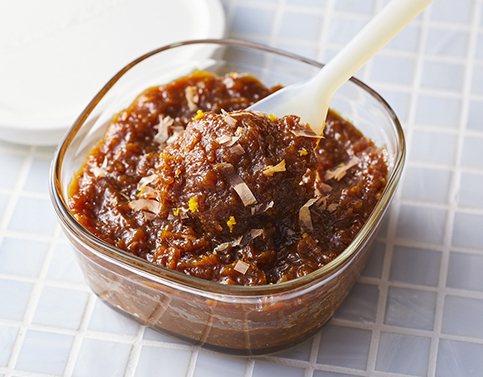
Another way to flavor miso is to incorporate katsuo-bushi. Roast a small handful in a dry skillet set over low heat; roast until aromatic. Stir constantly to keep the flakes from burning. Set aside until cooled, then crush the roasted flakes to a powder.
In a small saucepan combine 1/4 cup Sendai miso with 1 tablespoon sake and 1 tablespoon sugar. Stir to blend and set on the stove over low heat. Stirring to keep the mixture from scorching, cook until the sugar is completely dissolved and the sauce is thick and glossy. Remove the saucepan from the stove and and the crushed katsuo-bushi flakes. Refrigerate (up to one month) any miso you don’t use on the day you make it.
The theme of my April 2022 newsletter is URUI, the elusive flavor of springtime.

-79969_400x250.jpeg)