
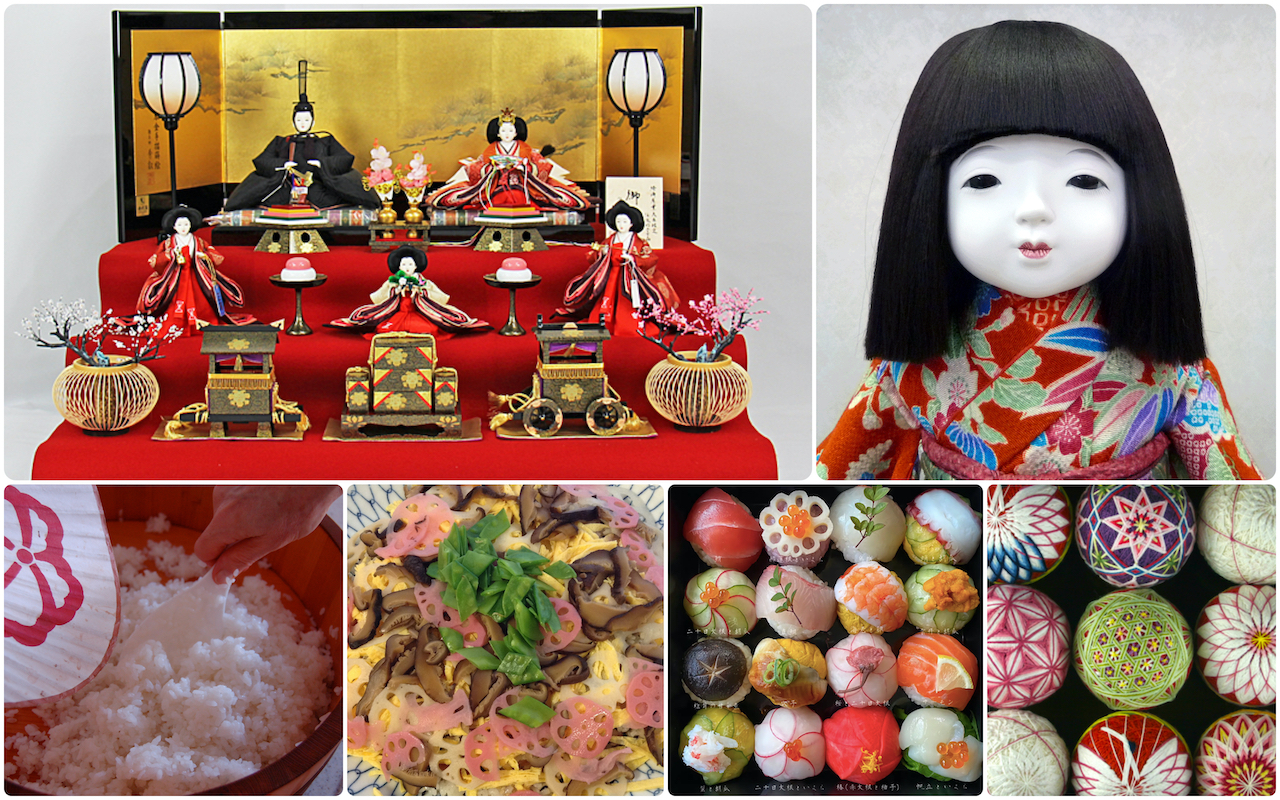
This KITCHEN PROJECT features temari-zushi, bite-sized spheres of tart rice topped with various ingredients.
HINA MATSURI is celebrated on March 3 and during the weeks leading up to it, and for several weeks thereafter, scattered chirashi-zushi and/or temari-zushi will be on the menu.
Try your hand at making these in YOUR KITCHEN: download a recipe for Pom Pom Temari-Zushi.
About TEMARI… Like many frugal Japanese women who managed households in the early and mid 20th century, my mother-in-law, Kiyoko Andoh, practiced thrift in and out of the kitchen. She saved bits and pieces of cloth, turning them into quilted cushions and throws. Odd lengths of thread were transformed into charming string-ball ornaments of various patterns. Called temari, string balls are made by winding colorful strands around a spherical core.
In the kitchen, my mother-in-law would take bits and pieces of pickled or soy-stewed vegetables to make what she called temari-zushi, bite-sized spheres of tart sushi rice each with its own decorative topping. Though not especially fluffy, the pert, plump sushi balls with colorful toppings reminded me of pom-poms… which is why I named them Pom Pom Sushi.
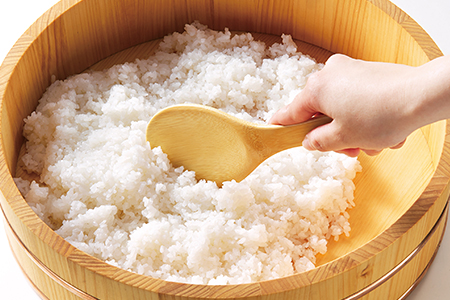
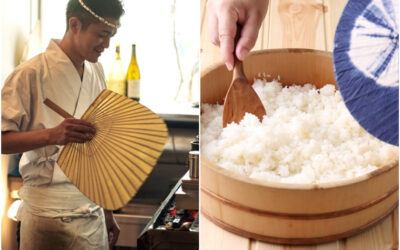
Tart Sushi Rice (Su Meshi 酢飯)
Slightly sweet, vinegar-seasoned rice called su meshi (literally “tart rice”) is the basis for all sushi dishes. For optimal flavor and texture when making su meshi, use freshly cooked and still-warm, Japanese-style short-grained white rice that has been rinsed really well to remove surface starch. As warm rice cools it is most receptive to absorbing the seasoned vinegar (that is why freshly cooked rice is best). If surface starch remains on the rice because it has not been thoroughly rinsed away, the cooked rice can become unpleasantly gummy and gluey.
DOWNLOAD instructions for making SU MESHI, tartly seasoned rice for sushi.
Download the FEBRUARY 2025 newsletter, about cooking cloth.
-79969_400x250.jpeg)