
PROJECT Katsura Muki
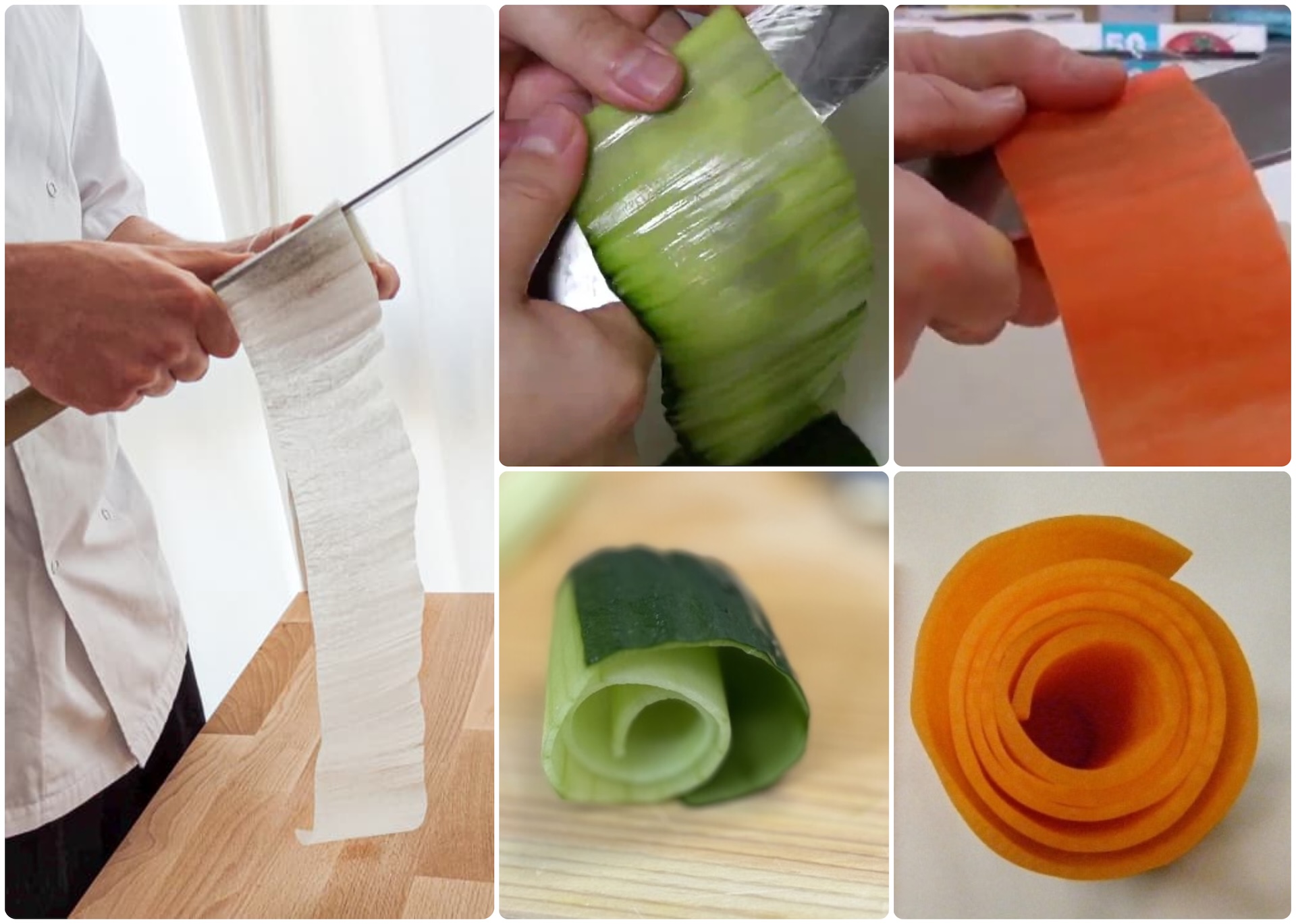
This PROJECT is about learning to make katsura muki, a classic cutting technique in the traditional Japanese kitchen. When done properly, long, flowing, continuous and incredibly thin peels are produced from vegetables such as daikon radish, cucumbers and carrots.
In researching the subject of becoming proficient in making katsura muki peels I consulted dozens of websites in both Japanese and English. All agreed the following three points are critically important:
- choice of knife (single bevel wabōchō is best)
- condition of your knife (sharp!!)
- proper positioning of knife (and your hands/body)
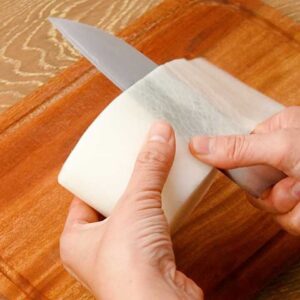
All sources I consulted, including chefs, further agreed that PRACTICE, daily practice for a minimum of one month, was the only path to achieving real success.
In Japan, daikon radish is the vegetable of choice for mastering this basic cutting technique. But those who reside outside Japan may find cucumbers more readily available (and certainly less expensive) for practice sessions.
Japanese carrots are plump, allowing you to cut long, continuous peels. But carrots in America (and many other parts of the world) tend to be slender, making them a bit more challenging to use.
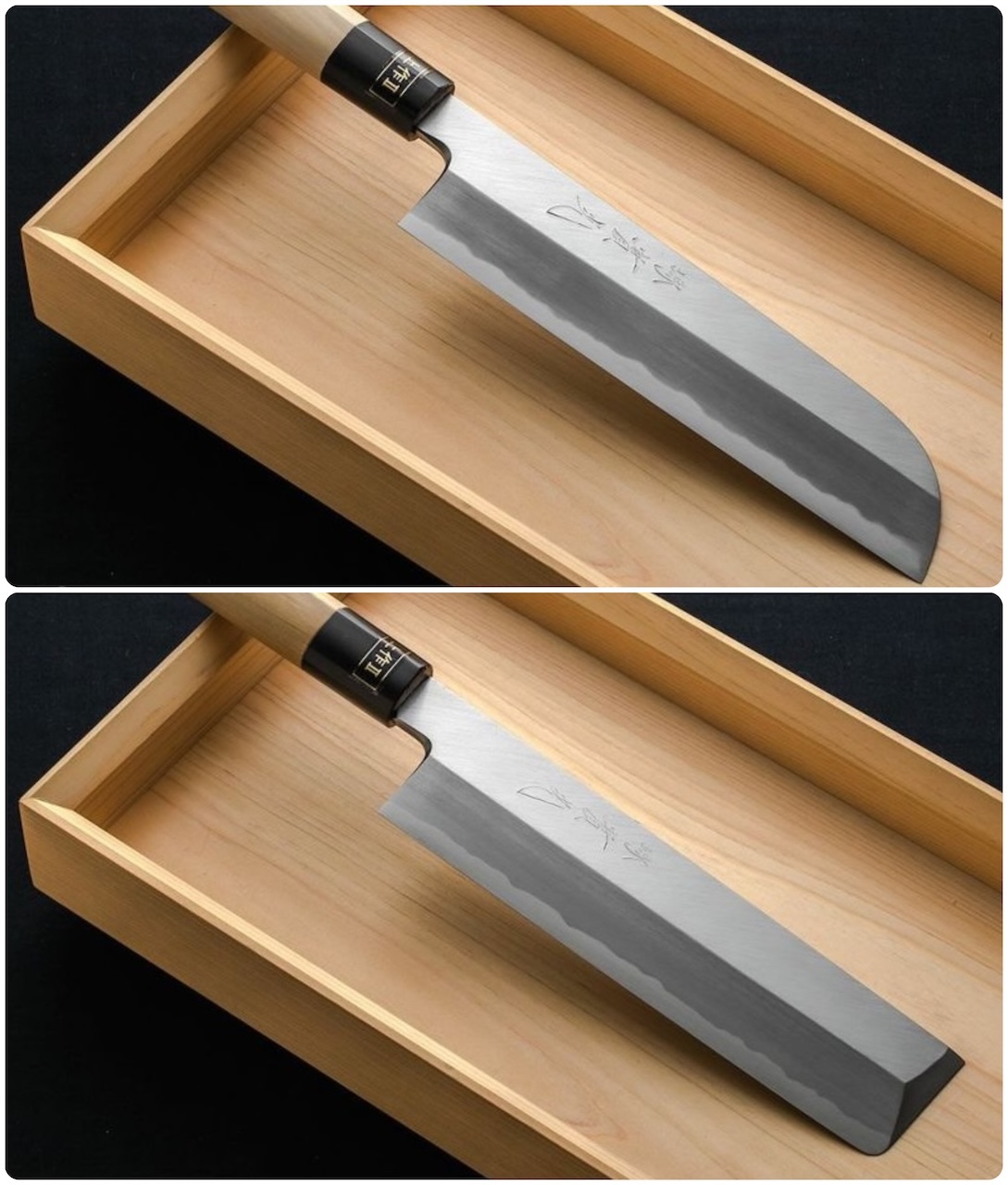
Japanese knives 和包丁(wa-bōchō)
Traditional Japanese knives (wa-bōchō) boast single bevel blades (kataba 片刃). They are especially well-suited to peeling vegetables katsura muki style.
The knife pictured on top is the kind most often found in the Kansai area (Osaka, Kyoto and environs) while the one pictured on the bottom is more commonly found in the Kanto area (Tokyo and environs).
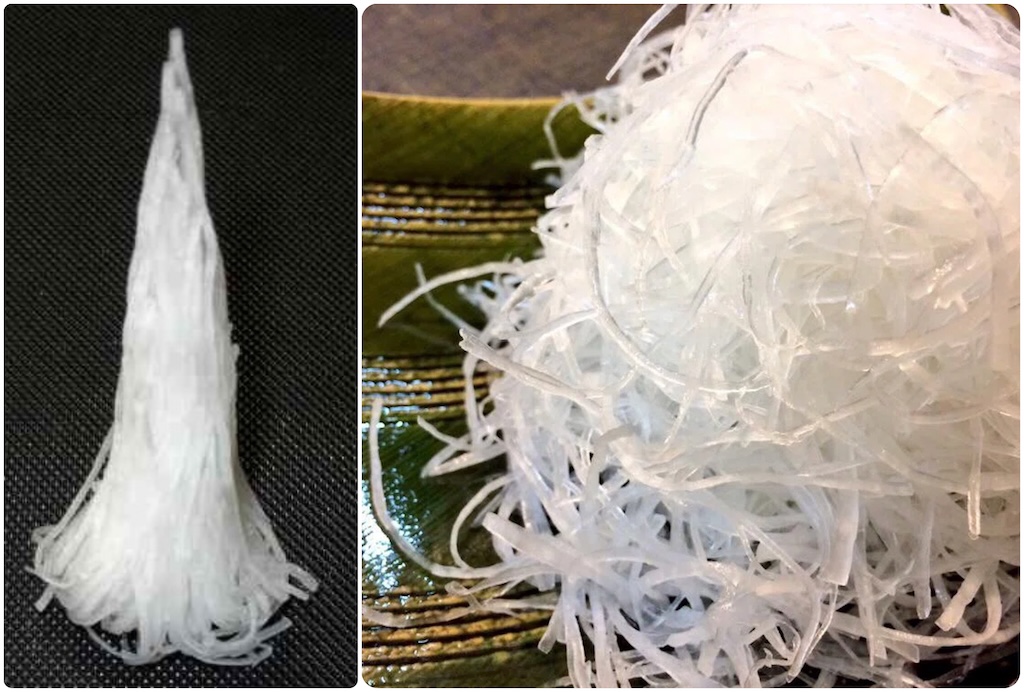
Finely shredded daikon
Once you are able to produce thin katsura muki peels, you can create a finely shredded daikon garnish. On the left, short lengths of katsura muki peels have been stacked and then sliced WITH the grain. This produces a vertical tower.
On the right, short lengths of katsura muki peels have been stacked and then sliced AGAINST the grain. This produces a soft, cloud-like pile that is often the backdrop to sliced sashimi
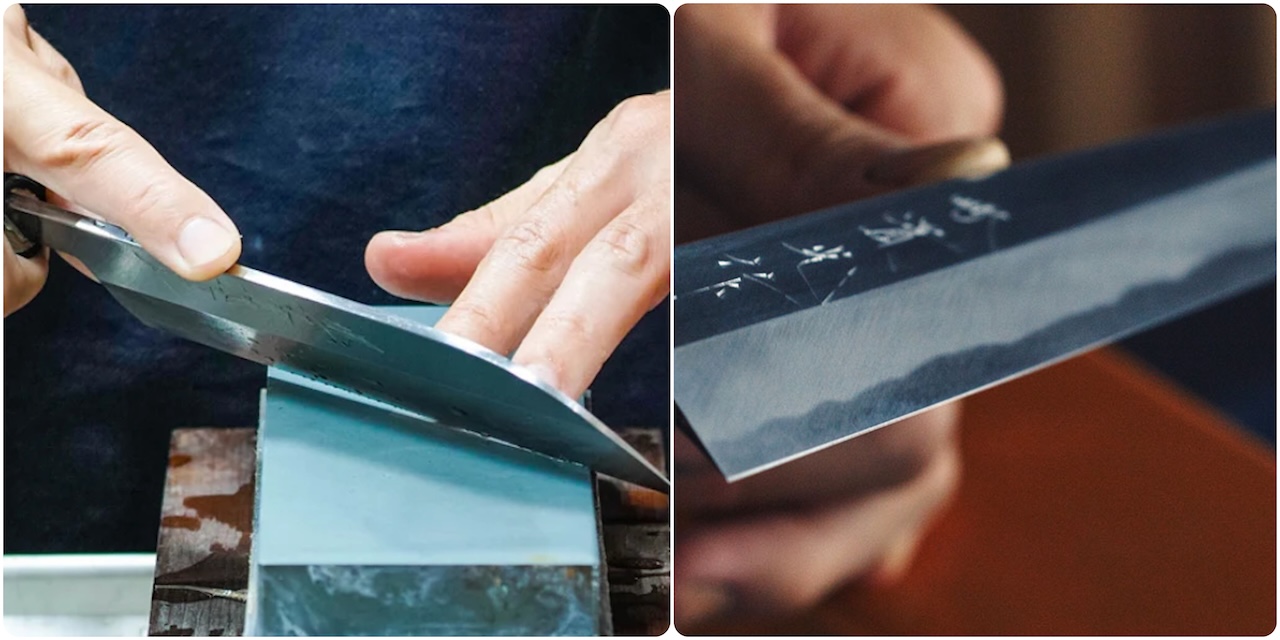
Resources for knife sharpening & maintenance
A wonderful resource, in English, about knives can be found at the KORIN website.
One of the best videos I watched in English about sharpening knives, both single and double-beveled blades, was at the website of a knife and sharpening stone company called MUSASHI
One of the best videos, in Japanese, about katsura muki was by Knife chef|oiri_kitchen. (By the way, he holds the Guinness Book of Records title for 2025 for the longest, continuous katsura muki peel: a whopping 15 meters 11 centimeters long!!!)
The video has English subtitles though some are awkward literal translations such as “wig removal” for katsura muki.
Focus on the action, noting especially how he holds the knife and positions himself in relation to his cutting board. Notice, too, the importance of triming your daikon segment to be sure it is a perfect cylinder before you start peeling.
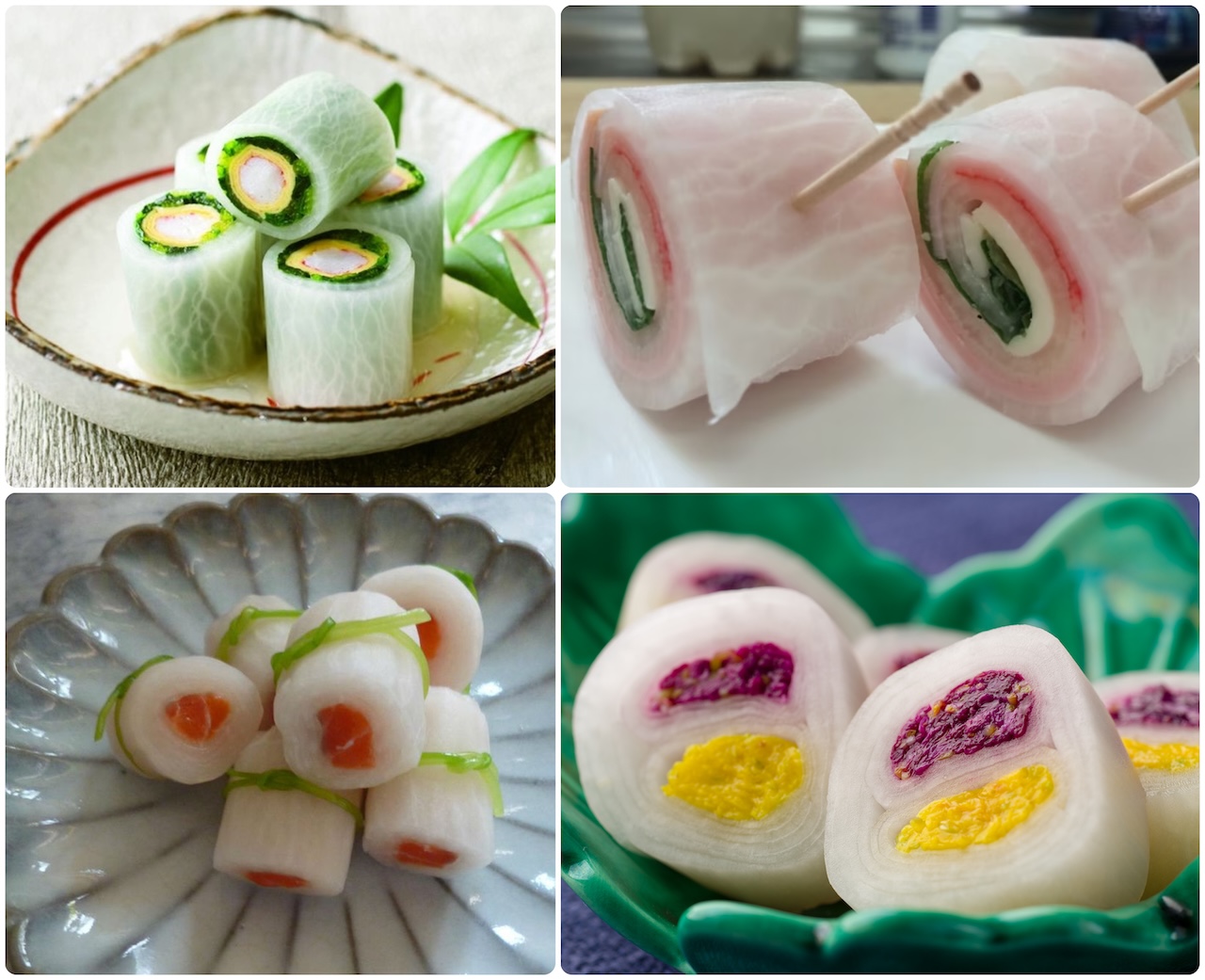
Fancy roll-ups
Once you can produce long, thin, continuous peels from daikon (or cucumber or carrots) you can use these to create attractive appetizers.
Download a copy of my November 2025 newsletter about KATSURA MUKIpeeling.
-79969_400x250.jpeg)