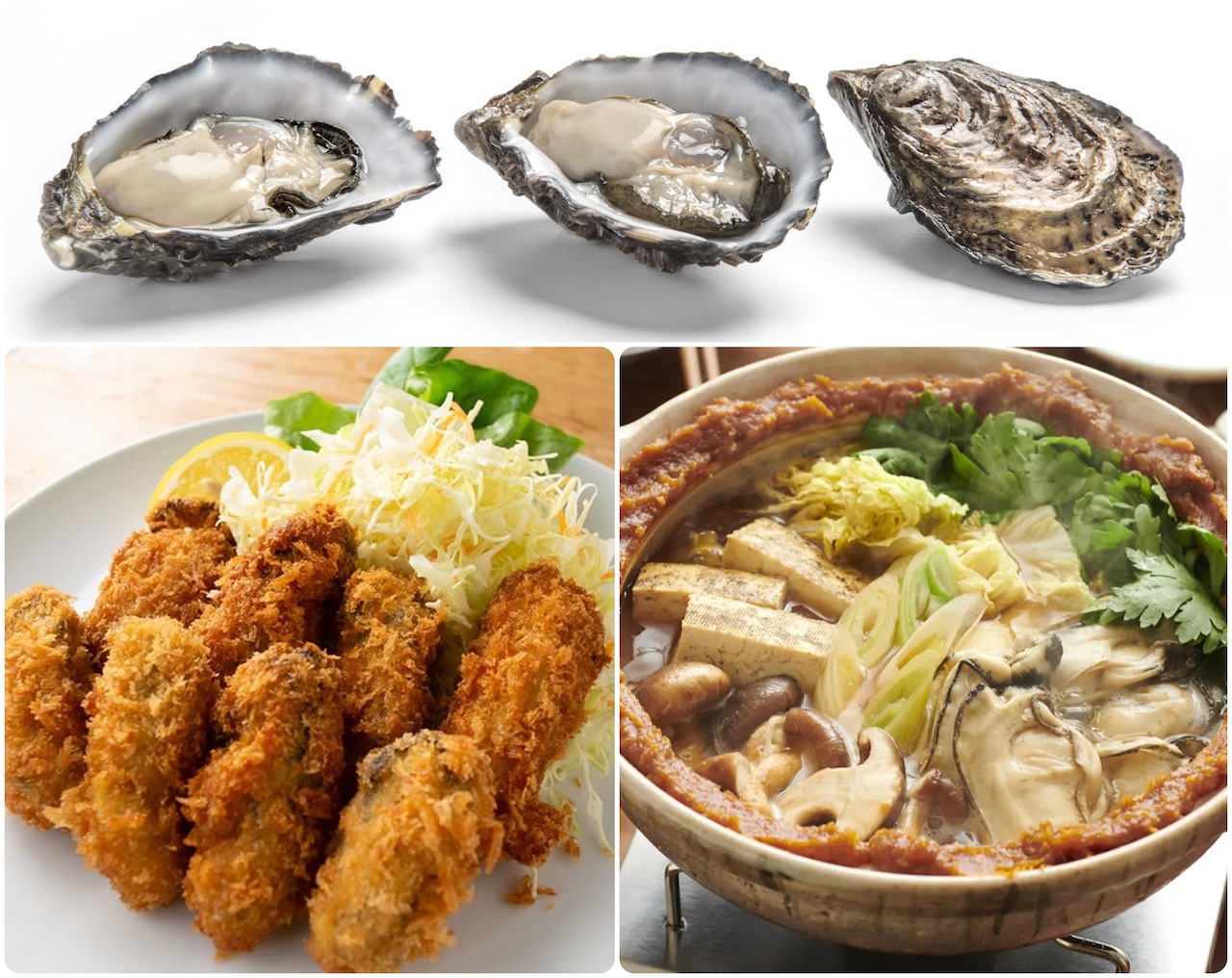
This project is about making two different oyster dishes: fried (kaki furai 牡蠣フライ) and simmered in miso (doté nabé 土手鍋). Recipes for both dishes begin with already shucked oyster meats.
If you have purchased shucked oysters in a glass jar, carefully strain the liquid. It is a flavorful essence that can be added to the pot if you are making nabe. Shucked oysters can have bits of shell and grit clinging them, so examine carefully. If need be, briefly swish the plump meats in salted water (1 teaspoon salt for 2 cups tap water), gently rubbing with your fingers to clean the surface. Rinse the meats in fresh water, and drain immediately on paper towels (you don’t want the shucked meats to absorb the rinse water). Place cleaned oysters on your platter, ready to add to the nabé …
Or, to dust in cornstarch, dip in egg and then dredge in panko crumbs to deep fry.
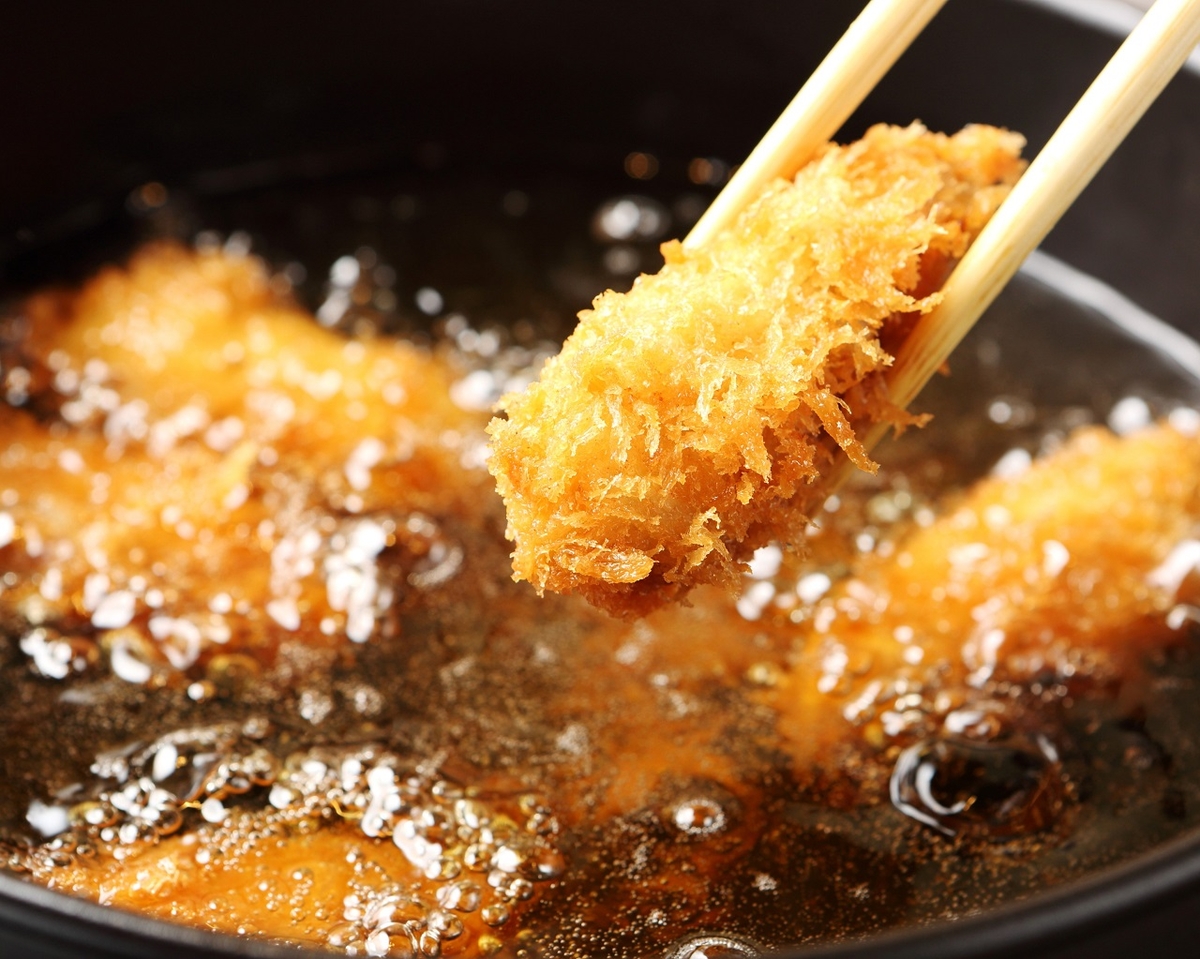
Kaki Furai
Kaki furai (breaded, fried oysters) are a popular obento item in Japan where many fried foods are served at room temperature. The crunchy coating owes its crispness to coarse shards of breadcrumbs the Japanese call panko that remain crisp even hours after frying.
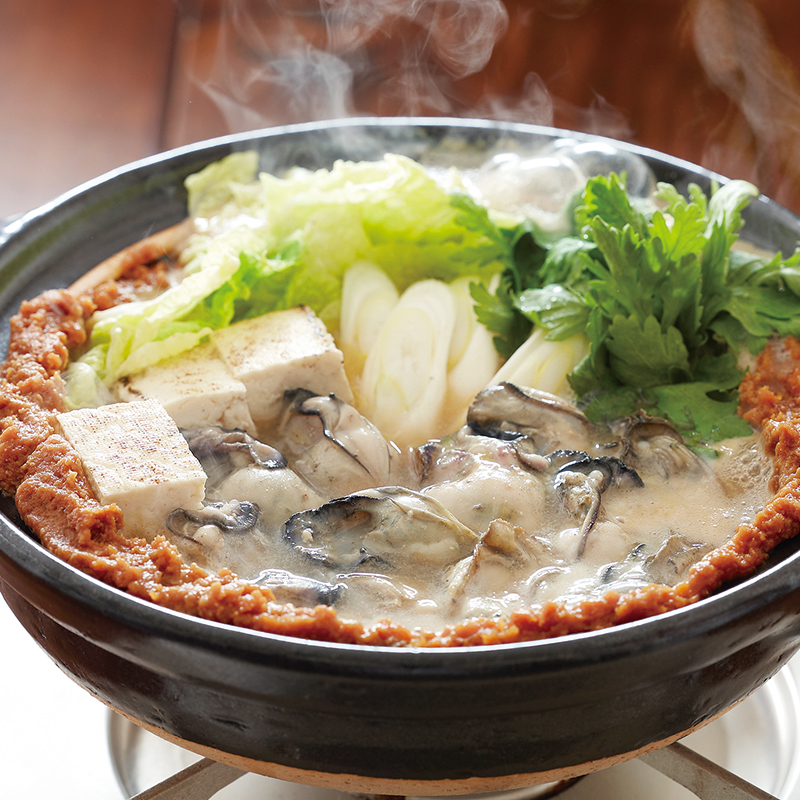
Home, Hearth & Hot Pots
Winters in Japan’s Tohoku (northeast) region can be brutal. Ice-glazed windowpanes and road-blocking deep snow invite folks to stay at home, gathered around a hearth or snuggled under a cozy kotatsu table-and-heating unit rolled into one. The upper body is kept toasty in a hanten jacket, a short, thickly padded, kimono-like garment. Tohoku natives, equipped and outfitted in this way to withstand winter’s worst, further fortify themselves with bubbling nabé – tasty hot pots cooked at table, shared with friends and family.
Visit Oysters for more information about them. If you haven’t yet read my February 2026 newsletter about OYSTERS, check it out.