
Oysters
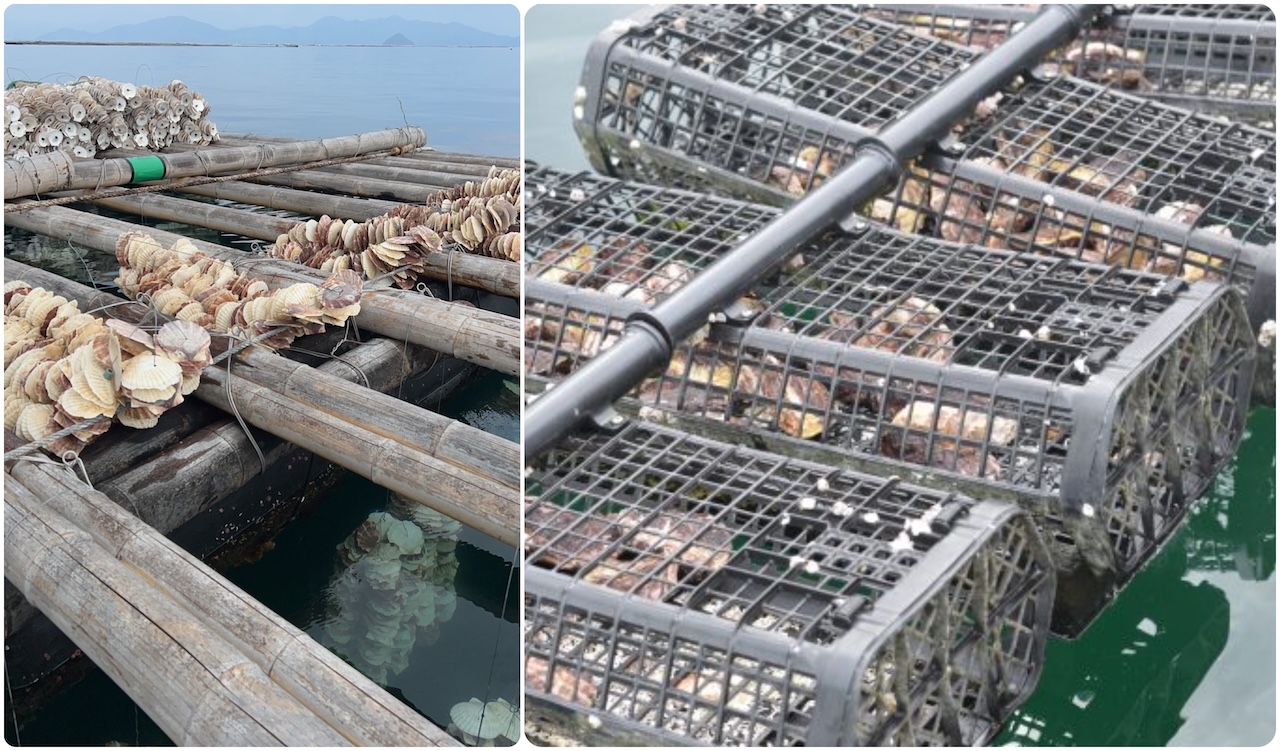
Wild Harvest and Farmed Oysters
Throughout the world, oysters have been a popular food source since ancient times. Archeologic evidence in Japan, in the form of kaizuka (shell mounds), dates to the Jōmon period (14,000-300 BCE).
Oysters had been abundant for millennia and harvested in their natural habitats — tennengaki 天然牡蠣. Oyster farming yōshokugaki 養殖牡蠣, began in earnest during the 16th century in and around Hiroshima.
Today, there are oyster farms scattered around the Japanese archipelago, some using a suspension method from rafts, others employing baskets submerged in tidal beds.
Which are better, natural harvest or farmed oysters? There are pros and cons on both sides. Wild oysters provide biodiversity, farmed offer consistency in size, shape and flavor profile. The downside of wild harvest, especially when done without care not to over-fish, is depleting natural resources. The downside of farmed product is possible environmental damage.
The bottom line is responsible management of resources is essential, whether harvesting wild or farming oysters.
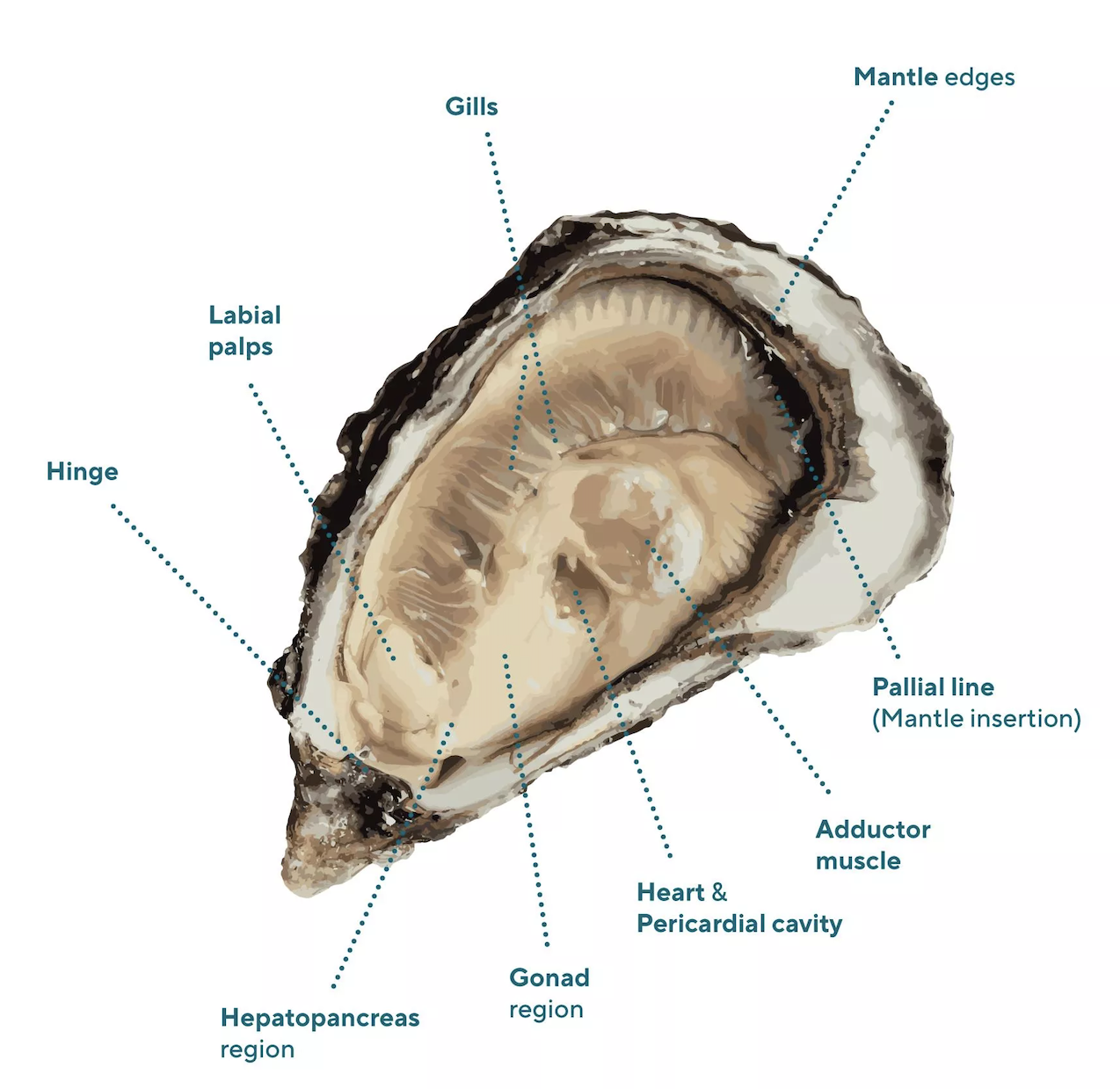
Interesting oyster TRIVIA
Interesting trivia: Pacific oysters are protandrous hermaphrodites. That means they mature as males and then change to females later in life. Stranger still, some revert back to being male, especially when food supplies become scare (when they are overcrowded, for example). Spawning is triggered by a rise in water temperature – above 18 C/65 F (that, in the Northern hemisphere is usually during July and August) initiates the process.
In the illustration above, the gonad (reproductive organs) region is displayed as neutral.
Pearls
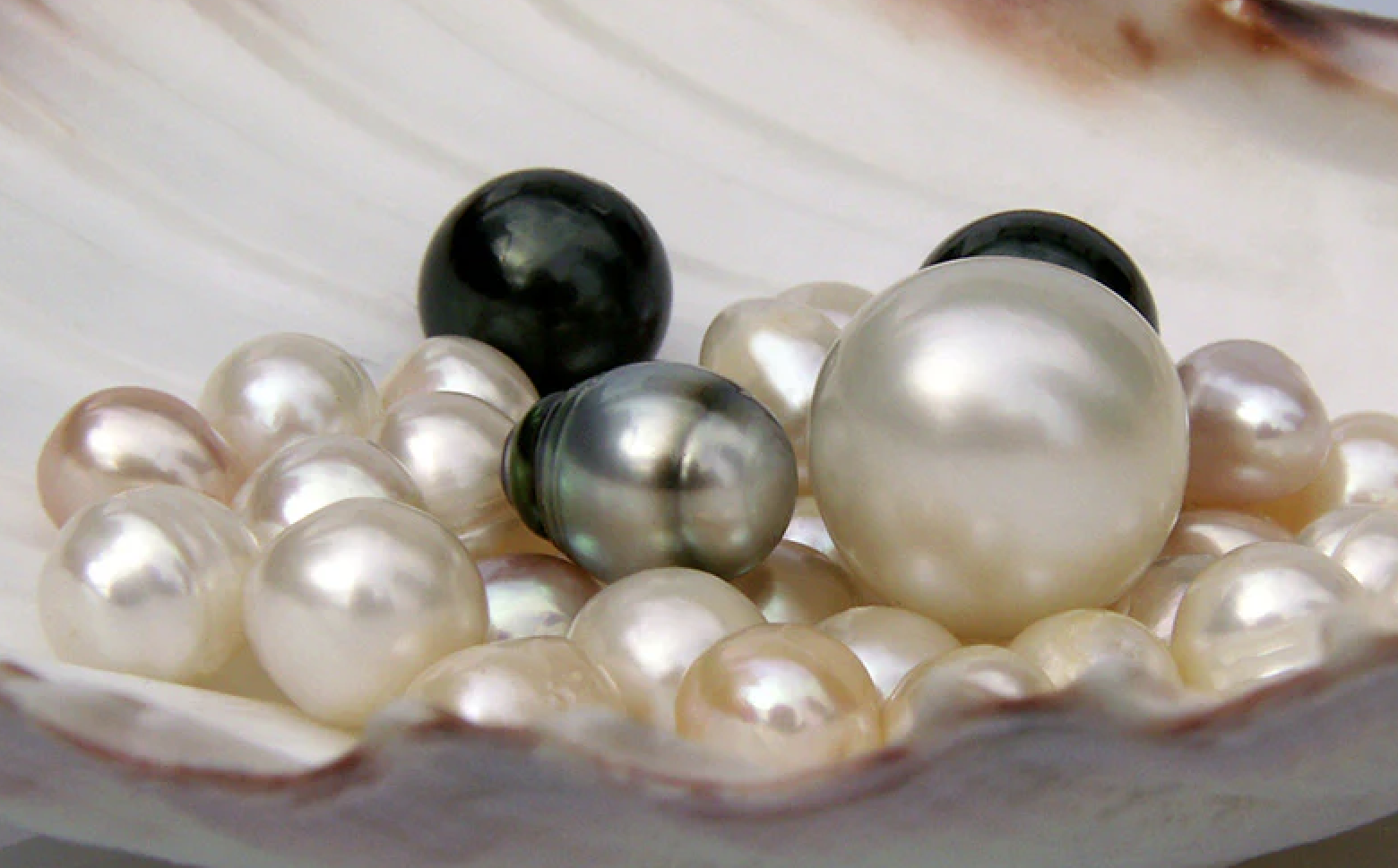
Oysters are not just a nutritious food source but also produce non-edible treasures: pearls. Pearls form when an irritant such as a grain of sand enters the oyster’s shell. As a natural defense, the oyster coats the intruder with a substance called nacre (the same material as the shell), that builds up over several years, resulting in a pearl. Cultivated pearls are made by inserting an irritant, usually a small pebble, to start the process.
A Japanese entrepreneur Kokichi Mikimoto (1858–1954) is widely recognized as the first person to successfully create a cultured pearl. He did this in 1893. Since that time the technology has improved and currently a technique developed by Tatsuhei Mise and Tokichi Nishikawa has become the industry standard.
Visit PROJECT Oysters to download recipes for two classic oyster dishes: kaki furai (fried ousters) and kaki nabe (onepot miso-simmered oyster stew).
Download a copy of my February 2026 newsletter about OYSTERS.

-79969_400x250.jpeg)