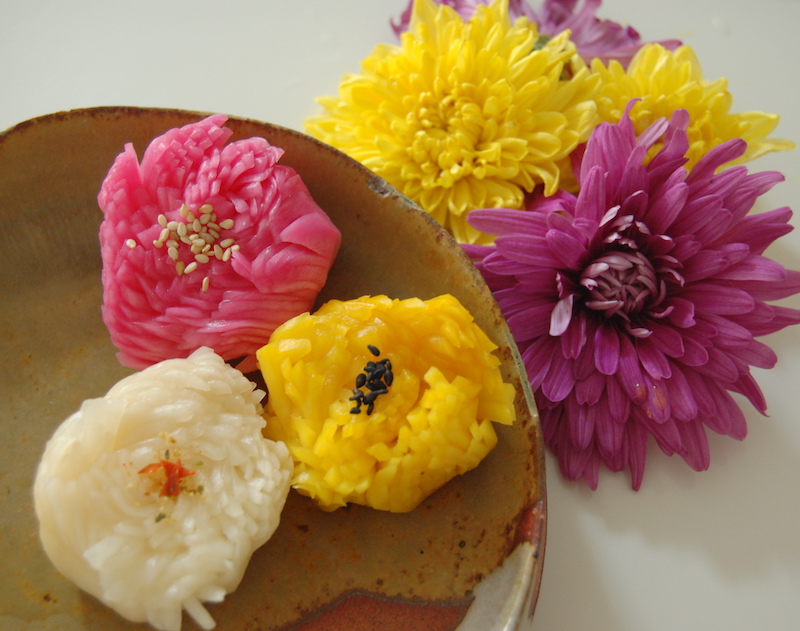
3-Colored Turnip Flowers
三色花蕪Sanshoku Hana Kabu
Emblematic of Japan and its culture, chrysanthemums appear in many guises: as the exalted Imperial household crest (a special, layered 16-petal design), the “official” stamp of the Japanese government (passport cover), and as a motif for textiles and table accessories glorifying the autumn season.
Here, culinary art mimics nature: Decorative knife skills carve white turnips into chrysanthemums. A combination of techniques (salt-wilting and marinating in a sweet-and-sour brine) flavors the turnips. Natural food dyes – gardenia pods and red shiso leaves – tint the turnip-flowers yellow and purple, respectively. These piquant turnips most often garnish platters of grilled fish or meat.
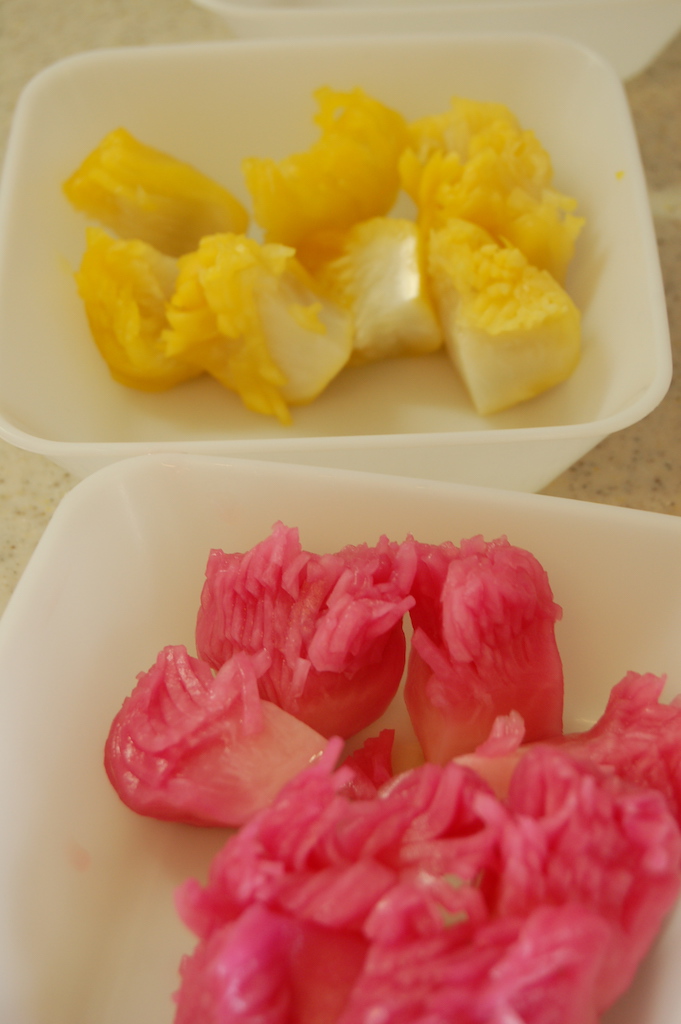
To make eating the turnip-flowers a bit easier, the kakushi-bōchō (“hidden” knife-work) technique is used: large “flowers” are pre-cut into four to six wedges and then reassembled to make a whole. The purple (slightly plum-flavored) flowers are usually garnished with white sesame toasted seeds, the yellow (gardenia-pod dyed) flowers are usually garnish with toasted black sesame seeds and the white flowers are finished with a touch of shichimi tōgarashi chili pepper.
When you’re ready to try your hand at creating these tasty, eye-catching garnishes, DOWNLOAD the recipe for 3 Colored Turnip Flowers

-79969_400x250.jpeg)