Fermented Fish Sauce 魚醤
Fermented fish sauces can be found in many parts of the world, most having been produced for thousands of years. It is unclear whether each was an independent “discovery” or whether they influenced each other by way of shared ancient trade routes and/or political conquest by the Roman Empire. The Romans are credited with “inventing” garum made from fatty fish packed with salt that was allowed to ferment in the hot sun.
Within Asia, China with its various fermented bean and bean-and-fish sauces was likely the source of “inspiration” for Viet Nam’s nuoc mam, Thailand’s nam pla, Cambodia’s tik trei and Korea’s aekjeot.
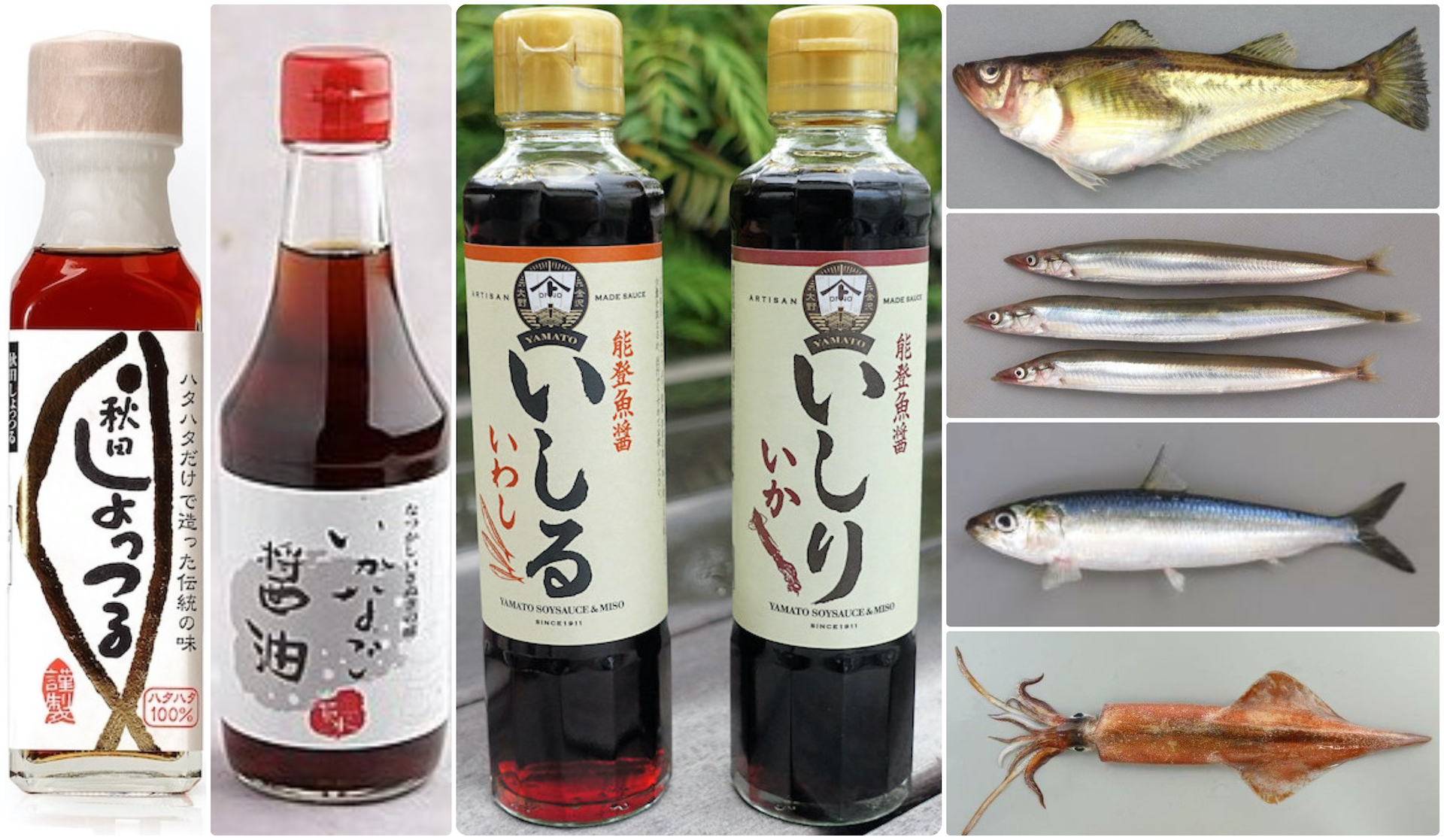
What about Japan? It boasts three kinds of gyoshō (fermented fish sauce), each using the fish and seafood from the region of origin:
- The Tohoku’s Akita prefecture is known for its shottsuru 『しょっつる』sauce, bottle far left. Shottsuru is made from HATA HATA fish (Arctoscopus japonicus Japanese sandfish; pictured top, far right).
- The Inland Sea area’s Kagawa prefecture is home to ikanago shōyu 『いかなごしょうゆ』, bottle second from left with red cap. It is made from IKANAGO fish (Ammodytes japonicus or Japanese sand lance; pictured 2nd from top, far right).
- The Noto Peninsula (Ishikawa prefecture) is known for its ishiru『いしる』and ishiri 「いしり」– bottles with gold caps, left to right. Ishiru is made from IWASHI (sardines; pictured 3rd from top, far right) and ishiri 「いしり」is made from IKA (squid; pictured bottom far right).
Check out PROJECT Cooking with Fish Sauce
Check out my FEBRUARY 2024 newsletter
all about Funky Fermented Fish Sauce.
-79969_400x250.jpeg)