Making a Home-Style Meal featuring ichiya-boshi
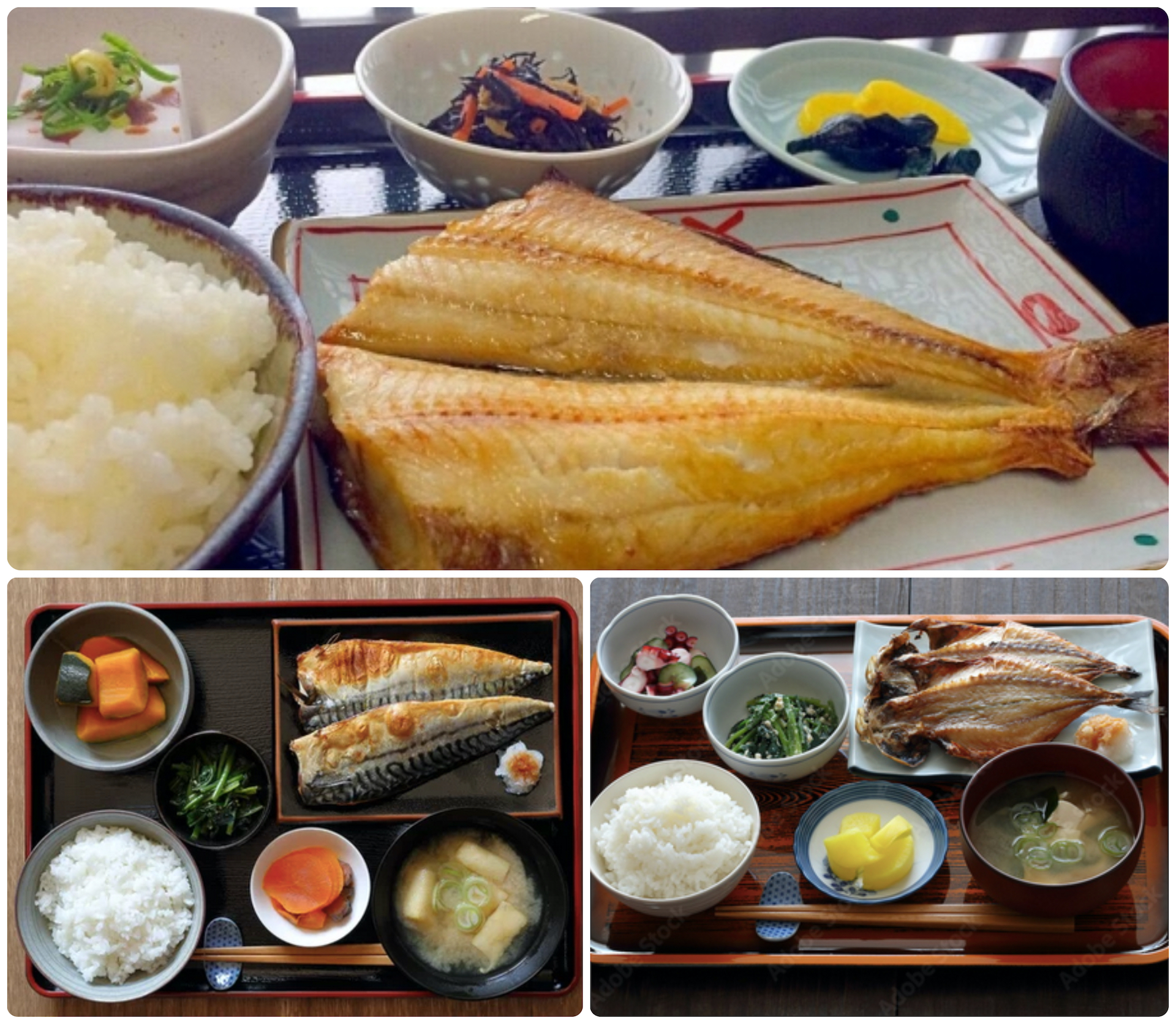
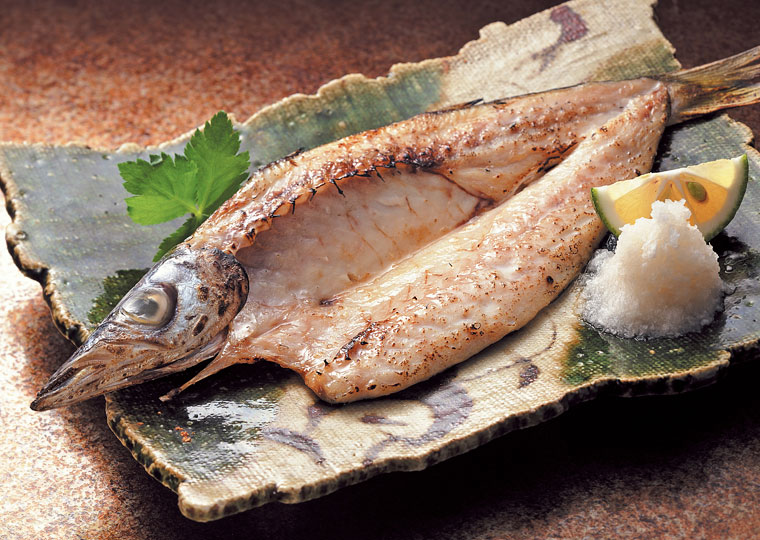
Traditionally, bountiful catches of fish were gutted, salted, and set out to dry in order to extend their shelf life. The generic term for these sorts of fish is himono, literally “the dried thing,” though these air-dried fish are actually quite moist to the touch, and wonderfully succulent when broiled. Air-dried fish are also known as ichiya-boshi (literally, “dried overnight”).
Air-dried fish are increasingly available in Asian markets outside Japan (look in the refrigerator or freezer section of the store). Try making a meal with air-dried fish in YOUR kitchen.
Download this Guide to Buying & Storing Ichiya-Boshi.
Download this Basic Broiled Air-Dried Fish recipe.
For help constructing a meal scroll down to Assembling a Meal featuring ICHIYA-BOSHI where you’ll find lots of suggestions.
Assembling a Meal featuring ICHIYA-BOSHI
A simple, home-style Japanese meal most often follows the ICHI JŪ SAN SAI format of one soup + 3 dishes… and rice. Download a recipe for Ordinary Miso Soup
Many other recipes can be found in WASHOKU (Cooked White Rice pg 137; Rice with Mixed Grains pg 139; Soy-Braised Hijiki and Carrots pg 187; Lemon-Simmered Kabocha pg 204) and KANSHA (Spicy Stir-Fry pg 122; Wakame with Tart Ginger Dressing pg 147; Sour Soy-Pickled Ramps pg 200; Quick-Fix Pickles pg 195 & 196).
On this website, in Kitchen Culture there are still more possibilities such as: Ohitashi spinach and Kimpira and Carrot-Ginger Rice.
Head to the Kitchen Culture page for more about ichiya-boshi fish.
My December 2022 NEWSLETTER is about Ichiya-Boshi comfort food from the sea.
-79969_400x250.jpeg)