.jpeg)
枇杷 biwa (loquats; Eriobotrya japonica)
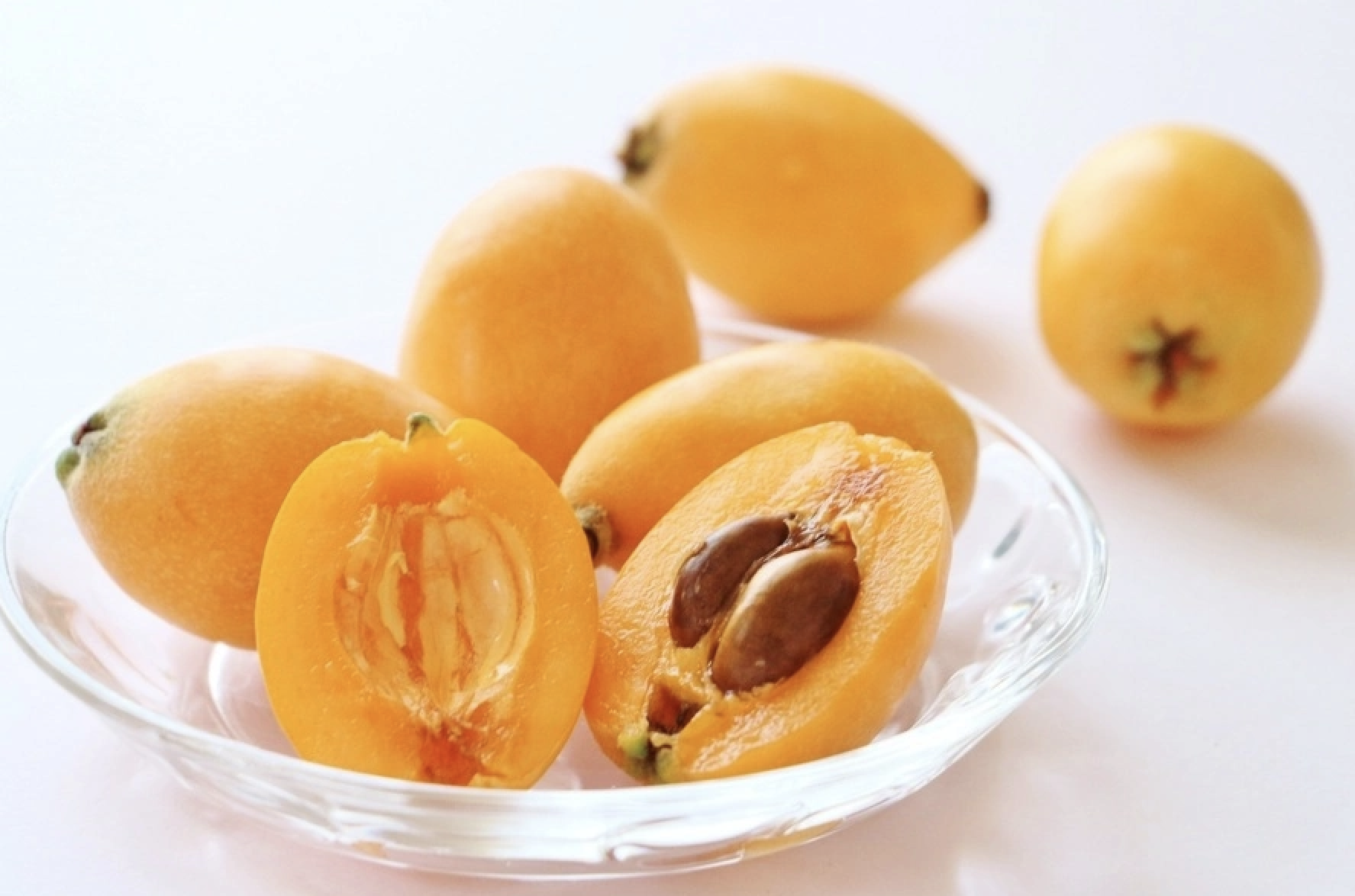
This month I was inspired to choose biwa as the theme for my newsletter and web posts when I was gifted a box of luscious loquats from friends in Chiba. The southern Boso Peninsula is famous for Boshu Biwa, a premium variety cultivated there since 1751 and historically offered to the Imperial Family.
Indigenous to China, biwa fruits were first brought to Europe by the Portuguese in the 16th century. In Japan, archaeologic evidence suggests they have been part of the diet since the Yayoi period (c. 300 BCE – 250 CE).
Fine flavor & nutrition
Biwa (loquat fruits) are juicy with a texture similar to apricots and a honey-like sweetness with just a hint of tartness.
Loquat fruits are enjoyed raw or as an extract; the fruit is also found in jams, tarts, and juices. Not only delicious, biwa are also highly nutritious.
Especially rich in vitamin A and beta-carotene (both are antioxidants that support immune function), leaves from the biwa tree are dried then brewed to make a restorative beverage. Loquat leaf “tea” has been shown to reduce inflammation.
In China and Japan loquat fruits and leaves are often used to treat coughs, diabetes, and various other ailments.
Visit PROJECT Biwa for recipes using the fruit and leaves.
Read my June 2026 newsletter for more information on biwa.