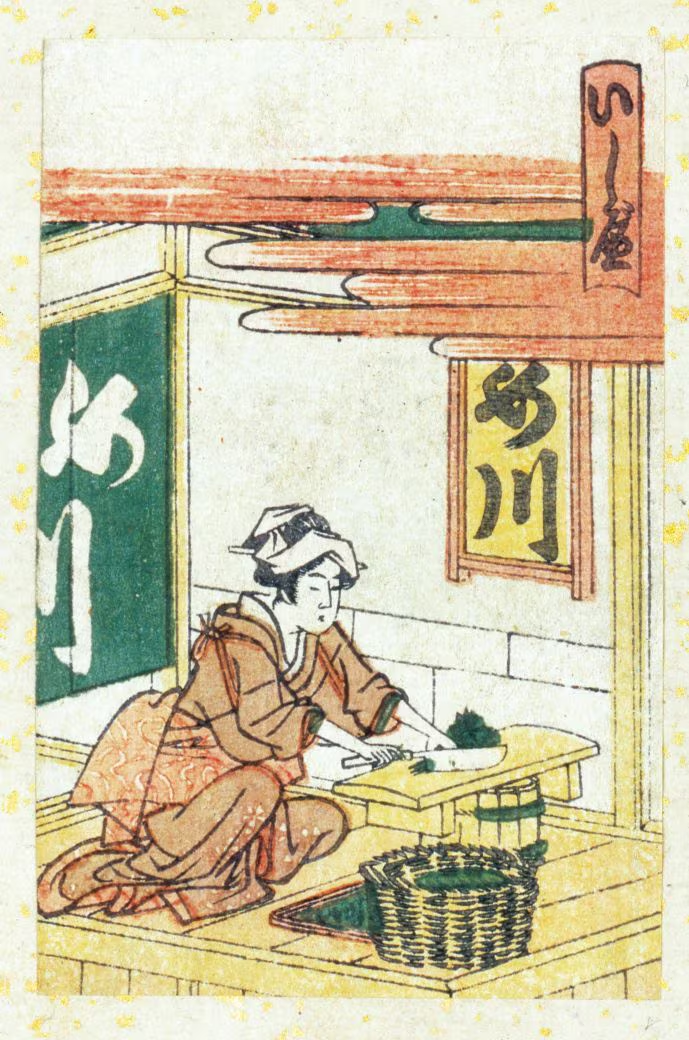
Cutting Board まな板 manaita
The unassuming cutting board – a dedicated surface on which to slice and chop food – is an ancient tool. Natural materials such as stone and wood offered smooth, stable surfaces on which to prepare food.
In the modern kitchen synthetic materials such as silicone and plastics have become increasingly popular. Round (think tree stump) and rectangular (think plank) shapes predominate, though there are novelty and decorative boards, too.
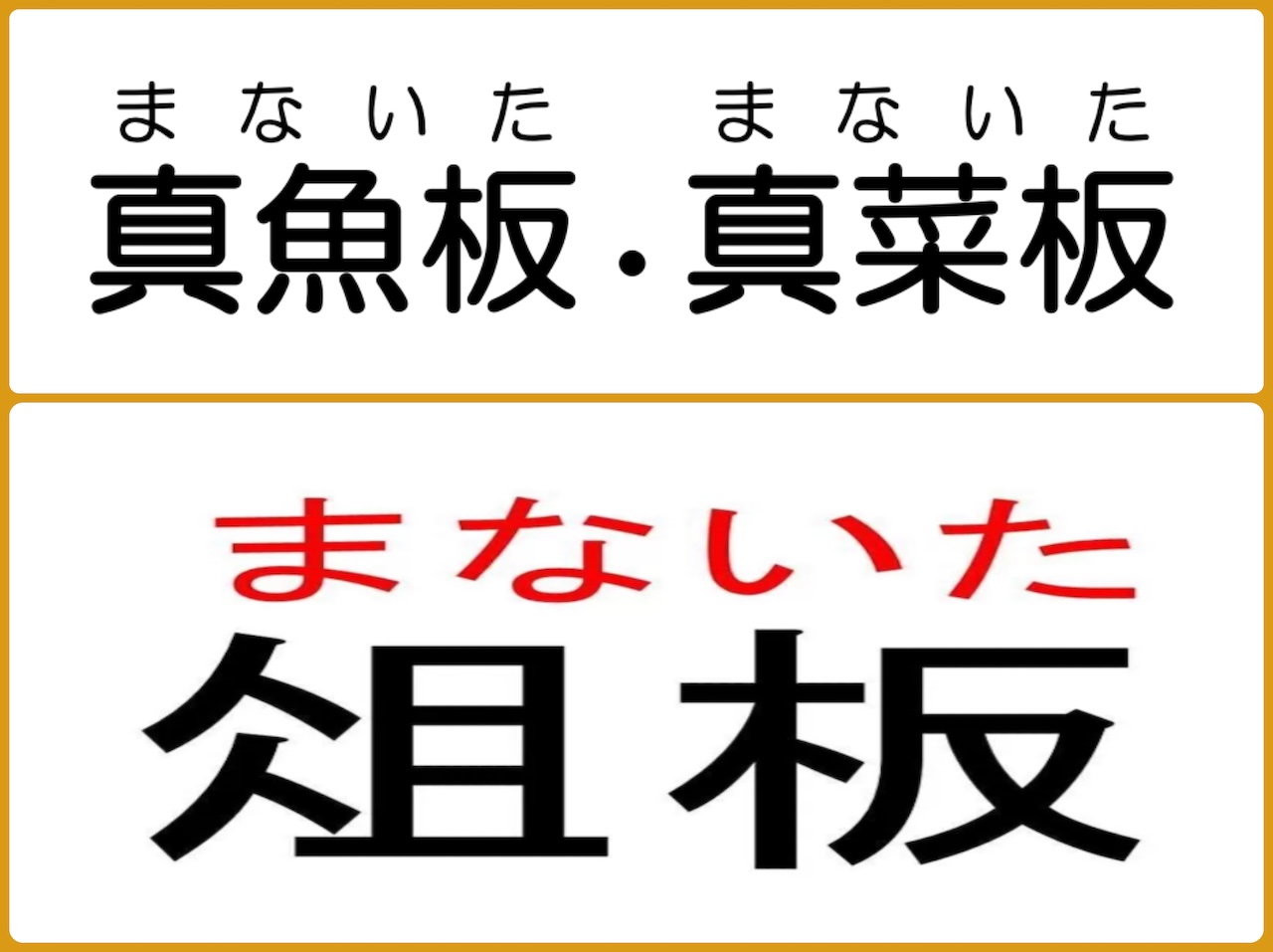
Different Ways of Writing: MA・NA・ITA
In the Japanese lanuage, it is not uncommon to find more than one way of describing and writing the same object. This multiple way of writing is especially true when the item in question has roots in another culture. The origin of many culinary tools and techniques in Japan can be traced to China.
In ancient China the calligraphy so 俎 was used to describe a board on which meat/flesh was cut with the connotation of ritual sharing (including sacrifices). In Japan where the concept, and word manaita was already in use, one way of writing the word for cutting board borrowed Chinese calligraphy, adding to it the calligraphy for “plank” (ita): 俎板 (that is the way its written above, on the bottom row).
To make things more interesting (should I spell that c-o-n-f-u-s-i-n-g instead?), alternate ways of writting manaita use calligraphy for “true” and “fish,” plus plank: 真魚+板 In some instances, the calligraphy for leafy green 菜 is used instead of fish 魚 — both are pronounced “na.”
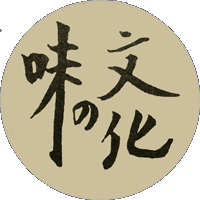
And yet another way of writing manaita is to use just hiragana and then add the calligraphy for ita (plank). Indeed that is the way manaita is written at the very start of this post.
Visit PROJECT Cutting Board for information on choosing and maintaining cutting boards.
More about cutting boards in my October 2026 newsletter