Tengusa (Heavenly Grass)
TENGUSA 天草
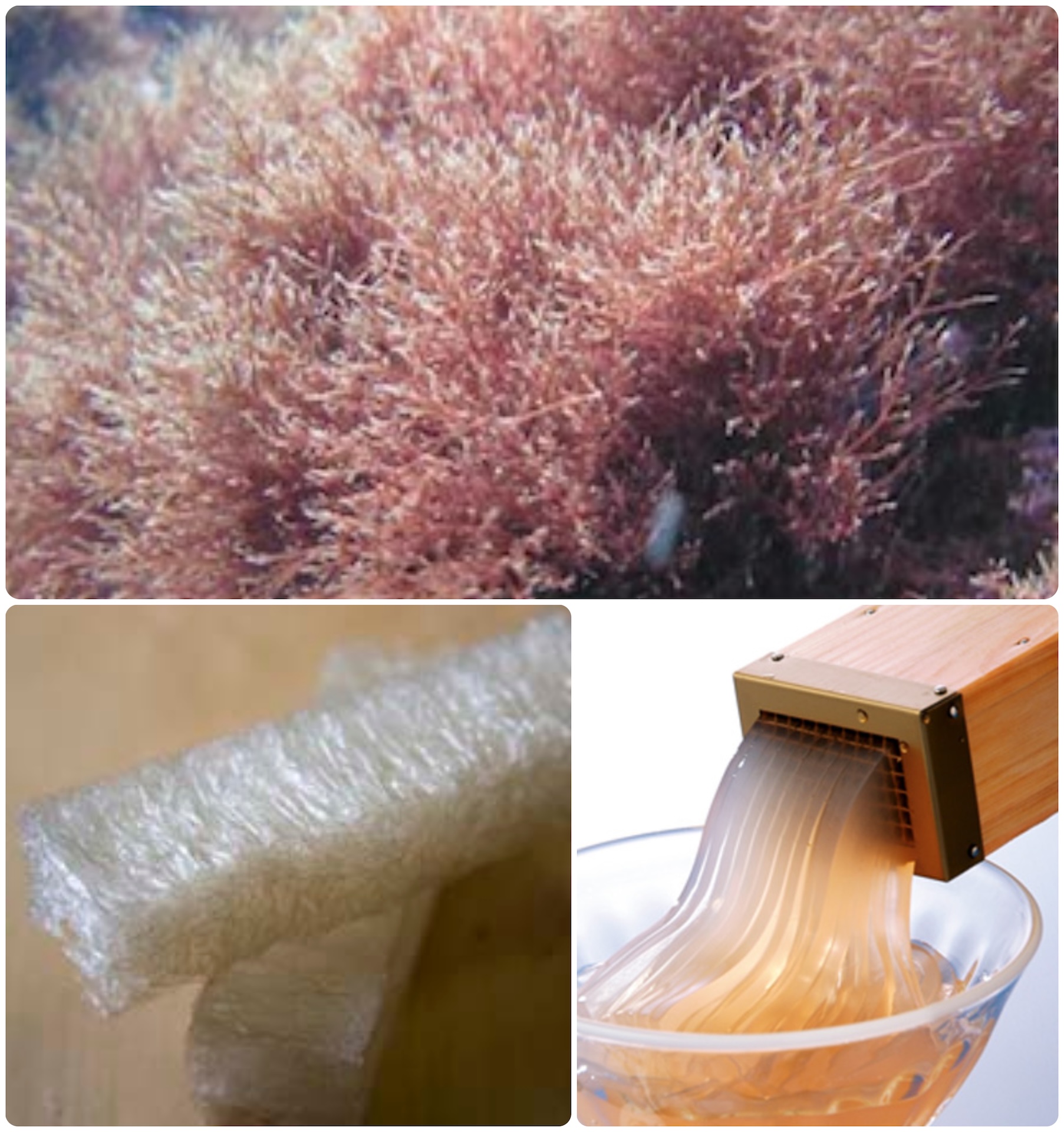
Making sweet and savory jellies and aspics from the sea begins with harvesting tengusa (天草 literally “heavenly grass”), a group of red marine algae that grow in fairly shallow waters. The most common variety is makusa (Gelidium amansii); in Japan most of the commercial crop is harvested in and around Shizuoka. Aquatic plant farmers use barrel-shaped umi megane “sea goggles” to peer into the ocean to locate tengusa beds, then scoop and rake in their harvest.
After being harvested from the sea, tengusa is dried, ideally by bleaching in the sun rather than by manufactured chemicals. Drying helps to retard spoilage of the fresh algae and at the same time it concentrates the algae’s nutrients, especially vitamins B, E and K and minerals such as calcium and potassium. Low in calories and a good source of dietary fiber, tengusa (and foods made from it) are popular with dieters.
As tengusa dries the red algae gradually turns straw-colored. When dried tengusa is boiled with fresh water it becomes a thick, gelatinous mass. As it cools, the slightly golden-colored jelly-like mass solidifies, and the resulting aspic is called tokoroten. Tokoroten is typically extruded through a special mold that produces long, slender noodle-like strands.
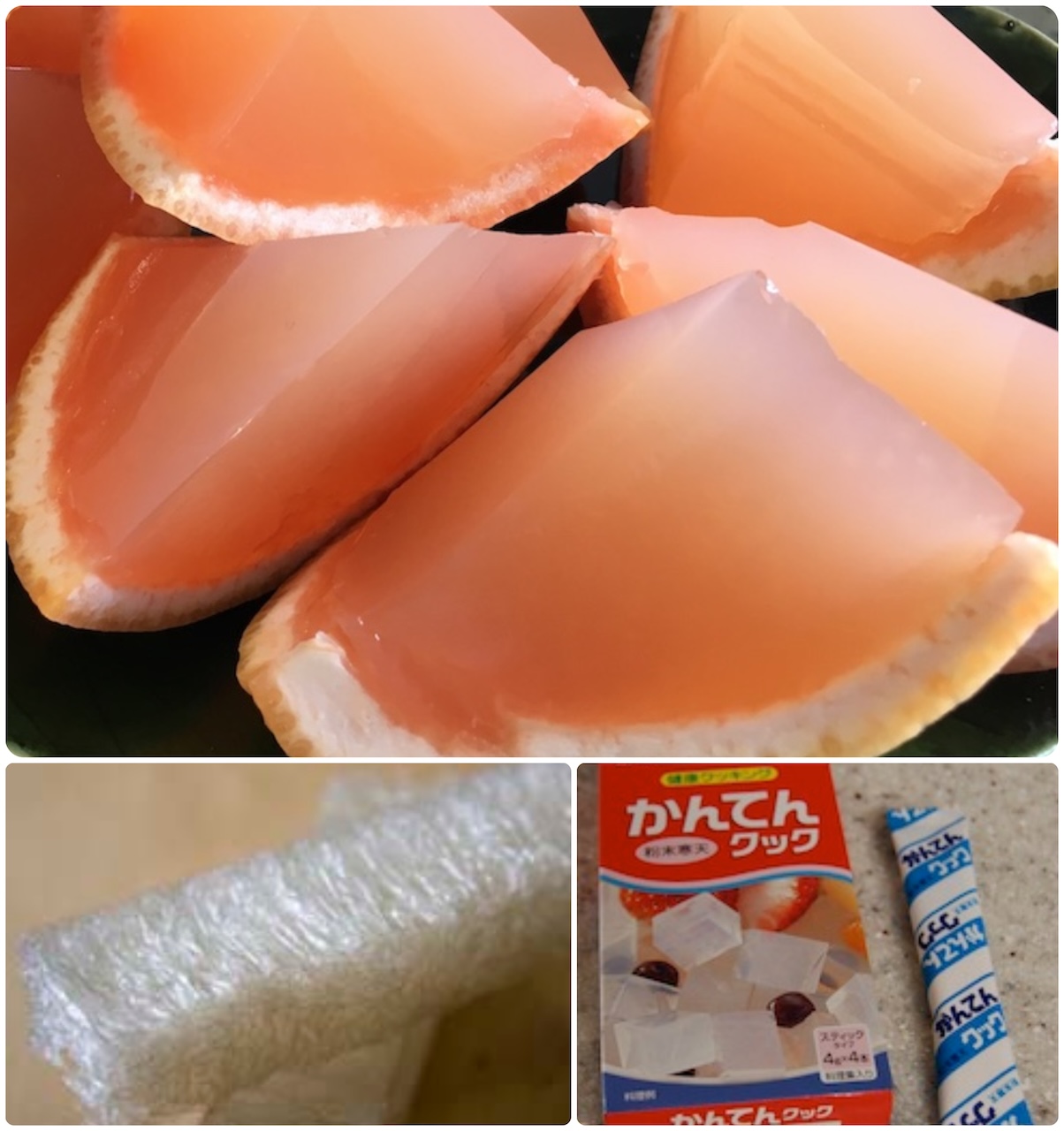
When blocks of tokoroten are frozen and then dried they become kanten, a shelf-stable foodstuff that can be soaked and simmered to make both sweet and savory dishes.
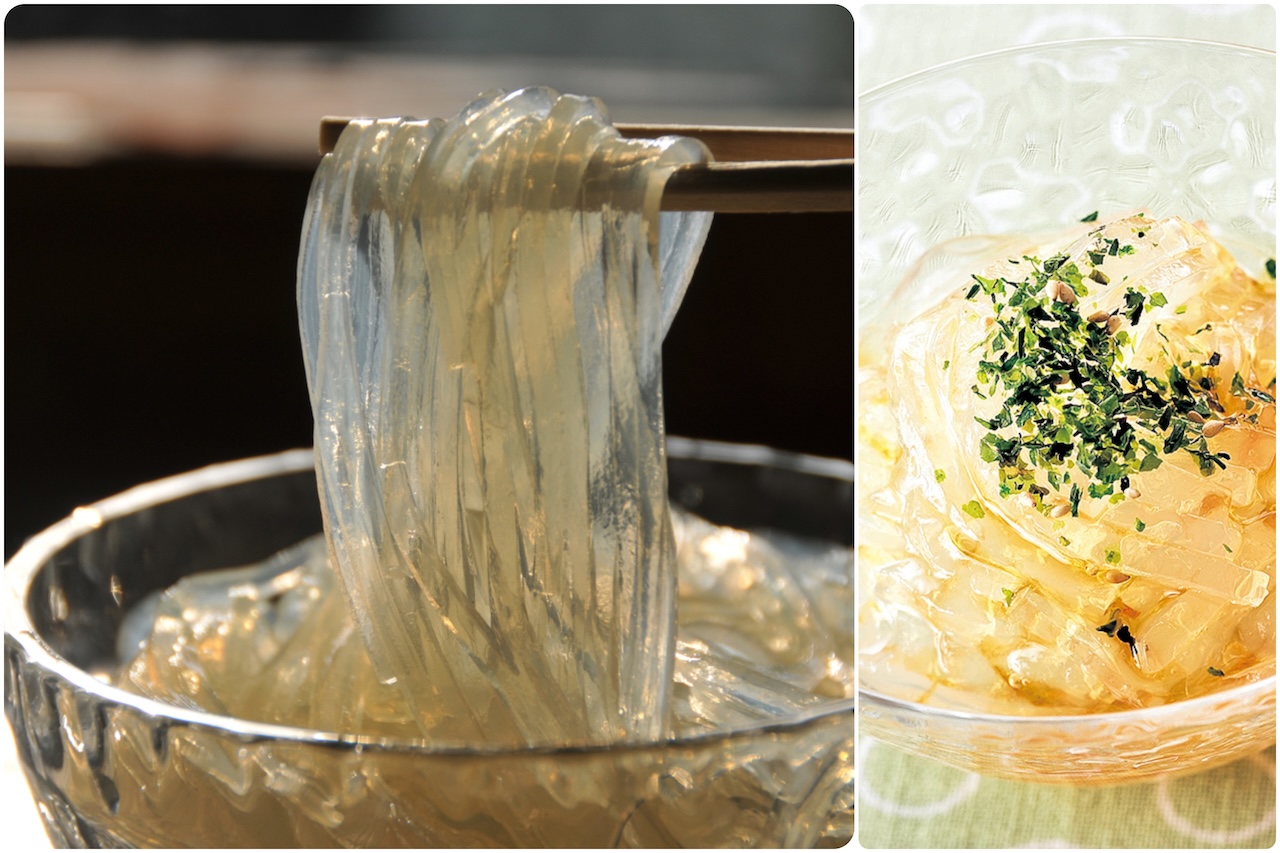
心太 TOKOROTEN... a savory aspic
A classic summer savory dish is made by extruding tokoroten into noodle-like strands that are then served, chilled, with a tart (vinegar) and spicy (karashi mustard) sauce. Garnishes can include ao nori (sea herb) and/or toasted sesame seeds.
For those who want to make their own, friend and colleague NAMI CHEN of Just One Cookbook has detailed instructions for making tokoroten. And, she is selling the special equipment to make the noodles, too!
寒天 KANTEN
Originally, tengusa had been dried and boiled to make tokoroten, a nearly, colorless, very stiff aspic. Then, sometime in the late 17th century, kanten, a new and easy-to-use form of this sea gelatin, appeared in Japanese pantries and at table.
Visit PROJECT Kanten to learn more about this remarkable, shelf stable foodstuff and for ways to cook with it.
Download a copy of my August 2026 newsletter about Sweet Jellies & Savory Aspics from the Sea.
-79969_400x250.jpeg)