PROJECT Cutting Boards
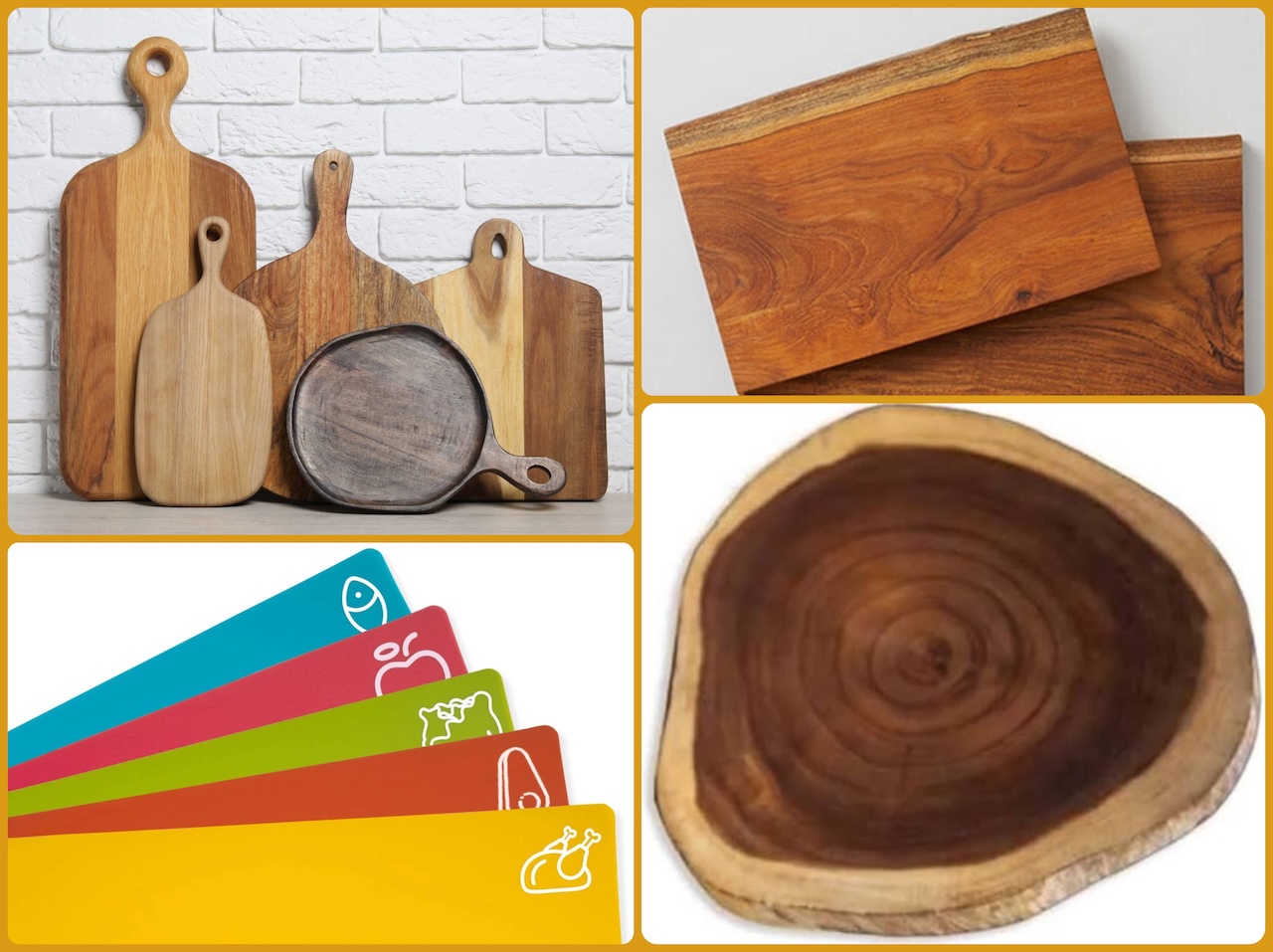
Whether cooking in a home kitchen or a professional one, most people will keep several cutting boards at hand. Depending on the task, the most suitable size, shape and materials may vary.
This PROJECT Cutting Board considers a variety of factors in selecting a board, and the pros and cons of various materials, both natural and synthetic, used in making boards.
Tips on removing odors and stains from cutting boards are included at the end of this post.
Historically, NATURAL materials such as stone and WOOD were used as cutting surfaces. In the early 20th century, a better understanding of hygiene and sanitation led to concern about food-borne illnesses. When bacteria like Salmonella and E. coli linger on cutting board surfaces it leads to cross-contamination, especially problematic when the same board used for raw meats is also used for other foods. As a result, boards made from synthetic materials such as POLYETHYLENE (PE) that can be subjected to sterilizing high temperatures and sanitizing chemicals were thought to be a better (safer) choice. In addition, because PE surfaces could be dyed, color-coded boards were touted as a preventative measure in avoiding cross-contamination (typically green boards are used for vegetables, red for raw meat, and yellow for poultry).
PE boards proliferated until consumers became aware of other issues. A landmark study conducted in 1993 comparing wooden and synthetic surfaces revealed that even plastic boards can harbor dangerous bacteria. More recently (2023-2024) researchers have focused on the issue of microplastics contamination. This happens when food chopped on sythetic surfaces shed high levels of microplastics.
There is no one, clear-cut “winner” when it comes to choosing a safe (bacteria and chemical-free), convenient (easy to maintain, portable), environmentally friendly, affordable cutting board. Here are a few things to consider, though, as you decide what to use:
Among NATURAL materials, WOOD is the most popular (and sustainable) choice. In Japan, hardwoods such as hinoki cypress (Chamaecyparis obtusa) are favored while in America maple is the most common choice and in Europe, it is sweet chestnut. For all wooden boards, straight grain (rather than cross-grain) is preferred because it resists warping. Wooden boards do not dull knife blades.
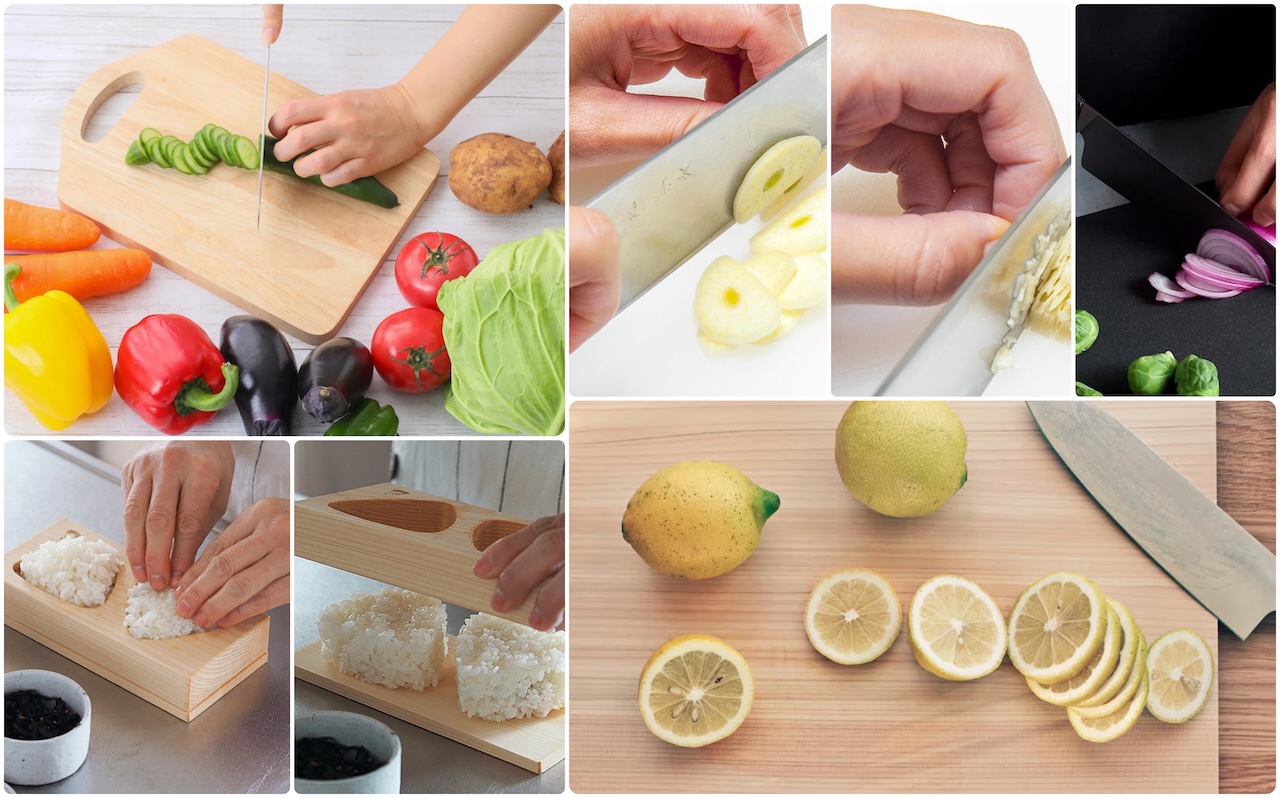
Most cooks will have several boards for different purposes. I prefer to use synthetic materials when chopping onions, garlic or other foods that could tranfer odors to the board. When cutting raw meat or fish, I also use PE surfaces because I want to be able to thoroughly clean the surface with high heat and kitchen bleach.
I find that wooden boards are good for fruits, vegetables and bread and cheese. For those wanting to limit their use of plastic tools, wooden rice molds can be substituted.
Removing odors and stains
There are natural and chemical substances that can remove odors and stains from cutting boards.
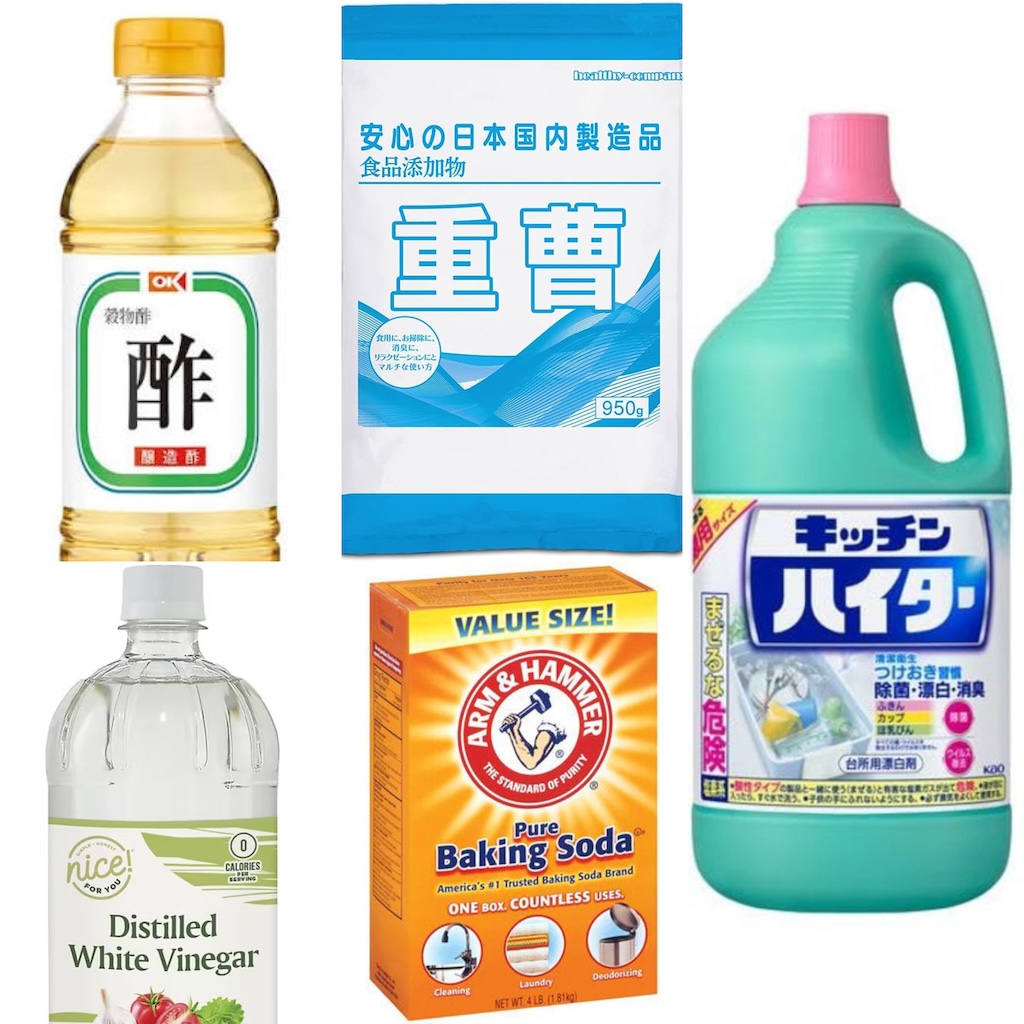
The two most effective NATURAL substances for odor and stain removal are VINEGAR (su 酢) and BAKING SODA (juso 重曹「じゅうそう」) chemically known as sodium bicarbonate or NaHCO₃. Generic products sold in Japan are pictured on the top row, American products on the bottom row.
In the 1960’s, the Japanese developed a home bleach product they dubbed HAITA (based on the German word heiter, meaning “bright, sunny”). It is the large, aqua-colored jug pictured on the right. The active ingredients are sodium hypochlorite (chlorine, surfactant (alkyl ether sulfate), alkaline agent.
More about Cutting Boards in the Kitchen Culture blog post and my October 2026 newsletter