洋菓子・yōgashi
Western-Style Confectionery
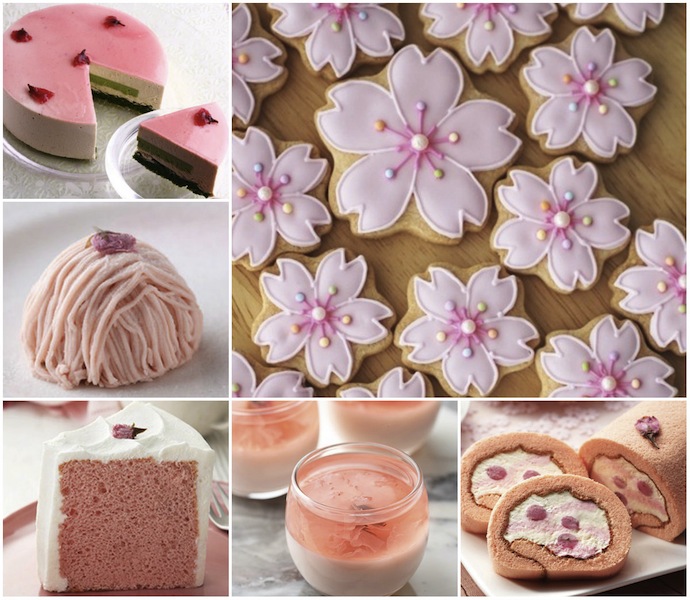
Japan’s food culture includes ingredients, techniques and dishes that have been adopted and/or adapted from non-Japanese sources. One large category is confectionery. Earliest influences were from the Portuguese in the 16th century, later interaction with French, Dutch, Scandinavian, English and American food culture brought about further changes in the Japanese culinary world. Above is a small sampling of western-style cakes, cookies, and custards themed around SAKURA, Japan’s iconic symbol of spring.
和菓子・wagashi
Japanese-Style Confectionery
There is a long, deep, tradition of confectionery in Japan. Indeed there is archaeological evidence that fruits, nuts and grains were fashioned into snacks and sweets as long ago as the Jomon period (10,000 years ago!!). The kind of highly artistic, stylistic sweets that we think of today as wagashi, however, developed during the Edo Period (1603-1868).
The wagashi most often associated with springtime is SAKURA MOCHI 桜餅. There are basically two styles: KANTO (upper right) and KANSAI (lower left).
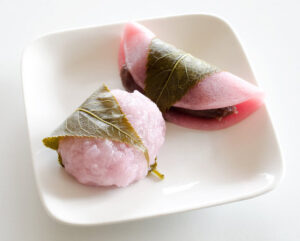
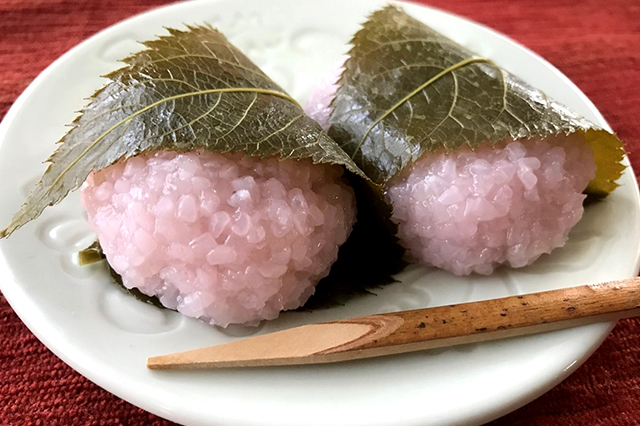
Kansai-style Sakura Mochi 桜餅, 関西風
Although all kinds of sakura mochi enclose sweet bean fudge, the ingredients and method of making the exterior is various. What is called KANSAI-style features a nubbly-textured exterior made from dōmyōjiko 道明寺粉 rice flour. The filling is typically fashioned from a chunky bean jam called tsubu an 粒餡.
To find out more about various rice flours, visit the PROJECT Rice Flour post.
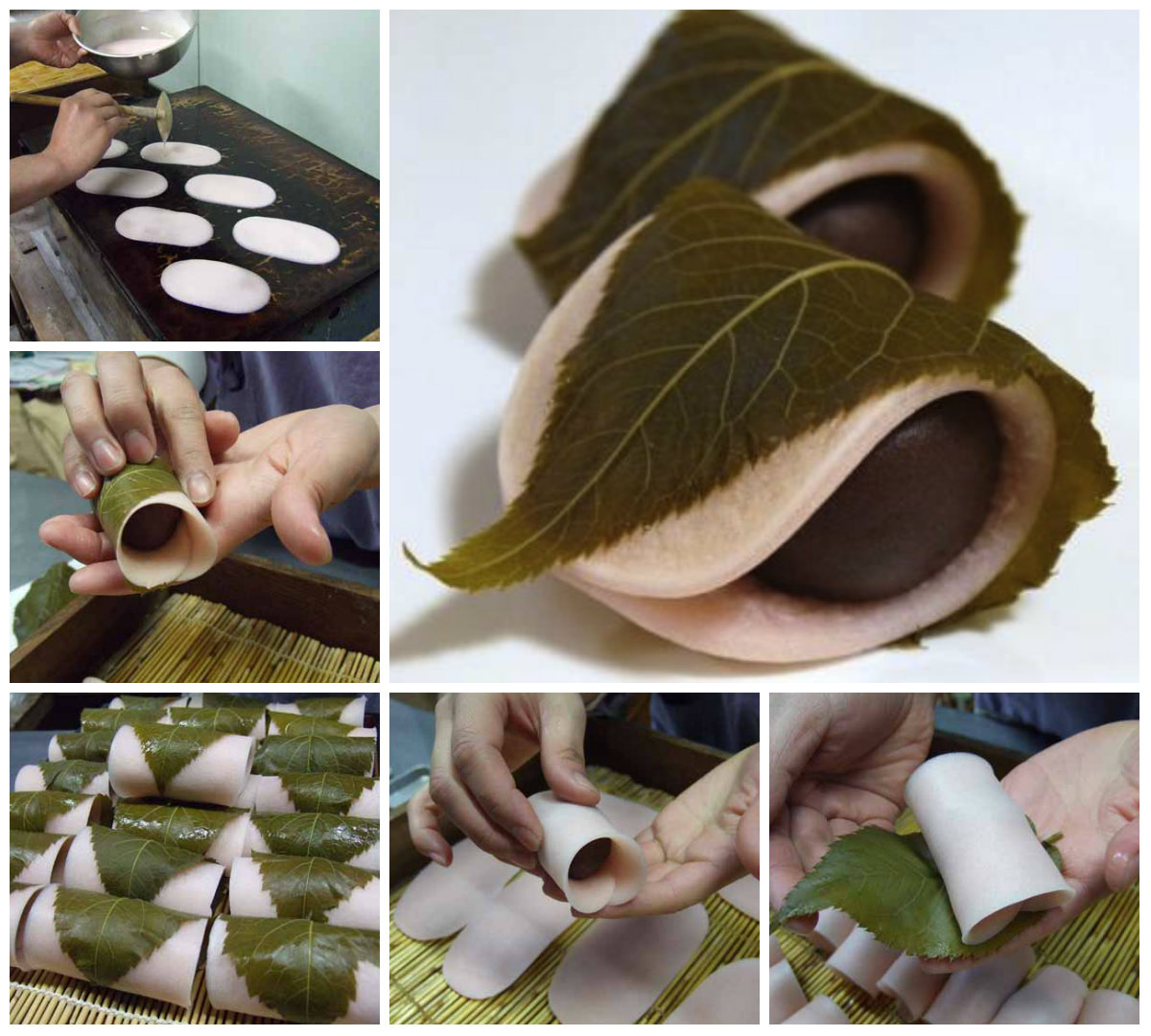
Kanto-style Sakura Mochi 桜餅, 関東風
Kanto-style sakura mochi features a smooth crepe-like exterior, typically made from a combination of rice and wheat flours that adds elasticity and a distinctive chewiness. The filling is usually a smooth and fudge-like koshi an こし餡.
Visit my Kitchen Culture blog post Celebrating Sakura.
Download a copy of my March 2025 newsletter about Celebrating SAKURA.