デパ地下お惣菜 Depachika osōzai
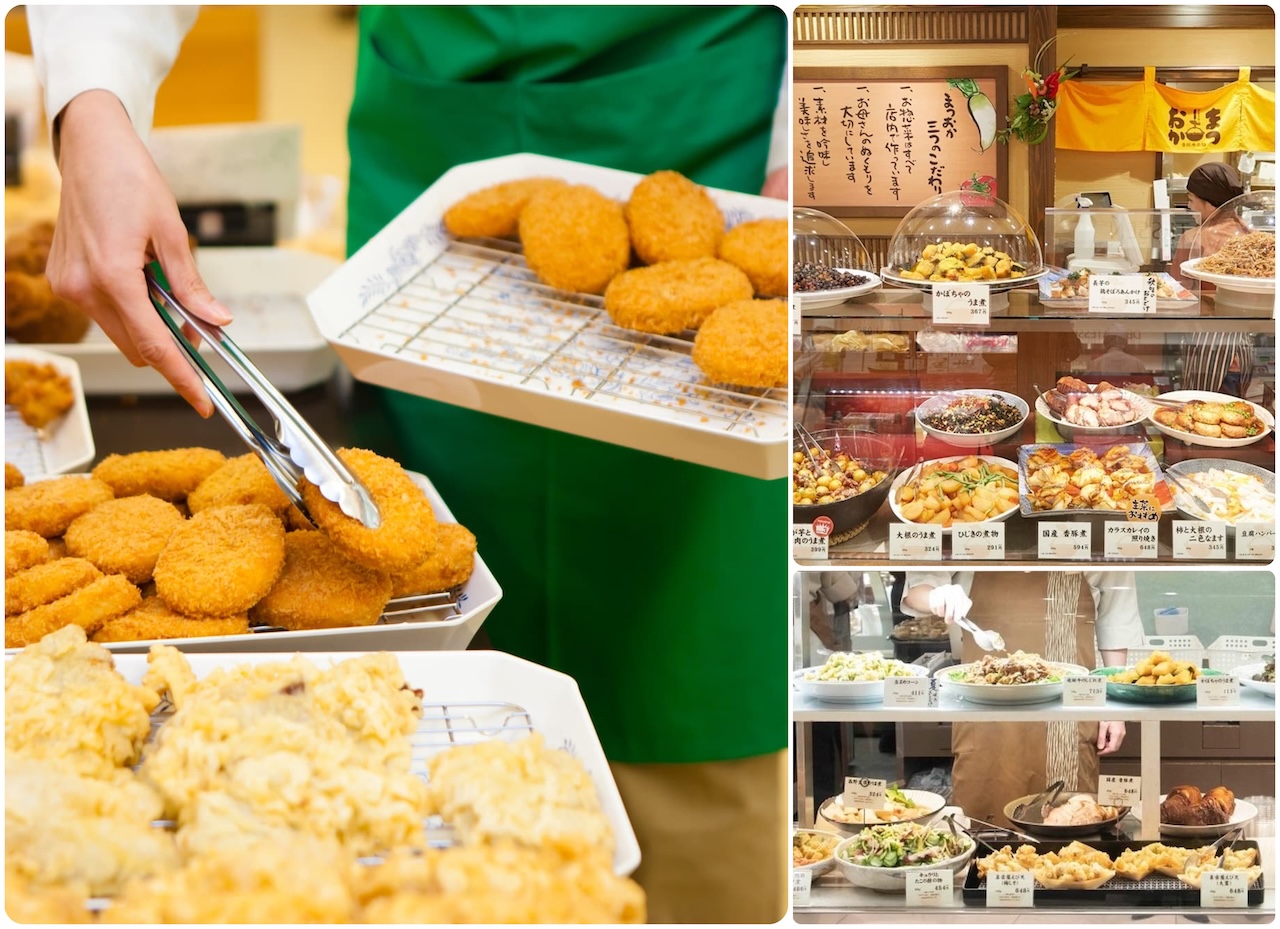
Modern households everywhere are challenged with balancing a desire to eat healthfully with limited time to prepare meals. In Japan, the food industry’s response has been to offer a vast assortment of prepared foods for sale through various outlets: convenience stores, supermarkets, and depachika (department store food halls located on the basement level). Collectively the dishes are being marketed as osōzai or “side dishes.” Osōzai has become a huge and profitable business.
For busy home-makers or single households osōzai are often the answer to what’s for dinner. For visitors to Japan, exploring depachika food halls is a terrific way to sample a wide range of foods at reasonable prices.
外・中・内 食 Eating OUT, IN and IN-BETWEEN
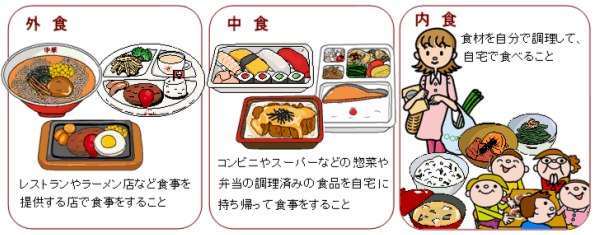
Today’s food choices in Japan fall into one of three categories: 外食 gaishoku, 内食 uchishoku or 中食 nakashoku.
As the calligraphy for each of these options suggests it is WHERE the food is prepared and consumed that defines it.
EATING OUT in a restaurant, whether at a casual eatery or a high-end establishment, is gaishoku and that means others (food professionals) prepare and serve the food in a special (not-at-home) setting.
EATING IN uchishoku is on the other end of the spectrum. It means a home-made spread whether that is a hastily assembled sandwich or a leisurely prepared multi-course meal made from scratch. If it is uchishoku the assumption is that home cooks (with no special training) are in charge.
IN-BETWEEN nakashoku is a meal made of foods prepared by others (food professionals) that is consumed in the home (or in the office or at school). Most nakashoku is purchased at supermarkets, convenience stores or department store food halls. Increasingly delivery services bring nakashoku foods directly to the home.
Ready to try transitioning from made-by-others nakashoku osōzai dishes to home-made osōzai?
Visit PROJECT osōzai.

-79969_400x250.jpeg)