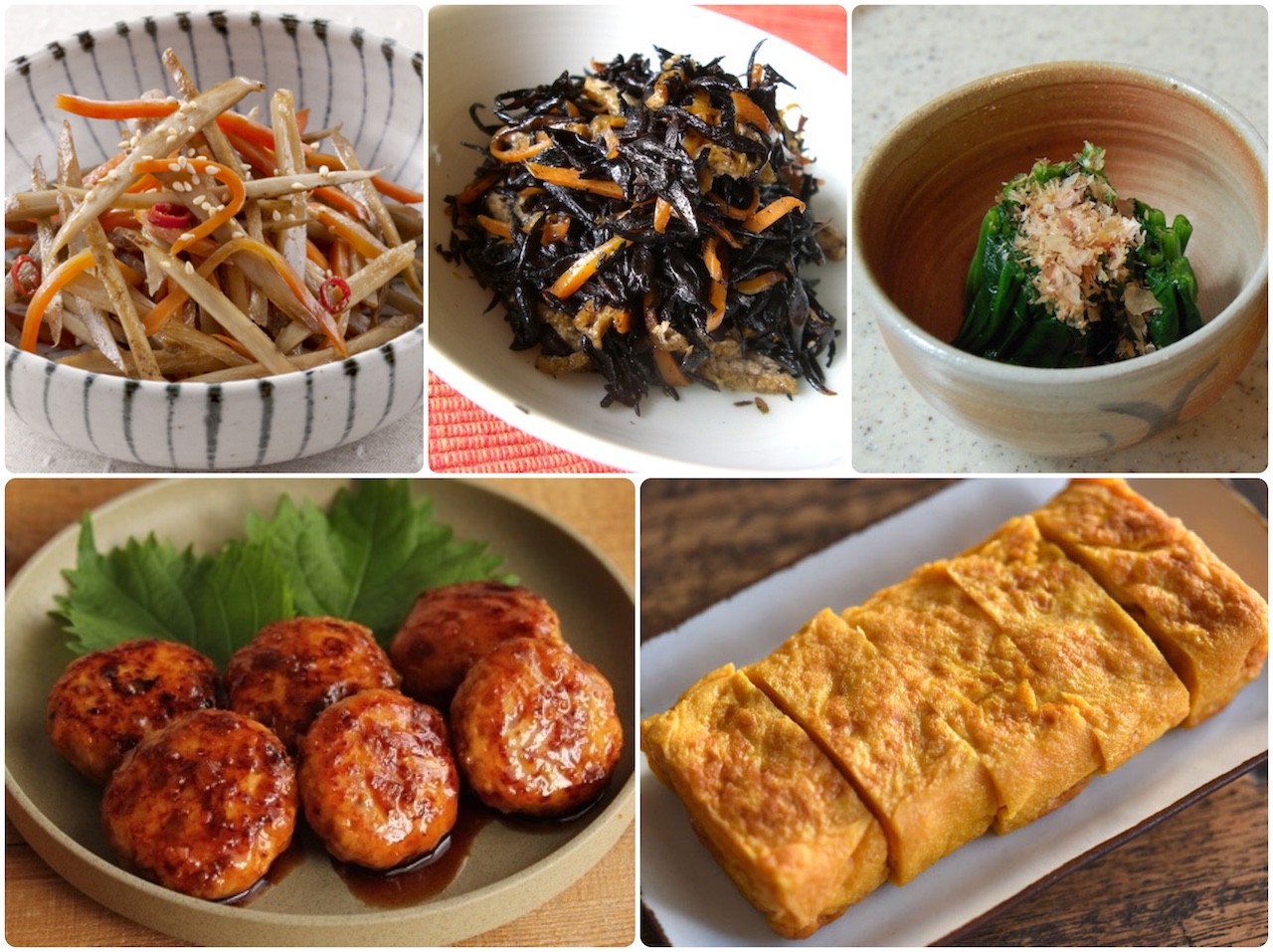
Food halls located in the basement level of Japan’s leading department stores carry an incredible array of fresh foods, packaged grocery items, and prepared take-out items. Japan’s food halls are justly famous for their extensive, high-end comestibles. The savory items sold at the osōzai (side dishes) counter boasts the highest volume of sales. Among the dozens of dishes that consistently rank in the top 10 are these FIVE SIDE DISHES (clockwise from upper left):
Kimpira, a spicy stir-fry of carrots and burdock root…
Hijiki, simmered in a slightly sweet soy broth with slivers of carrot and fried tofu…
Ohitashi, briefly blanched spinach dressed with smoky katsuo-bushi flakes…
Tamago Yaki, rollet omelet. The sweet version, pictured here, is popular in the Kanto Plains area centered around Tokyo, boasts a carmelized surface. The savory version favored in the Kansai region (Kyoto, Osaka, Kobe area) is paler in appearance. Recipes for both styles are included here…
Tsukune, gingery ground chicken sliders glazed in a sweet soy sauce.
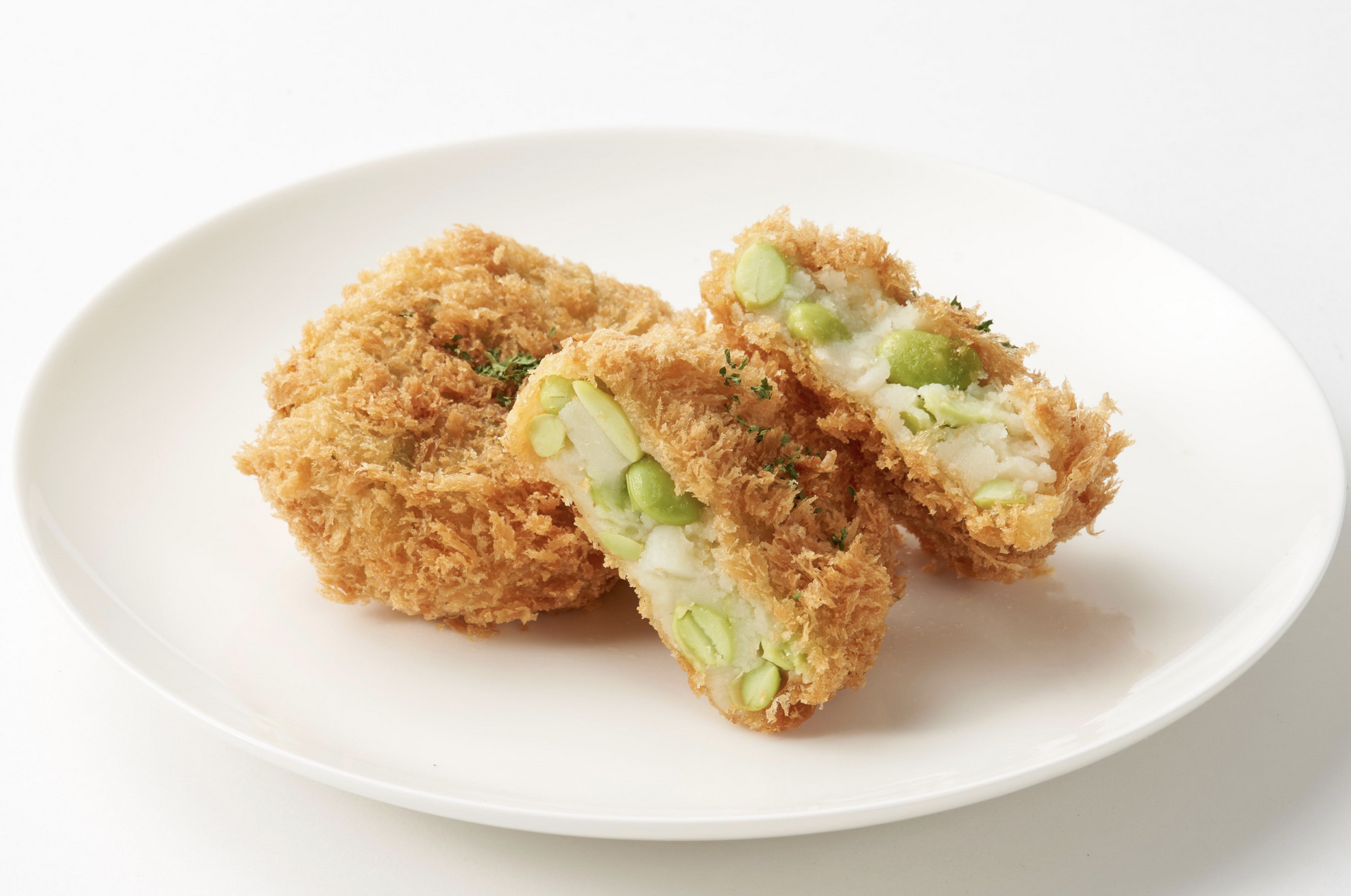
枝豆コロッケ edamame korokké
Across the board in every store at every location, one of the most popular osōzai items is what the Japanese call korokké, crispy-on-the-outside, creamy-on-the-inside croquettes. The Japanese will eat these, and other fried foods, at room temperature—they are a favorite item in obentō lunchboxes. The shard-like slivers of breadcrumbs known as panko keep the exterior crunchy and crisp long after they have cooled down.
This recipe is for making EDAMAME KORROKE. In my cookbook, KANSHA (pg. 118) you’ll find full instructions for making kabocha (pumpkin) and adzuki (red kidney beans) croquettes.
Find out more about OSOZAI in my MAY 2026 newsletter.