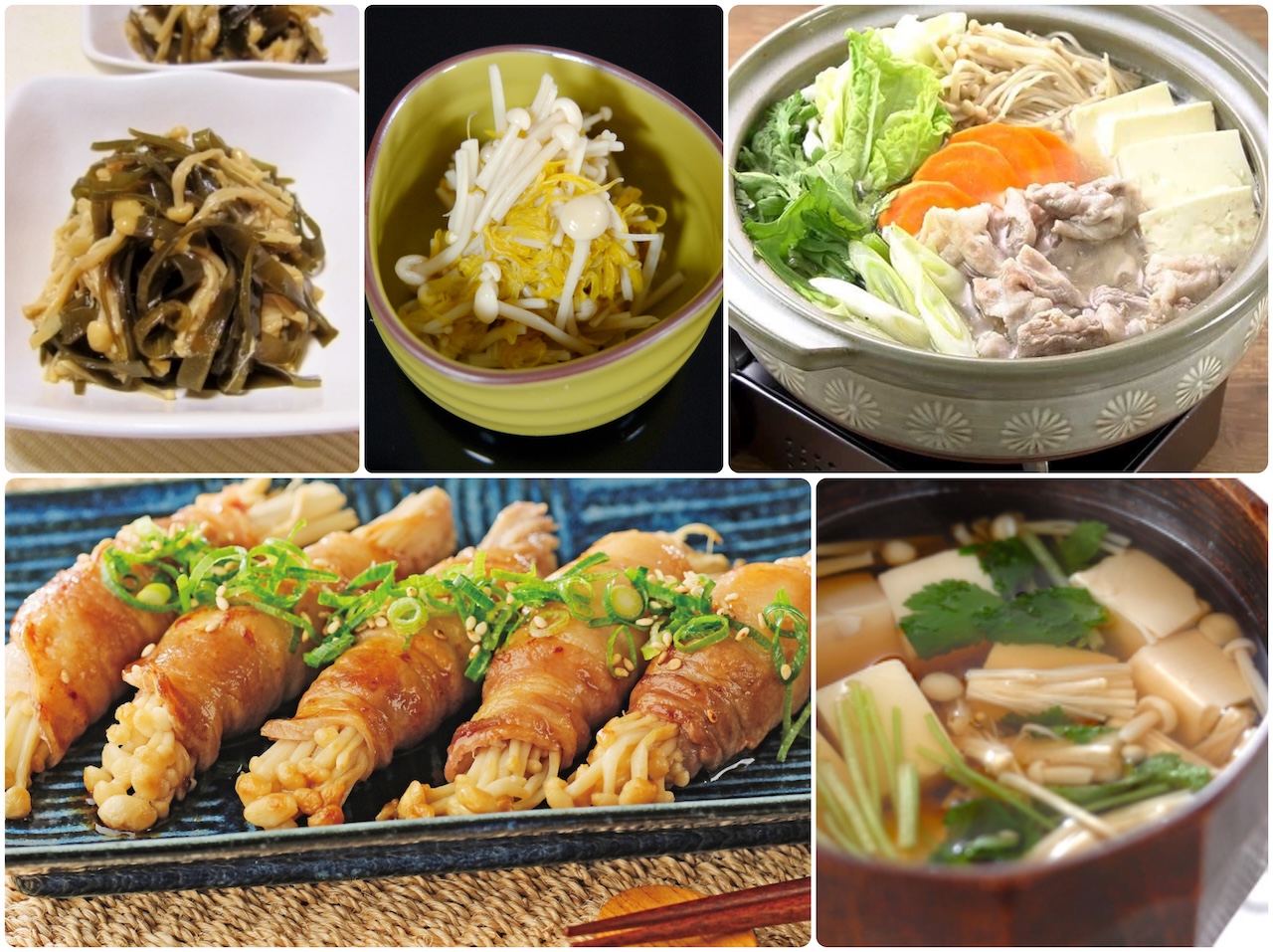
えのき茸の色々 lots of dishes to make with enoki mushrooms
Enoki mushrooms are a popular item in nabemono hot pots and miso soup. They also lend themselves to being simmered (with kombu made into tsukudani) and sauteed (wrapped in bacon); they can be coarsely chopped and added to omelettes, too.
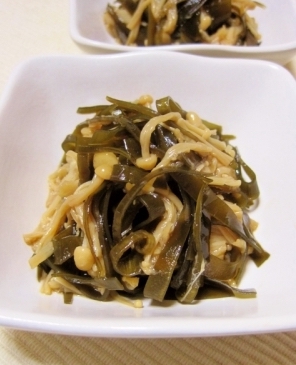
Kelp and Mushroom Relish
In frugal washoku kitchens, pieces of kombu that remain after making dashi stock are re-purposed into a tasty relish called tsukudani that is eaten with rice (and often stuffed into onigiri rice balls). Here is a recipe that combines kombu with enoki mushrooms. Once made it will keep for several weeks, refrigerated in a glass jar.
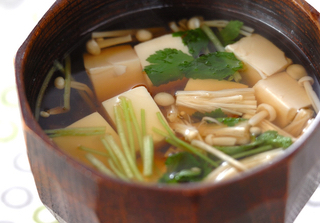
Basic Miso Soup
There are seemingly limitless variations on the theme of miso soup. The choice of miso typically reflects a regional preference — mugi miso is what I first tasted in Shikoku nearly 60 years ago and has become my “norm.” What about the items included in miso soup? A recent Japanese newspaper survey based on their readers’ eating habits listed the top ranking items as tōfu and negi (onions). Wakamé and some sort of mushroom (especially énoki) followed high on the list.
This Basic Miso Soup recipe I offer you here is representative of Japanese home-style miso soups. Enjoy it as is, or use it as a point of departure to develop your own house version.
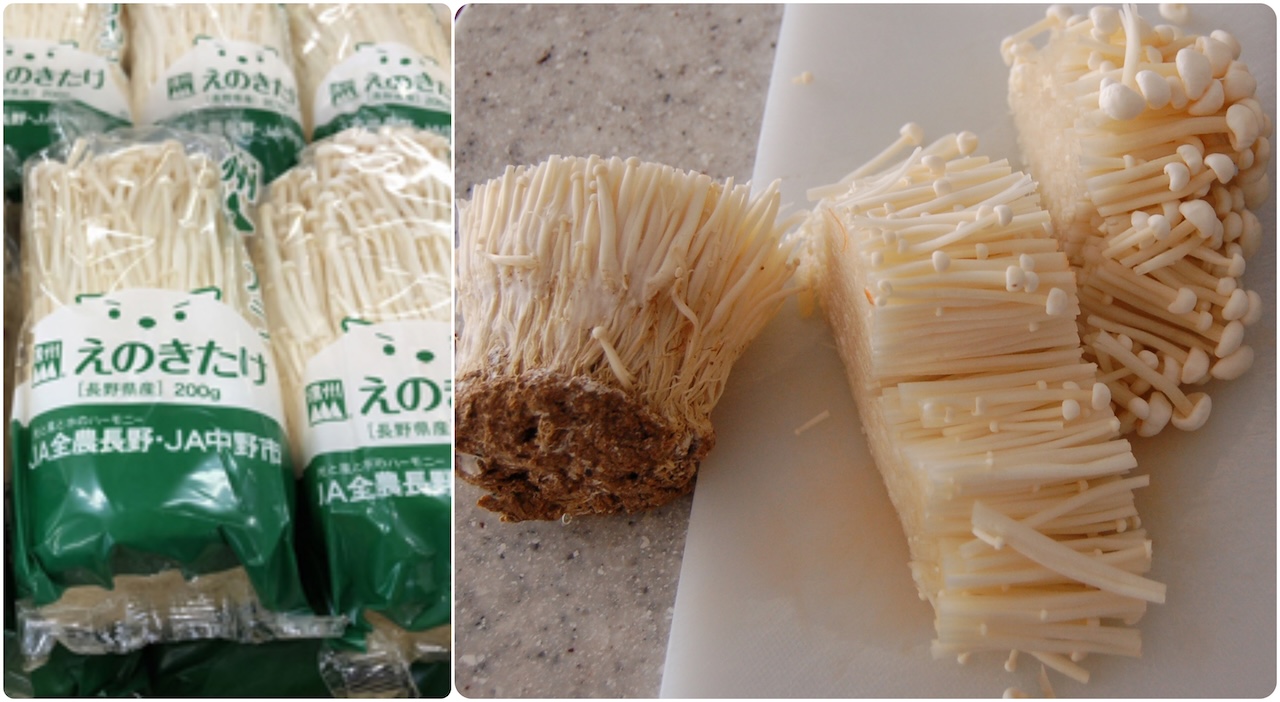
Buying and cooking ENOKI mushrooms
Sold in North America as both enoki mushrooms and enokidaké these slender stalked, small-capped, white, fungi have a light floral aroma. Commercially grown enoki mushrooms come to market packaged in cellophane bags that contain 100 grams, or about 3 ounces. Typically the bottom half of the bag is opaque, hiding the unattractive clump of moist, sandy, organic material on which the mushroom spores are cultivated.
Unless a specific recipe indicates otherwise, trim off the bottom third of the stem section and throw it away along with whatever gritty, cultivating material may still be clinging to it. Cut the remaining stalks in half, thirds, or even shorter pieces depending upon the recipe in which they will be used. Typically, in soup dishes, the stem portion is briefly simmered in dashi and the caps are placed directly in individual bowls. Just before serving, hot soup is poured over the caps.
Visit Enoki Mushrooms to learn about how enoki are cultivated.
My NOVEMBER 2026 newsletter is themed on Enoki Mushrooms.