Daigaku Imo

Oct 6, 2020 | Autumn, Kitchen Culture, Year-Round

Daigaku Imo (Glazed Sweet Potatoes)

大学芋

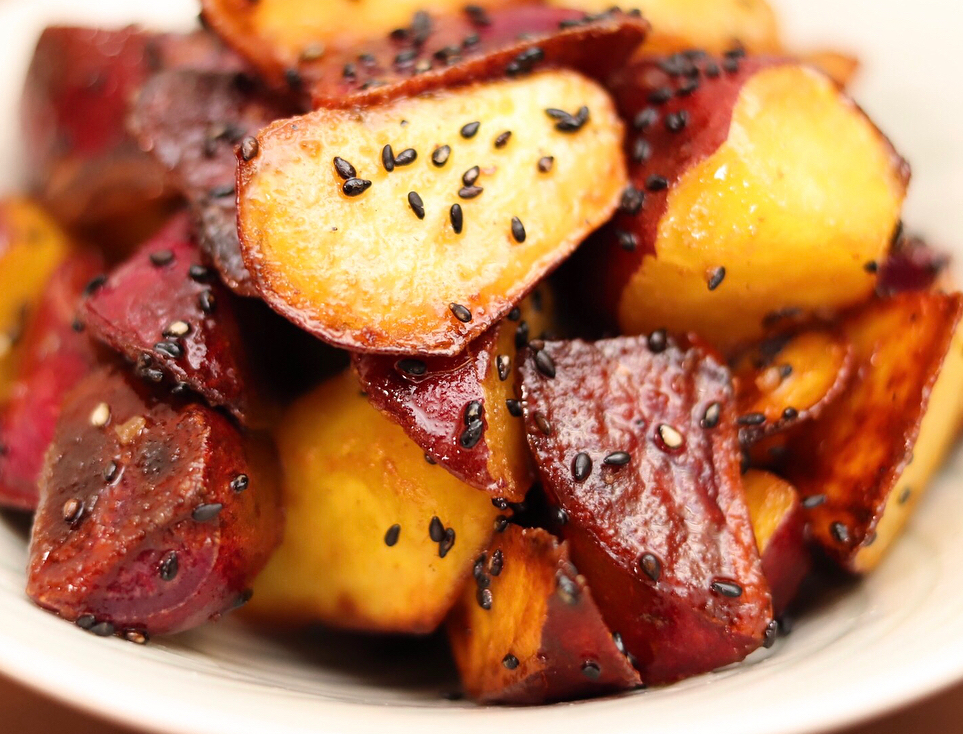
Syrup-glazed, black sesame-studded Daigaku (university) imo (potato) first became popular among university students in Japan at the turn of the twentieth century. To learn more about the history of this dish, read my October 2020 newsletter
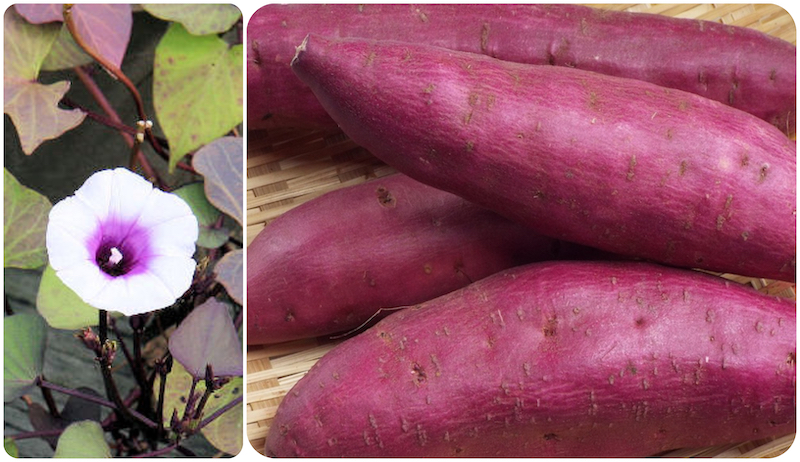
The flower that blooms from Satsuma imo looks a lot like a morning glory. Only to be expected when you realize that the plant is genus Ipomoea, commonly known as morning glories. (Yams, by the way, are tubers, members of the Dioscoreaceae family, related to lilies and grasses.) Ipomoea is one of the largest groups of flowering plants in the world.

Satsuma imo are a good source of Vitamin B1 (thiamin that enables the body to use carbohydrates as energy), potassium, and Vitamins A and C. Baked or steamed they are quite low in calories (only 86 calories for 100 grams/3.5 ounces; the potatoes pictured here average 300 grams each). Frying and glazing will of course add calories to any dish, but my version of DAIGAKU IMO (adapted from a popular Japanese TV cooking show) is about 230 calories per portion.

DOWNLOAD Glazed Sweet Potatoes DAIGAKU IMO
Kagami Mochi

Kagami Mochi

At New Years’ time, the Japanese decorate their homes with a special display called KAGAMI MOCHI. There are many regional variations on the theme but typically two large rounds of omochi rice taffy are stacked with a daidai 橙 (bitter orange) on top. The arrangement is...

Symbolic Pine

Symbolic Pine

Because pine trees are hardy evergreens, they are a symbol of longevity and resilience in Japanese culture. As such they are a key motif used at New Year’s. Various foods are configured to evoke the image of pine needles (matsuba 松葉 ) and pine cones (matsukasa 松笠 )....

Katsura Muki, gossamer thin peels

Katsura Muki, gossamer thin peels

Daikon radish is peeled into long, seemingly impossibly thin ribbons in a cut known as katsura muki. The skill needed to produce these peels is the most basic requirement in any Japanese professional kitchen. It typically takes months (if not years) of daily practice...

Tsutsumu… wrapping, enveloping

Tsutsumu… wrapping, enveloping

Written with calligraphy for “bath” (furo 風呂) and “spread out” (shiki 敷) the word is rather curious for a piece of cloth. It seems the origins hark back to the Muromachi Period (1336-1573 AD) when Daimyo lords would spread out a cloth in which to wrap their clothing...

Recent Posts & Projects