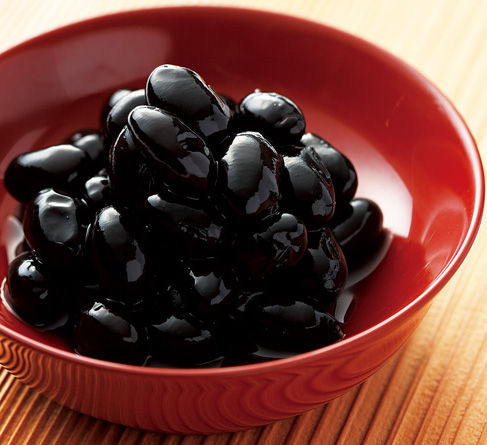
Glossy sugar-stewed black beans, a New Year’s treat.
KURO MAMÉ
black beans・earnest effort
黒豆・苦労+忠実
In the world of culinary endeavor, word-play can add a nuance of flavor to mealtime. Several of Japan’s osechi dishes served during the New Year holiday exemplify this: Plump, black soybeans called kuro mamé are tender-cooked and sugar-stewed until glossy.
The word kuro usually means “black” But the meaning shifts to “hard work” when the calligraphy changes and the final vowel is extended.
Similarly, the word mamé usually means “bean.” But, when written with different calligraphy, mamé becomes “sincere” or “earnest.”
KURO MAMÉ
Kuro mamé = black beans = 黒豆
Kurō mamé = earnest effort = 苦労・忠実
Eating sugar-stewed black beans on New Year’s ensure that those who work in earnest will have a sweet new year!
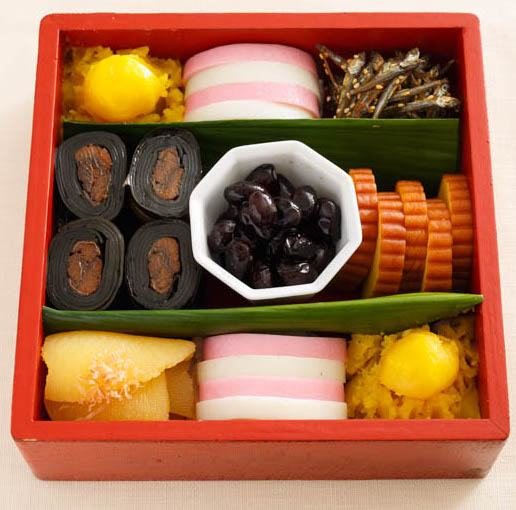
Sweet-simmered kuro mamé are part of osechi, the food served at New Year’s in Japan. Osechi dishes are typically served in stacked boxes called jūbako. Pictured here is one of several layers; the swwet-simmered black beans are in the middle in a white dish.
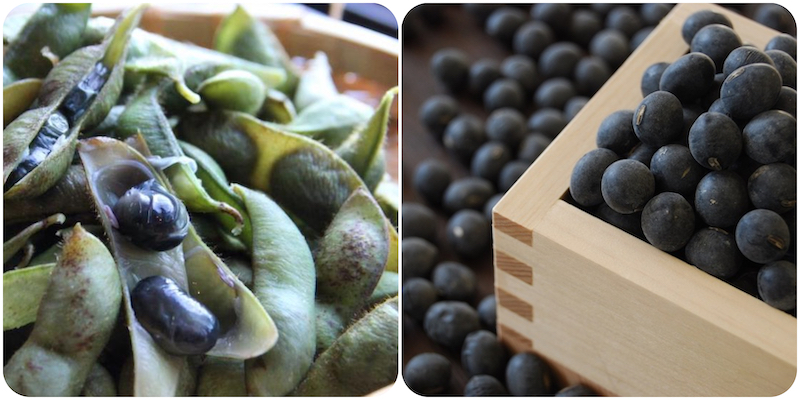
Kuro mamé, black soybeans grow as any other soybean. If you are able to source them as “branch beans” you can enjoy them édamamé style, boiled in their pods. Most of the crop, however, is dried and cooked as needed.
DOWNLOAD recipe for Kuro Mame for Japanese New Years