OBON cookery: Cucumbers & Eggplant
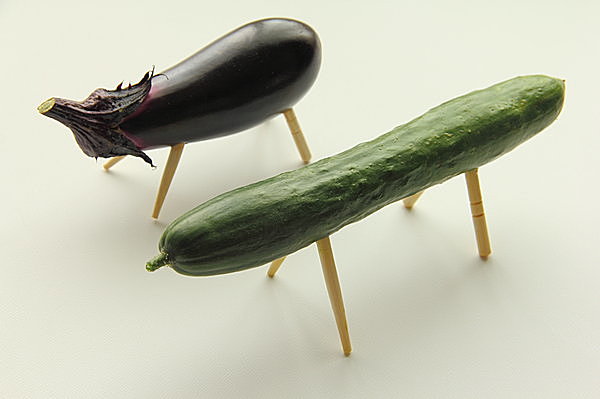
Project OBON is about eggplant and cucumber cookery. Why eggplants and cucumbers? These vegetables reach their peak of flavor during the summer when Obon is celebrated. And, the vegetables are fashioned into transportation for departed spirits.
Eager to begin their annual visit, departed souls travel swiftly back to this world on cucumbers (galloping horses). But when it comes time to return to the spirit world, they are reluctant to go… favoring transport on slower oxen (eggplants).
Various eggplant and cucumber dishes appear on summer menus throughout Japan. Try your hand at making one (or better yet, all) of these eggplant and/or cucumber dishes.
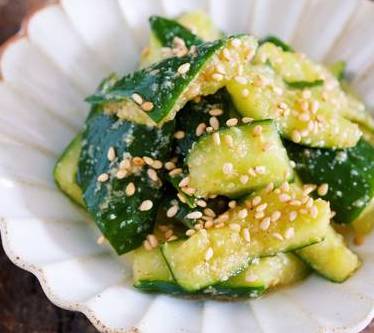
Smashed Cucumbers with Toasted Sesame
Most supermarkets in Japan set up a small table at the back of their produce section with slightly bruised or blemished (and therefore deeply-discounted) fruits and vegetables. Here, too, you can find day-old, but still fine-flavored and perfectly safe to consume, items. Whenever I see less-than-gorgeous-looking, odd-shaped cucumbers I grab them to make this salad. Find out more, and download a recipe for Smashed Cukes.
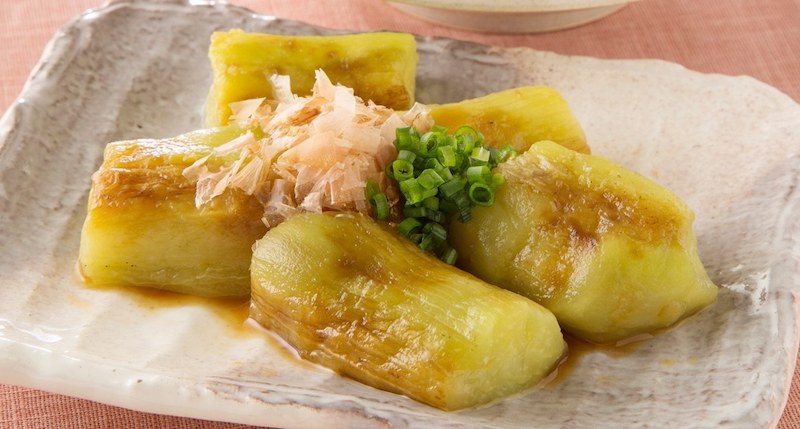
Roasted Eggplant
Late in summer eggplant skins begin to toughen a bit. That is when yaki nasu (roasted eggplant with the skin peeled away) is especially good. Served chilled and showered with smoky katsuo-bushi flakes and chives, it makes a refreshing side dish on a muggy day.
Find out more, and download a recipe for Roasted Eggplant.
山形だし Yamagata Dashi
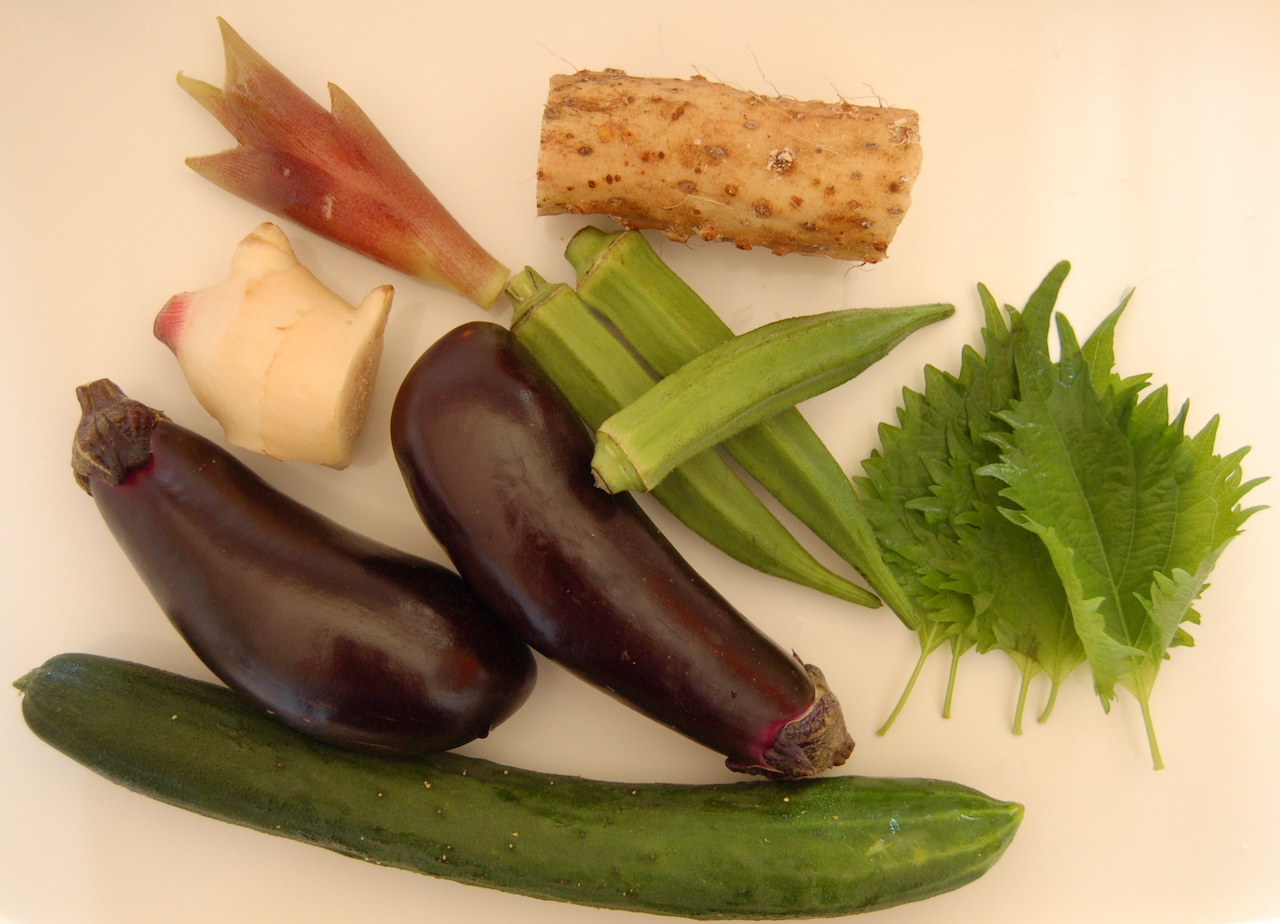
Somewhere between a salsa and chutney, Yamagata’s summertime signature dish Dashi is a refreshing mixture of chopped cucumber, eggplant and other summer vegetables. It is truly restorative on days when temperatures and humidity soar.
The Japanese generally embrace foods with viscosity (think positive cling, not negative slime) and in this dish, vegetables such as okra and a slippery yam called nagaimo encourage other minced morsels to bind with each other. The result is a mixture of crisp, succulent tidbits with a slightly slick mouth feel.
For more information and a recipe visit the Yamagata Dashi post.
Visit OBON SUMMER HOLIDAYS blog post for more information and inspiration.
Download a copy of my August 2023 newsletter themed on Obon.