うちわ flat fans
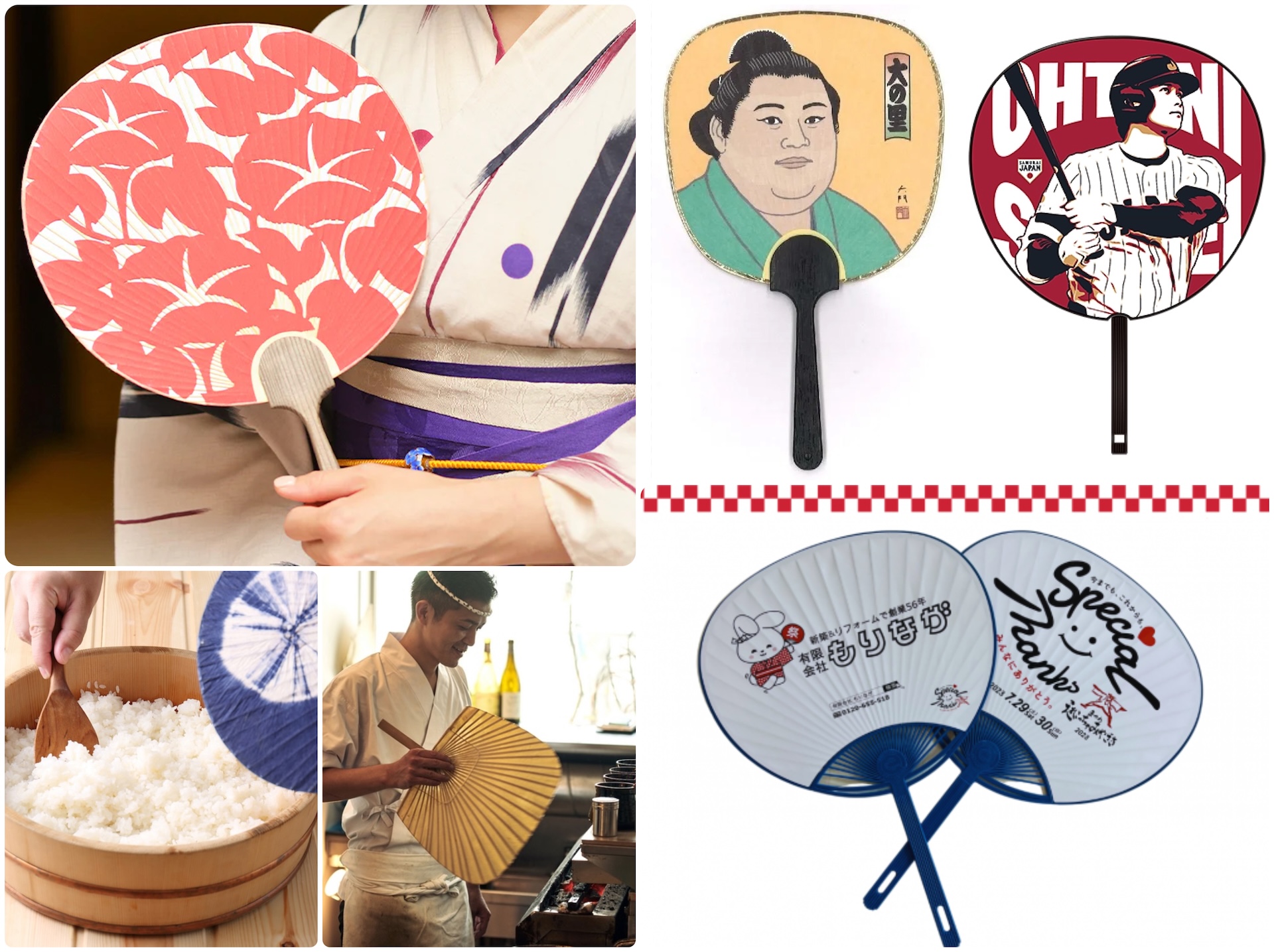
In Japan, hand-held, flat fans called uchiwa have been creating cooling breezes for millennia. Uchiwa can be many things: In addition to being practical tools in the kitchen (for fanning rice when making sushi… for fanning cooking fires when broiling), uchiwa often become a fashion statement (especially when coordinated with yukata summer weight kimono worn by festival-goers) or advertisements (passed out on street corners to shoppers in hot weather).
Uchiwa become sports fan merchandise. Uchiwa are especially popular among sumo-wrestler and baseball-player fans in Japan.
Bōshū, Marugame and Kyō UCHIWA
In Japan today, there are three areas known for their uchiwa:
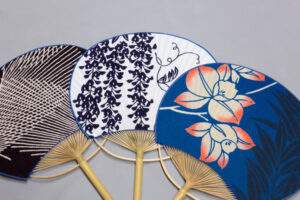
Bōshū uchiwa 房州うちわ(千葉県南房総市・館山市)fans are made in the southern part of the Bōsō Peninsula in Chiba Prefecture. One of the distinguishing features of Bōshū uchiwa is the use of medake, a type of small, wild bamboo collected locally during the cold season. The handle is typically kept round.
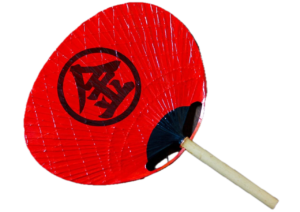
Marugame uchiwa 丸亀うちわ(香川県丸亀市)fans are made in Marugame area of Kagawa Prefecture (Shikoku). These fans were first created as souvenirs for pilgrims visiting Kotohira Shrine in the early Edo period (1603-1868 AD). They feature a vermilion background with a circular “金” (Kin) character.
Kyō uchiwa 京うちわ(京都府京都市)made in Kyoto are thought to have originated in Korea, brought to Japan by pirates active along the coasts of China and Korea in the 14th century. The craft slowly made its way inland, eventually to the region of Kyoto.
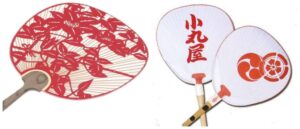
Today two rather different and distinct styles are associated with Kyoto. One, sukashi 透かし features openwork (left) while the other style known as Kyomaru (right) often become souvenirs from ryotei restaurants that employ geisha.
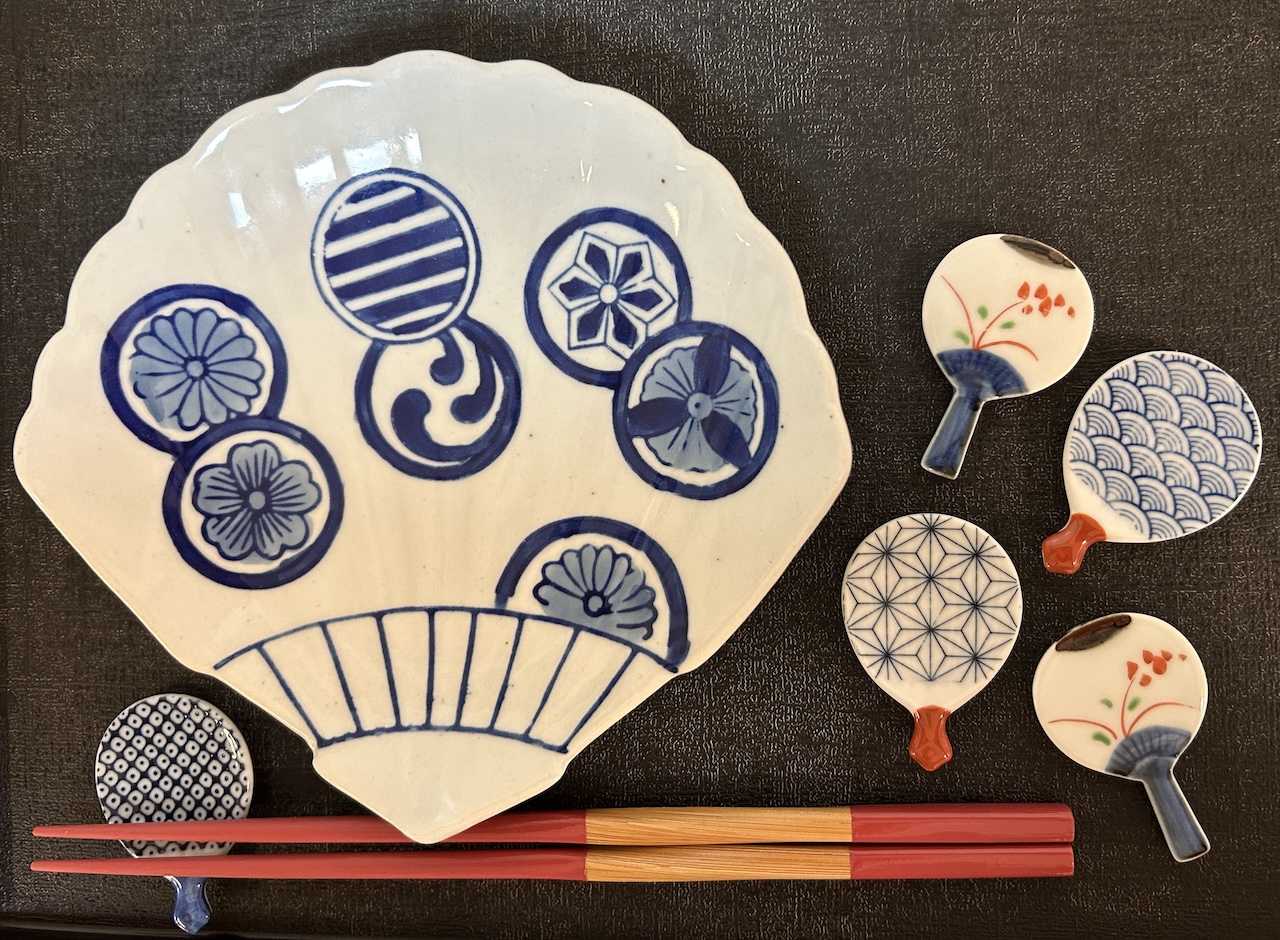
うちわ食卓飾り Uchiwa as design at table
Just the sight of uchiwa at table can having a cooling effect. Plates and chopstick rests are the most frequently encountered items.
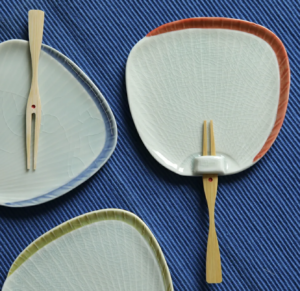
Above, small plates for serving sweets that are shaped like uchiwa fans… the handle of the fan is a bamboo fork.
Visit PROJECT Uchiwa for a recipe for making sushi meshi.
Learn more about UCHIWA flat fans in my JULY 2026 newsletter.
-79969_400x250.jpeg)