Sora Mame

Apr 22, 2020 | Kitchen Culture, Spring

Fava Beans: Sora Mamé そら豆

(Fava beans have been part of the eastern Mediterranean diet (Egypt, Greece, Italy) for at least 4000 years. There are stories of monks from India traveling through China who brought fava beans to Japan in the Nara Period (710-794 AD).  However, the first written evidence of sora mamé being consumed in Japan is in a dictionary-like document, Tashikihen (多識篇) published in 1631.

Today, favas (what the Japanese call sora mamé) are welcomed to Japanese tables as spring begins to shift towards summer.

The Japanese write SORA MAMÉ in several ways:

空 the calligraphy for SKY  calligraphy for BEAN

the calligraphy for HEAVEN  calligraphy for BEAN

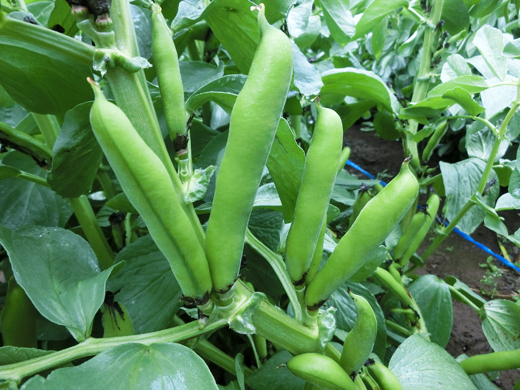
Both of these evoke the image of stalks in the field with pods pointing to the heavens.

 Sora mamé can also be written as: COCOON (kaiko) +  BEAN. This relates to the appearance of the pods themselves, which look vaguely like silkworm cocoons.

By the way, HIBARI is a Skylark and dishes made with fava beans often include hibari in their name.
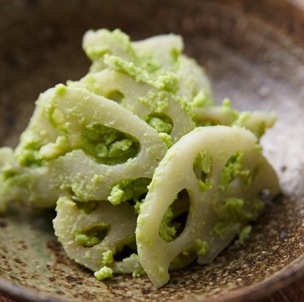
Hibari Aé

Lotus root with fava bean sauce
Download the recipe.

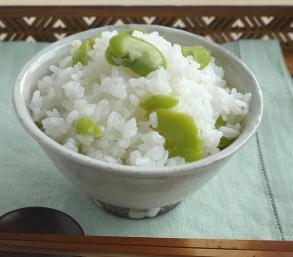
Mamé Gohan

Fava beans in rice

Download the recipe.

Osozai Side Dishes

Osozai Side Dishes

Modern households everywhere are challenged with balancing a desire to eat healthfully with limited time to prepare meals. In Japan, the food industry’s response has been to offer a vast assortment of prepared foods for sale through various outlets: convenience...

Using Food Fully

Using Food Fully

Meals planned around a single ingredient prepared in many ways are referred to as tsukushi (or zukushi) 尽くし menus. The verb tsukusu means "to use, or consume, entirely." This no-waste approach is both a frugal and practical way to cook, making the most of what is...

The Language of Learning

The Language of Learning

Although we are all born with some innate capabilities, we also must LEARN in order to survive and thrive. Different cultures manage learning differently. The Japanese language has two verbs that can be used when talking about acquiring information and experience....

Oysters

Oysters

Throughout the world, oysters have been a popular food source since ancient times. Archeologic evidence in Japan, in the form of kaizuka (shell mounds), dates to the Jōmon period (14,000-300 BCE). Oysters had been abundant for millennia and harvested in their natural...

Recent Posts & Projects